Getting Out the Vote

I wrote this fic/civics lesson as a thank you to Nonnatuns that made voting (whenever, wherever) a priority.  Initially, it was posted with a password for them, but I have opened it up to all.   Thank you!


Teddy Turner was not amused.  A man liked his routine, after all, and enough was enough.  The high chair meant food, or at the very least, a wooden spoon to band on his tray.  The wall of newsprint before him was a poor substitute for a warm slice of toast to gum and his mother’s pretty smile.  Gathering all his strength, he arched his body in protest against his high chair and kicked his feet.

The newspaper rustled as a voice hushed him from behind its barrier.  “Keep your shirt on, Teddy dear. Mummy’s nearly finished, you’ll soon have your breakfast.”

Not appeased, Teddy made to fuss again when he was alerted to the sound of reinforcements on their way down the staircase.

“What’s this?”  Patrick teased. He pulled his chair up to feed the disgruntled moppet.  “Has Mummy abandoned you for the Times yet again, son?” He stifled another protest with a spoonful of pablum.  “If Sir Alec doesn’t call for an election soon, you’re going to have to learn to make your own breakfast!”

With a huff, Shelagh refolded the newspaper.  “It’s a subversion of democracy,” she snapped.  “There’s absolutely no reason why that man doesn’t call for the vote.  There’s been no confidence in this government for months now.”

“I’ve never seen you so fired up about politics, Mum,” Timothy remarked as he and Angela took their places at the table.  

Bright blue eyes flashed behind Shelagh’s glasses.  “I’m sure I don’t know what you’re talking about, Timothy.  I’ve always been interested in the state of the world.” She placed the paper beside her husband’s plate and stood to pour out tea.  “Cornflakes again, Angela?”

Timothy shrugged and swallowed a gulp of tea.  “It’s just that I’ve never seen you read the paper except to clip advertisements or coupons.”

Silence cloaked the room.  Teddy leant back in his chair, his expression matching the wary look on his father’s face.  Even Angela paused, spoon halfway to her mouth.

The teapot returned to the table with a muffled thunk.  Shelagh’s voice was controlled. “Simply because I don’t discuss a topic in your presence doesn’t mean I don’t have an opinion on it, Timothy.  I do exist outside this family.”

Even Tim seemed to understand he’d stepped in it.  “I know that, it’s…well…” His voice trailed off in confusion.

“I’ll have you know that I have voted in every single election since I came of age.  I’ve even canvassed for candidates.”

“Even when you were at Nonnatus?”  Timothy was incredulous.

“It’s like watching someone in quicksand,” Patrick whispered to Teddy.  The tot chewed his fingers in response.

“Certainly at Nonnatus!”  

Timothy flailed, his debate training abandoning him in the face of a superior adversary, and he resorted to vocabulary tricks.  “But—but I would have thought the nuns would be too busy with…with less temporal tasks than politics.”  

Shelagh was in no mood to encourage the teen.  “There are few things more “temporal” than tending to the sick or ailing, young man.  In order for us to take care of the community, we need support from the government. The best way to ensure that is to work is to help put those in office sympathetic to our cause.”

Shelagh stirred her tea.  “The Order of Saint Raymond Nonnatus is not a cloistered community–they strive to improve this life as well as the next.  Sister Monica Joan was a suffragette, you know. She was on the frontlines fighting for women’s right to vote.”

“I can remember the Nonnatuns coming in to the polling place back in ‘45, soon after I’d arrived in Poplar.  Like a wave of blue, determined to make a change.” Patrick smoothed margarine on a slice of toast as the natural order returned to the room.  “The Nonnatuns have the best voting attendance record of any group in Poplar, I imagine.”

Tim grabbed the lifeline, grateful for the distraction.  “Which groups don’t vote?”he asked.

Patrick lowered his brow in concentration.  “Young people. And women. The numbers are improving, I’ve heard, but—“ he shrugged in resignation.

“But young people should be voting!  We’ve got the most at stake, when you think of it!  Were the ones that will have to live with the consequences the longest.”  He slumped over his cereal.

“Yes, but many young voters aren’t engaged in the process.  They think it’s for stuffy old men.”

“That’s because it is stuffy old men.”  Shelagh sighed. “When nearly every politician looks and sounds like someone’s grandad, it’s hard to think there’s a place for others at the table.  Why, many women that do go to the polls simply vote the way their husbands tell them. It’s hardly inspiring.  Women need to see that they have their own voice, and they need to use it.”

Teddy was finished with both his breakfast and the conversation, and began to fuss.  Shelagh pushed back her chair.

“I’ve got him,” Patrick told her.  “Finish your tea.”

Shelagh watched as her husband released the boy from his confinement and sighed. “Too many women have so little support at home that there’s no time for them to think of the world beyond their door.  Im afraid the simple act of voting can be quite complicated when you’ve little ones at home.”

Teddy’s feet thundered over the kitchen floor as he ran in restless circles.  “See?” Shelagh asked. “Imagine toting a pack of children along to the polling place and then trying to concentrate on your ballot.  I’m lucky enough to have your father to help, and you, too,” her voice was warm. Her anger was gone.

“Voting is a good deal more than simply showing up, Tim,” Patrick returned to his own cooling tea.  

“I’m starting to understand that.”

“Timmy could babysit.”  Angela’s bright voice offered.

“Babysit?” Three voices answered in unison.

Without looking up from her breakfast, Angela offered a most reasonable solution.  “Timmy babysits for Teddy and me. If voting is so important, he could help the other mummies.”

“Babysit?”  Tim moaned.

Patrick chuckled,  “Civic responsibility has a price, Tim.”

Pounding feet came to a sudden stop, and with a wobble and a whoop of laughter, Teddy Turner settled next to his mother to finish his breakfast.   

***


Clinic was over, and as the last of the patients wandered out, the nurses began to gather in the small kitchen for a cup of tea before setting the place to rights and moving on to the next task of the day.  

“We’re lucky Sir Alec didn’t call for the vote on a clinic day,” Patrick said, leaning back against the countertop.  “This cold season is starting a bit earlier than I’d like, and closing the clinic, even for a day, could put us so far behind it’d be spring before we caught up.”

Shelagh unplugged the electric kettle and filled the teapot.  “Yes, that’s the problem with relying so entirely on one space for all our community needs.  Having the polling here makes it a tad bit easier for Timothy’s cause, however. We’ll have Fred move out all of the examination beds from the alcove and he can keep the children occupied there whilst the mothers come in to vote.”

As if summoned, the boy appeared in the doorway, haggard and rumpled from a long day of canvassing the neighborhood.  With a dramatic flourish, he dropped into a chair.

“It’s impossible!”  He bemoaned. “I’ve had dozens of mums sign up for the babysitting service, and I’ve no one to help!”

Trixie’s mouth puckered as she struggled to control a giggle.  “I’m sure it’s not as bad as all that. Surely some of your friends will help.”

Tim leaned forward to rest his chin in his hand in defeat.  “That’s what I thought. I was certain the girls I asked would help.”

“No willing conscripts?” Trixie asked.

“I wonder if you’re aware of the irony that’s on display here, Master Turner.”  Phyllis Crane looked up from her clipboard. “Exclusively asking girls to help care for children is hardly supporting your cause for women’s voting rights.”

Tim rolled his eyes.  “I know that now.  Caroline Gillespie made her opinion perfectly clear when I approached them at the bus stop this morning.  But how am I to get boys to help take care of children?”

“You seem to be rather proving my original point, Tim.”  Shelagh crossed the room to pour him some tea. “These mums you’re trying to help, they have husbands—grown men perfectly capable of caring for their own children for an hour or so while their wives go vote…or do some shopping…or even get their hair done!” She stirred her tea vigorously as she continued.  “It’s not babysitting when they’re your babies!” She harumphed.

Patrick reared back in his seat, arms wide.  “Don’t look at me!” He defended. “I’ve given the littles a bath every night this week!”

“Yes, dear.  You’re quite liberated.”  Shelagh patted his hand. “Not all mothers are as fortunate as I am.”  Mischief gleamed behind her glasses.

Trixie giggled, then grew serious.  “You’re right, Shelagh. Somehow, there’s always another chore to be done, or person to be taken care of before a woman can stop being someone’s something or other and exercise her rights as an individual.”

Timothy squirmed in his seat.

“It’s all rather casual, this male chauvinism,” Phyllis removed her glasses to study the young man more closely. “It’s not like in America, what with those officials trying to block people from voting with poll taxes or literacy tests simply because of their skin color.  There, the enemy is out in the open, the lines are drawn quite sharply. In Britain, women have had the right to vote for decades, and because of the way society discourages our participation, we’ve yet to be a force within the polls.”

Patrick spoke up.  “I wouldn’t say women are discouraged, precisely, at least not officially…”

Three sets of eyes glared at him.  

“Then how would you say it, Patrick?”  Shelaghs voice was clipped. “Our paid workers—mostly men, mind you—are given time off from their places of employment in order to participate in elections.  There are no such opportunities for women that stay home to care for others. And how many political meetings have you attended that were held at men’s-only establishments?”

“I’ve offered to take you–“

“That’s hardly the point, and you know it.  It’s the way it’s always been done, and men have come to expect it to be the way things will always be done.”  Shelagh reached out and covered his hand with her own.  “I shouldn’t be so hard on you, dear. You’ve done tremendous work to help everyone have a voice.”

A glance passed between Trixie and Phyllis, and the older nurse stiffened her spine.  “Of course, we’re all grateful for the support we receive from men like you, Doctor Turner, but we’ve moved beyond that.  It’s time for the male population to recognize theirs is not the only perspective on the world.”

Patrick swallowed thickly and nodded his understanding.  

“This is all very interesting,”  Tim’s voice broke the tension. “But none of you have told me how I’m to find help taking care of all those kids.”

Chuckles broke the tension, and the group began to break up.  “You’ll think of something, Tim,” his father assured him.

“What if I told the other—“

Patrick placed a hand in his son’s shoulder, silencing him.  “You heard the ladies, Tim.” He exhaled a quiet laugh. “Do not tell the other lads it’s a good way to meet girls.”


***

Shelagh stood vigil at the community center doors, a worried crease between her brows.  There was no need to check her watch, the dwindling number of voters in the open space told her there wasn’t much time.  She pressed her lips together and held in a sigh. If he was late, there was an excellent reason.

“Good evening, Mrs. Turner,” Fred Buckle ambled in, tool kit in hand.  “Heard there’s been a good turnout today. Bodes well fer change, don’t it?”

“Fingers crossed, Fred.  There’s a fresh pot of tea in the break room if you’d like.  We can’t start taking down the polling booths until after the final votes cast.”  She craned her neck to peer around the large man.

Wisely, Fred kept his own counsel.  He tugged at his ear and said, “Right, then.  You’ll know where to find me.”

A rush of cold air filled the hall, and Shelagh turned expectantly to the entrance.  A woman burst in, a toddler on her hip and two young children dragging behind her in their pajamas.

“I’ve made it, ‘aven’t I?” She puffed.  “Himself only just left for the pub. I thought he’d never get out in time for me to come!”

Shelagh nodded, her arm outstretched to usher the woman in.  “Let me take the children. We have an eager group of teenagers ready to keep an eye on the wee ones as you cast your vote.”  She took the youngest in her arms. “Now come along, children. I think we’ve still plenty of coloring books that need an artist’s attention.”

An impromptu play area occupied the alcove they used for examination beds during clinic.  “Timothy, dear,” Shelagh called over. “We’ve got some little friends for you to play with.”

Tim unbent from the task of collecting wooden blocks from the low table.  Despite his fatigue, a broad smile crossed his face, and he held out a blue one to the littlest child.  “Brilliant. You can help me build London Bridge. Teddy keeps knocking it down.” He pulled out two chairs.

“Teddy always knocks down the towers,” Angela announced.  In an effort to prove his sister wrong, the little scamp snatched a crayon from the table and scribbled on its surface.

Caroline Gillespie scooped him up.  “Come on, little man. Let’s make the tower one more time.”

Shelagh smiled.  “Thank you, dear.  You’ve been a tremendous help this afternoon.”

“My pleasure, Mrs. Turner.  Timothy May have told you, but I wasn’t…supportive of his efforts when he first told us about it.” She rolled her eyes in a way that made her feel for the girl’s parents.  “It seemed like he was only asking us girls to be babysitters! But as I passed by after school today, I watched Mr. Stacey try to climb the steps outside. He needed two men to help him manage, poor thing.  I never really considered how the world excludes so many, just with simple things like stairs.”

Teddy was impatient to get at the new block tower, and Caroline set him down again.  “Each day is a lesson, as my nan says.”

“Indeed,” Shelagh grinned at the girl’s serious tone.  “I’ll pass this little one off to you as well, if you don’t mind.  I’ll go start on clearing out the voting stalls. Angela, Mummy will be right back.”

A dozen wooden stalls lined the wall of the main room, offering privacy to voters as they filled out their ballots.  Most of the poll workers, all tired volunteers, were gathered in the break room. Shelagh paused at the ballot box table.

“You go get a cup of tea, Mr. Lewis.  It’s only two minutes to seven, I can manage any last stragglers.”  She held in another sigh. Patrick wouldn’t be voting this time around.

Her heels clipped sharply on the Lino as passed from stall to stall.  Really, she wondered to herself, how could people be so messy? She collected stray paper and gum wrappers into a bag and dropped the marking pens in a can.

At the far end, she noticed someone had written a campaign slogan on the wooden surface, a clear violation of campaign rules, but decided not to pursue the matter.  It was unlikely Mickey Mouse had much support in the House of Commons.

“Busy today?” Patrick’s husky voice startled her, and she spun around.

“Patrick! You made it!  I was so worried you’d get here past time.  Let’s get you a ballot then-“

He stopped her with an outstretched hand.  “It is past time,” he told her. “It’s just gone seven.”

She struggled to hide her disappointment.  “Oh. I’m sure it couldn’t be helped. You had a long list for rounds.”

“Yes, I did.  That’s why I stopped in right after surgery and voted then.”

Her smile was wide.  “You did! Oh, Patrick. I’m so glad!”

“I’ve only ever missed one vote, and that was during my training.  A rather large baby was reluctant to hurry his arrival. I learned then to vote as early as I could.  Besides,” his eyes were warm, “I know how important it is to you.”

Shelagh felt her cheeks flush.  Had they somehow moved farther back into the booth?  He bent, his nose close to hers, and said softly, “We should head home.”

She could not hide her dimple.  “I suppose we should. Fred might ask us to help with the take-down.”

“Mm-hmm…” Patrick murmured, tracing her downy cheek with the tip of his nose.  “Let’s get the children home and into bed. Poor Tim’s so tired, he’ll be asleep before Teddy.”  He tugged her earlobe between his teeth. “It’ll be hours before they announce any results.”

She sighed.  “Hours? I do hope they take their time.”


Everything She Asks For

2018-04-12This fic begins during s6e8, as Shelagh tells Patrick her decision about her labor and delivery.  You’ll see I’ve cribbed that scene for continuity’s sake.  Obviously, the italicized first section of this story does not belong to me.  Nor does the entire world of Call the Midwife.  I’m just happy to spend time there.


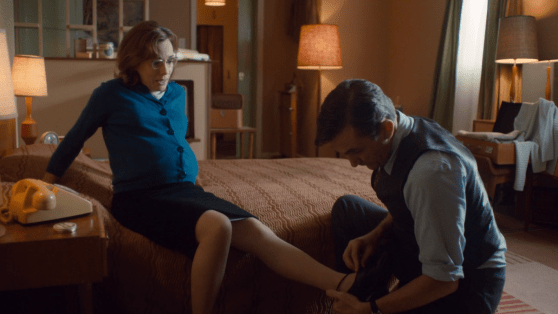
Shelagh rested back on her arms as she settled into an awkward sitting position on their bed, her shod foot in his hand.  He knew this may not be quite comfortable, but it was certainly better than taking off her own shoes. Besides, he enjoyed these little moments when he could take care of her.  His brain began to catalog facts as he worked the laces free. The baby had most definitely dropped in the last few days and Patrick wondered if his wife was starting to feel any increased pressure on her bladder.  Her torso was short enough that even this change wouldn’t help much with the difficulty breathing she sometimes felt.

“I do feel so much calmer since I gave up work, she assured him.  There was a hitch in her voice that pinged something in his subconscious, and he tensed as she continued.  “I think you might feel the same if you could just be my husband and not my doctor, too. And I think it…It might be best if you don’t attend the birth.”

His stomach lurched.   “But it never occurred to me that you wouldn’t want me there!”

“I want you there as soon as the baby’s born,” she pacified, “but we’ve been in too many delivery rooms together before today.  Solving problems. Preventing disasters.”

“And we do prevent disasters!  We’re a team.”

She seemed unmoved by his argument, and he tried to read her face.  He knew that expression–he’d seen it often enough when she had to give bad news to a patient or tell Timothy to get back to his studies.

“Patrick, I know that you’re looking at my ankles and thinking that they’re swollen.”

His answer was reflexive.  “If you’re not experiencing headaches, and there’s no sign of proteinuria, then it could just be the normal oedema of late pregnancy.”  Too late, he realized he’d proven her logic.

“See, the minute you look at me, you go to work.,” she rejoined.

“No,” he admitted, his heart swelling.  “The minute I look I you, I’ll give you everything you ask for.”  Discussion over, he slipped the second shoe from her foot.

“There,” Shelagh said, sliding her feet into the slippers her husband held out for her. “Thank you, Patrick.”

He glanced up from under his furrowed brow.  Not be there at the delivery? It didn’t seem he had much choice in the matter.  Shelagh’s bossy streak was in full force these last few weeks. First the new house…then the home birth…now this?  He opened his mouth to protest but closed it in resignation.

Shelagh leant forward and caressed his cheek. “Patrick dear, don’t look so glum.  You’ll see I’m right, I promise.” She leant down and pressed a kiss to his lips. With a ladylike grunt, she extended her arm for assistance. “Up, please.  Those potatoes are not going to boil themselves!”

Patrick watched as she left the room.  Her back must definitely be hurting a bit now, he thought.  The baby was certainly settling lower. He’d have to keep an eye out for any early signs of–

“Patrick,” Shelagh called gently from the door.  “See what I mean? You’re doing it right now!” Her smile was kind.  “Come on then, Doctor. Help your pregnant wife down the stairs like all the other husbands.”


The evening air was crisp in the back garden, and Patrick was grateful for the cardigan Shelagh had handed him after dinner.  He stood by the trash bins and looked up at the stars. It’d be clear the next day or so, he thought. Good. The children needed to be outside, needed to get some air and sunshine if they were to head off the influenza outbreak he’d heard of in other parts of London. It wouldn’t do for them to get ill, especially with Shelagh being so far along in her pregnancy.

A laugh drew his attention back to the house, and through the large glass doors, he could see Shelagh and Angela sitting together with the pile of books the little girl had chosen that afternoon at the lending library.  Timothy sat in the corner of the room, finally finished with his studies for the night and flipping through a new comic book. The sight of his family should ease his mind, he knew, but Shelagh’s words this afternoon still stung.

Not be in the room when she delivered? He’d never even thought that was a possibility.   He’d taken for granted that Shelagh would want him there.

God, he wanted a cigarette.  His nerves were close to the surface, and a long slow pull of smoke into his lungs would be just the thing to calm them.  He rubbed the back of his neck and turned away from the glow of the windows.

There were still so many questions about this pregnancy that remained unanswered.  They’d accepted the near-miracle of its conception (though if he were honest, simply applying the Laws of Probability had made it a much more likely event than mere medicine could predict).  Considering the scarring left behind by the TB and the resulting procedure that had given them heartbreaking news three years ago, he wasn’t even convinced the baby should be delivered here at home at all, but Shelagh had been determined.  His maternity hospital–his efficient, comfortable, safe maternity hospital was not the place for her delivery.

She’s just showing her old prejudice for her district nursing days, he groused.  There was absolutely no reason why she shouldn’t deliver at the hospital. Maybe she was just a bit shy to be in the regular patient population?  He could promise her a private room. At the hospital, they’d be ready for any possible emergency.

His legs grew a bit unsteady and he dropped onto the nearby bench.  What if there was an emergency?  If he couldn’t be in the room, how could he be certain any and all warning signs would be noted?  Sister Julienne was a talented midwife, but–

The sound of the glass sliders opening sliced through his worried thoughts.  Tim approached and took the place next to him. “Mum’s really getting close now, isn’t she?” The boy’s deepening voice brought a crooked smile to his father’s face.

“Yes, very close.  We should expect things to start changing around here anytime.”

“I suppose.”  Tim’s voice was low.  “Some things aren’t likely to change, I reckon.  Mum’s putting everything in order, planning everything.  She’s just told us that we’re to go to Granny Parker’s when the time comes, and you’ll work at the surgery until it’s all over.  Just like it’s a regular day for you.”

“Yes,” Patrick answered cautiously.  “Your mother prefers it that way.”

“But what about you, what do you prefer?  I should think you’d want to be at the birth of your own child.  You’ve been there for half the births in Poplar for the last twenty-five years.”  He straightened his spine. “I don’t need to be shuttled off to Granny’s as if I were a child, Dad.”

Patrick hesitated.  He’d need to show support for Shelagh, but Tim was no fool.  “Tim, when a woman gives birth, things change a bit for her. It’s rather scary, and your mother copes with that by creating a sense of order.  It’s important that we help her feel safe, and if that means I can’t be with her at her time, I’ll just have to accept that. You know Sister Evangeline wouldn’t let me in the room when you were born, either.”  He hoped he sounded more confident than he felt.

A look of empathy passed over the young man’s face.  “You’re not too happy about it, are you?”

No, his son was certainly no fool.  “Not at all.”

Two sets of shoulders lifted in parallel sighs of resignation.  “Women can be a mystery, Tim, especially regarding childbirth. You know, when Mummy was getting close, she decided that she needed to bake.  I have no idea why, but she insisted that if she made enough cakes, she’d be ready for you. In that last month, she must have gone through twenty pounds of flour.  We couldn’t eat it all, so she’d give most to Nonnatus.” He leant in conspiratorily. “To be honest, I think Sister Monica Joan was more relieved than I was when you were born.  Your mother was a terrible baker!”

Tim chuckled softly. “I remember her cakes.  I was always glad when Mrs. B sent one over to us on special occasions.”

After a long moment, Tim broke the silence.  “You like that Mum gets so fussy about the details, don’t you?  All her lists and plans?”

“What do you mean?”

Tim screwed his face in concentration, the right words eluding him.  He licked his lips nervously and said, “You like being taken care of.”

Patrick blinked.  “I hope I take care of her, too.”  His voice was guarded.

“Well, yes, but you like being managed by her.  The surgery is never organized when she’s away, and you’re always happy to have her run the house.”

“I’m not sure what you mean, Tim.”

Timothy shifted on the bench.  “The words aren’t coming out right.  I mean, I know you married Mum because you love her, but isn’t part of you glad she takes care of all those things?”

Patrick arched his neck and looked up at the night sky.  “I’m not certain I ever really thought of it that way, Tim.  I didn’t fall in love with Mum because I needed someone to help with the washing up.”

“No, I suppose not,” Tim admitted.  “But it got me wondering, that’s all.”

“We’re all on edge, Tim, that’s all this is.  Mum has good reasons to keep the house quiet when the time comes.  We have to respect them.” He leant in again. “Besides, you’re not really interested in being here, are you?  You cringe when we even talk about it. You wouldn’t be able to escape it if you were here!”

Timothy grimaced.  “No, I don’t really want to be here, but do I really have to stay at Granny Parker’s the whole time?”

Patrick’s mouth twisted in a half-smile.  Teasingly, he reached out to rub his son’s head.  “No, I suppose you could spend some of your time out trying to impress the ladies.  I’ll talk to Granny and let her know you’ll be out a bit. How’s that?”

“Dad!” Tim shrugged away, laughing.

Shelagh’s voice broke into their camaraderie. Neither had noticed that she’d come up behind them.  “You two look like you’re having a good time,” she said.

“Now, I hate to be a spoilsport, but it’s getting late, Timothy.  You said you needed to call your friend Alan about a question on your trigonometry.  You don’t want to wait too long. I’m sure his parents would not appreciate a phone call in the middle of the night.”

Patrick studiously avoided his son’s eye as he headed back in the house.  Instead, he extended his arm and Shelagh came up close against him.

“I have a feeling there was something going on out here I don’t quite understand,” Shelagh said.  

Patrick pressed a kiss against her smooth hair.  “I’m sure I don’t know what you’re talking about, my love,” he teased.  “Just man-talk–nothing to worry about.”

She slid her hand over his waist and toyed with the buttons of his cardigan.  “I think Tim wasn’t very happy about our decision to send the children to Granny Parker’s when the baby comes,” she admitted.

Our decision?  Patrick bit his lip to keep from saying the words.  “I’ve had a talk with him, and he understands better now,” he told her.  

“Truly?  I was so worried you’d both think I was being selfish.”  She looked up into his downturned face. “You’ll see, dearest.  It will be for the best.”

Angela’s voice came through the glass door.  “Mama, I finished my Horlicks!’

“Well, that’s me,” Shelagh pushed off from his side.  “Coming, Angela!”

At the doorway, she turned back.  “Are you coming, Patrick? It’s getting chilly out here.”

Smiling to himself ruefully, Patrick gave a brisk rub to his arms and followed his wife into the house.


Pitch of Dreams

This bit of nonsense came about from an Ask on Tumblr from alice1nwond3rland.

Here’s to the “Never Have I Ever” ask (this will be a silly one)! Well, you’ve written all sorts of CtM and Turnadette (even a bit of AU)  😍! So, have you ever written a category of AU in which Patrick gets to live out one of his childhood dreams? For instance, Patrick being the Captain of his own ship or traveling to space!”

(Any mistakes regarding the game of cricket are wholly unintentional.  While I have a vast appreciation for the traditional attire of the game, I understand few of the rules.  If you see something, say something.)


Once upon a time, Patrick Turner dreamed of such a moment.  As a young boy, the makeshift pitches on the cobbled streets of Liverpool had been his Lord’s, his dusty wool knickers and cap his whites.  The old shed in his parents’ garden wore the scars of his years of bowling practice bore witness to a young boy’s tenacity.  Those dreams faded as new ones bloomed, but never completely disappeared.

Today he stood at the edge of it all.  His eyes roamed the stands as fans poured in for the test match that could help turn everything around for England.  They had a fighting chance, he knew.  Australia was strong,  but he knew better than to underestimate an underdog.  

“Ready, then, Dad?”

He turned to look at his elder son and nodded.  “As I’ll ever be.”

Tim smiled in return.  “Imagine, Dad.  If you’d been on time to meet with my teacher, we’d never have been there when Mr. Baxter fell into that ditch, and none of this would be happening.  We’d just be home watching on the telly.”

At that moment, Ted Baxter, England team captain approached them. “We’ll be off to the toss in just a moment, Doc, then it’s all you two.  Father-and-son first bowl–God, it’s what cricket was made for.”  

“I can’t thank you enough for this, Ted–” Patrick began.

Baxter slapped Patrick’s shoulder. “Don’t thank me–you’re my good luck charm.  It was our quick thinking saved my ankle.  Why I wouldn’t be on this pitch today without you.  Must say, the whites do you credit, old man.  I’ll bet the little lady found you a treat, the ladies always do.”  

Patrick thought of the blush that flooded Shelagh’s cheeks when he came downstairs that morning.  “She’s become more of a fan than I expected.”

The team captain winked.  “Perk of the job. Now, don’t you grimace Tim.  You’ll see one day.  You can’t fight the lure of the flannels.”

Tim’s eyes rolled skyward.  “Really, Mr. Baxter, don’t encourage him. It’s bad enough Dad’ll be walking around like this for weeks.”

A voice called the teams out to the field.  “Come on, then,” Baxter whistled to his team. Patrick and Tim followed to the pitch, and shook hands with the two captains and umpires and called the toss, sending the players to their positions.

Patrick took his place and let his eyes scan the crowd.  He knew Shelagh was there, though he couldn’t see her in the stands, and tipped his cap in her direction, then turned to face his son crouching behind the wickets. The load roar faded and he could hear the shouts of children in the streets of his old neighborhood, he could feel the cobbles under his feet.  He clenched his fingers around the seam of the ball and delivered.


A/N:  Now come on. Would it be so hard to write a cricket scene or two, HTMcG?  Throw a fan a bone!

A Mission of Hope, Chapter Twenty-four

BBN9PKPrevious Chapter


Creating a mobile clinic with one old truck and a bus necessitated optimism and strong backs. Fortunately, both were in good supply at Hope Mission. Timothy and Steven joined the team and the next morning, a large canvas tent was set up near the well site. Trixie and Barbara took two horses out and travelled through the community to spread the plan, while Phyllis joined Sister Julienne and Sister Winifred in the relocation efforts.Fred proved his worth yet again and was able to lay his hands on enough horns to create a network of timekeepers that would make Greenwich jealous.

Within days, rotating teams of men began to break through the shale. For three hours, the men would hammer away at the stone, then transport the rubble to a nearby pile to be used later. As Zakhele promised, a few men from the settlement came to help, but never spoke with the other teams, nor even with the clinic staff. The would work silently, then leave.

Fred’s vuvuzela system kept a slow stream of patients at the clinic, each getting far more attention than any patient in busy Poplar ever received or indeed wanted.  One at a time, patients would step under the tent awning and have the combined efforts of at least one doctor and several nurses.

For three days, the system seemed to hold up well. The slow train of patients meandered through the off-site clinic, and the well grew deeper. Each day, Zakhele Obi would make the journey out to the site and nod his grizzled head. Not tomorrow, he promised, but soon, they would see water.

By the third tomorrow, however, enthusiasm began to wane, and not simply for the men digging. The medical staff began to get bored, restricted to the small space with little to occupy themselves but the guilt they felt watching the men work in the blazing sun.

Patrick and Shelagh sat at the makeshift examination table tending to a young woman with a severe cut on her hand. It was the first near-emergency the clinic had seen for days, and the nurses had drawn straws to see who could clean away the blood. Disappointed, the others turned back to sorting patient cards and re-boiling water.

Trixie walked over to the edge of the tent and watched the stone dust and rubble fly in the air above the well hole. “It must be dreadfully hot working there, but the men never ask for a break. I’m dying to get away for a breather and all I’m doing is busy work. It makes a girl feel quite useless.”

“Never useless, Nurse Franklin.” Ever industrious, Sister Winifred sat by peeling the potatoes for the evening meal. “We all have our roles in this plan.”

Trixie sighed. “I know. But I feel like I need to be doing something.” Pushing away from the pole, she determined, “At the very least, I can bring them some fresh water.”

As Trixie lifted a bucket to fill, Henry Makepeace entered the tent. “Good afternoon, all!” He looked about the tent and grinned. “I wondered how long it would take for you to get bored. It’s not much fun being the smokescreen, is it? Here’s hoping today is the tomorrow Mr. Obi has been talking about!”

As he turned to visit the well site, Trixie called, “Just a moment, Mr. Makepeace. I’m on my way over as well. I’m sure they could all use a break.” She lifted the heavy water bucket and made to follow.

Henry stopped in his tracks. “You can’t do that, Nurse Franklin. What if the police came by? Imagine what they would say at the sight of a white woman serving water to the black laborers?” His face was stern. “We’ve talked about this, Trixie. The rules are different here. We can only push them so far. It’s one thing for you to speak with the women and children, it’s quite another for a white woman to be seen spending time with black men.”

Trixie’s eyes grew round. “I was only going to give them some water, Henry, not the plans to take down the government.”

His face softened. “I know that. But it could get you into trouble, and it certainly would not be good for the men. We have to work from within this system if we’re going to get anywhere.”

“I just don’t want them all to think we believe in any of this apartheid nonsense.” She blinked hard.

“You’re here, helping. They know that.” Henry glanced about, noting the eyes upon them, then reached out for her hand. “Little steps, Trixie.”


Zakhele was right, and tomorrow did finally arrive. Five days into the project, the teams broke through the bedrock and into the aquifer. With the water supply secured, it was time for the clinic to begin its slow crawl back to the Mission.

Each evening the team would move the tented clinic twenty-five yards closer to their goal, and finally a sense of success began to build. The mood lightened, and the clinic took on the anticipatory feeling of the last week of Advent. The patient train was still managed to a trickle, but rather than fill the hours with busy work, the medics cautiously joined in.

As Umakhulu’s favorite, Shelagh was often coaxed to join in with the young mothers as they bonded over the joys and fears of motherhood. Watching them balance the two, Shelagh finally relaxed and allowed Angela to rejoin her new playmates.

Heeding Henry Makepeace’s warnings, Trixie and Barbara cautiously began to interact as well. Music needed no interpreter, and the two young women found that the traditional dances were an easy way to pass the time spent waiting. Phyllis Crane, always game for a new experience, may have provided more amusement than she intended when she learned some of the new steps.

After school, Timothy and several older children would start up a game of football, and each day, Patrick would watch as the old ball would fly down the small field. On one such day, Steven Obi came to meet his father for the long walk home.

“Doctor Turner, you should join the game. You must grow tired of always watching.”

Patrick laughed. “Oh, no, thanks. My days as a footballer are long gone, I’m afraid.”

Timothy ran over to join them. “Dad’s really a cricket player, Steven. If we had a cricket pitch, he’d be out every day with us!”

“Cricket?” Steven buzzed with excitement. “I have always wanted to learn to play. Perhaps you could teach me, Doctor?”

“You could, Dad. We’ve got a ball similar to a cricket ball back at the schoolhouse. And we could use a branch for a bat.” When Patrick made to demur, Timothy pushed him. “Come on, Dad, you know you want to. I’ll send–”

“Joseph has already run to get the ball, Doctor Turner, and Timothy is right. We can make do with one of the old boards the crew is using. One day, I should like to say I was a cricket player. You will not take that chance from me, will you, Doctor?”

With a chuckle, Patrick shed his lab coat and rolled up his sleeves. “You’ve quite a career in diplomacy ahead of you, Steven. Well, then, come on, lads!”

For a time, Patrick used his bowls to instruct Stephen and the other village boys on the skills needed to successfully bat in cricket. Soon, each striker was successfully making contact with the ball.

Shelagh returned from a call and stopped to watch. She waved over to her husband, and he stopped to lift his sunglasses and wave back.

“Tim, your turn,” Patrick announced. “Let’s show the lads a little more steam.”

Timothy left the wicket and took the bat from Steven.

“You are a good cricket player like your father, Timothy?” Steven asked.

A grimace crossed Timothy’s face and he didn’t answer the question. He took position and waited for his father to bowl. Four pitches went by, each one an over, each one far faster and better placed than the bowls thrown earlier. With each pitch, Tim grew more irritated.

“Dad, you know no one can hit those bowls with a cricket bat like this. Stop showing off for Mum!”

As laughter rose up from the small crowd, the poor boy muttered, “Sometimes parents can be so embarrassing!”

Next (and final) Chapter


A Mission of Hope, Chapter Twenty


BBN9PK

Previous Chapter

Plumes of dust followed the truck as it crossed the wide savannah, a barren landscape quite different from the trees and green bushes that surrounded the Mission. In the heat of the early afternoon, there were few animals visible. Only a lonely black-winged kite soaring in lazy circles gave proof to life on the plain.

“I thought you said Steven lived three miles away?” Patrick squinted, his forehead furrowed despite the dark sunglasses he had taken to wearing outside. He shifted gears awkwardly with his right hand, grimacing at the grinding sound.

“It is three miles on foot, Doctor,” Utitshala informed them, “but to travel by car, it is much longer.”

“That makes no sense, whatsoever.” With each minute, Patrick’s confidence was starting to fade and with it, his patience.

“The settlement Steven lives in isn’t at all like the rondavels we’ve seen near the mission, Dad. Steven says–”

“I know, Tim. I did the same research you did before we arrived.” As soon as  the sharp words flew out of his mouth, Patrick shook his head in regret.

“I do not think “sense” was the primary motivation in building this road.” Utitshala waved his hand towards the plain. “This road was created when the government began the relocation to the Bantustans. Out here, so far from the cities, we have very few roads, as you know. There is the road into the village where our Mission is situated, and then we have this one. The roads converge far to the North, making a direct route between the settlement and Alice. Do you understand why that is?” As he asked Timothy the question, Utitshala’s old eyes clouded over with emotion and he looked away to the tan landscape.

“I’m not sure, sir. It seems as if the road is meant to make travel more difficult, not less.”

The old teacher’s silence compelled Patrick to reconsider his own tone. After a moment, he began to speak.

“It was to keep the people apart, Tim. The government wanted to isolate the people they were transferring to the homelands. They took advantage of the differences between the tribes and used it to defuse any possible alliances.

“The Xhosa farmers that were already here had their village, they had an entire history here. The Homeland Act didn’t require them to leave, but thousands of others were forced from their homes and their livelihoods and pushed out here on land no one else wanted. These people are poor in ways we’ve never seen, Tim. They have so little power in their own lives.Now imagine that happened to you. How would you feel?”

“I’d be furious.” Tim’s righteous heart shone out of his eyes.

“Precisely. The last thing the government wants is one angry group to start talking with the others.”

Tim considered his father’s words. “So that explains why so few of the children Steven knows come to school.”

“Yes. They are forced to stay home to help the family survive.” Patrick glanced over at the old teacher. “Did I get that right, Utitshala?”

“Yes, Doctor, you are correct.” Composure returned to the old man’s wise face. “I am afraid the government’s plan has worked, to a very large extent. Because of men like DuPlessis, we will find a great deal of suspicion and anger when we arrive. It is my hope that your father’s plan will help make a change, young Timothy.”

Through the ripples of heat hovering above the road, the shantytown came into view. Barely more than shacks, these homes were assembled from scrap wood and rusted corrugated tin. Few had windows, leaving families to shelter in dark, unventilated spaces.

As they drove through the settlement, suspicious faces turned to watch them, eyes full of reproach. In a small clearing, two boys faced each other with two long sticks, their arms up as if to duel. They paused for a moment before one boy called out to them.

“That’s Zinwe, from school. He comes with Stephen sometimes,” Tim said.

“Not often enough. I am afraid that boy could fall in with the wrong crowd if we are not careful,” Utitshala answered. He waved, and the two boys turned their back on the truck to resume their game.

“You’re sure I was right to bring Tim?” Patrick asked, his voice uncertain.

“Yes, Doctor. We are safe here, though I cannot promise we will be successful. Turn here.”

The truck turned down an alley so narrow homes on each side could be reached from the truck windows. At the old teacher’s direction, Patrick continued down a labyrinth of alleys.

“Perhaps we should have left the truck back at the start of the town and walked in,” Patrick wondered aloud.

“I am afraid Doctor Fitzsimmons would have been none too pleased when we returned on foot because her beloved old truck had been stripped down to the ground, Doctor. It is better we keep close. Zakhele Obi is an important man here. No one will bother us if they know we are his guest.”

Patrick downshifted as they pulled along an open lot. Men sat in makeshift chairs clustered in small groupings, some playing cards or mancala, while others loitered about with no direction. Every set of eyes turned toward the visitors as the climbed down from the truck. A small man stepped forward, his eyes on the teacher. He walked with a limp, but his back with straight. His hands touched his chest, moving out from his heart in greeting. “Molo, Utitshala!”

The two men clasped hands and exchanged greetings in Xhosa, their manner that of two veteran soldiers from old battles. They broke apart, and Utitshala introduced his companions to the small crowd that had gathered around them.

Zakhele Obi, I wish to make known to you my esteemed new friend Doctor Patrick Turner, and his son, Timothy.”

Shrewd eyes passed over the two visitors before Zakhele spoke. “Timothy Turner. My son Steven speaks most highly of you. He has grown complacent in his schooling of late, so I must thank you for the challenge you offer.” He called out to a young boy on the edge of the clearing, issuing an order in Xhosa. The boy dropped his ball and ran off down a side alley.

“I have sent for my son. He would be most displeased if he were not here to greet you properly.”

Timothy’s face flushed with the attention. “Thank you, sir. I’ve already learnt so much from Steven during my stay.”

“It is good to know the boy has done some good himself, then. And this is your father.” He extended his hand for Patrick to clasp. “I am Zakhele Obi, sir.”

Patrick shifted on his feet, aware of the watchful glare from several of Zakhele’s companions and took the other man’s hand.  “Thank you for your welcome, Mr. Obi. I’m sorry to arrive unannounced, but we don’t have much time here, and I was hoping to have a moment of your time.”

A momentary flash of distrust in Zakhele’s eyes and one of the men behind him spoke softly in his ear. Utitshala answered sharply, all signs of the gentle teacher gone. Zakhele considered for a moment, then answered his companion. The man gave a sullen shrug but kept his eyes on Patrick.

“Forgive us, Doctor,” his voice was smooth and cultured. “My friend Onke is a nervous sort. We do not have many friendly visitors out here, as you might imagine, but a friend of Utitshala is a friend of mine. Let us sit and share a moment of this glorious day.”

At his word, a battered table of crates and plywood was cleared and the three men took seats. Zakhele’s Timothy hovered behind his father, his eyes on the lookout for his friend.

“Mzingisi and I are friends from long, long ago, Doctor Turner. Young lions we were, ready to change the world! Now look at us, eh, my brother? Old and toothless.” He laughed, but the sound was mirthless.But old lions can still rule the pride. We are not so feeble, after all.”

“Perhaps we would be better off guiding the young ones, umhlobo.” Utitshala’s voice grew weary.

Zakhele sighed heavily. “Doctor Turner, your boy Timothy, here, he is an excellent student, I am told. He will one day go on to university, perhaps be a doctor like his father. It is as it should be. But my boy Steven, he has had to fight for the right to go to school at all. He has had to take many exams and speak before long tables of old white men to try to prove he is adequate for their mediocre school. My Steven, he would be the top student any one of the great universities of South Africa, even your Oxford. He could be a doctor, or an engineer, or even a great statesman, but he will never have the chance.”

“Timothy.” Steven Obi approached the small group, worry across his face. “I did not expect you to come out here today.” He held out his arms in the same manner his father used, his gesture of welcome diffusing the tension around the table. He greeted the other men and turned to his father.

“Tata, I will go to the Academy. If I study very hard, I may be one of the lucky ones to go on. It is what you wanted for me.”

The man rubbed his face, wiping away the emotion he wanted to hide. “You can understand why my old friend and I do not agree, Doctor. He would have us work with the enemy, whilst I would fight him.

“That’s what I wanted to discuss with you, Mr. Obi,” Patrick leant in. “I think I may have come up with a way that we can do both. I know you don’t trust me, all I ask is for the chance to earn that trust.”

“Tata, please listen to him. He is here to help our people.”

Onke fired up. “He comes to bring help, but how much does he demand from us? The Mission, they need workers to tend to these missionaries, they take food that should go in our children’s mouths, and for what? So that they may return home feeling proud that they made an effort to fix the poor black man.”

Zakhele placed a warning hand on his deputy’s arm. “Doctor Turner, you can see that we are of very strong opinions here. I am certain you mean well, but you must see how we feel.”

Patrick’s face was earnest. “I do see, Mr. Obi. All my life I have been trying to fight the ills of poverty. Until very recently, most of my patients lived in squalor, homes barely habitable. Change has come to England, and the welfare state has given our poor health care, better living conditions. But none of that just happened. It took hard work, efforts of so many people. We have this chance to make a difference here.”

“But it is not for you to make the change, Doctor. We must be self-sufficient if we are to gain the rights we deserve. Handouts only serve to undermine our independence.”

“Good medical care is a never a handout, sir.” Patrick’s voice was determined. “We can help counteract the problems you face here, and make you stronger.”

He shifted in his chair, and his hands moved with excitement. “We can help another way, one which I think will make both you and Utitshala happy. I’ve spoken with Henry Makepeace, and he assures me that the laws against congregation will not reach to medical clinics.”

Patrick’s words hovered in the air as his plan began to reveal itself. Zakhele squinted as he strove to understand, and Utitshala nodded his head.

“Yes, my old friend,” he explained. “His words are true. If you were to come to the clinic, you could meet with the chief of the village, the people of both worlds could listen to each other. The only way we will win is if we work together.”

“If we fight together,” Onke asserted.

“Perhaps. I cannot support political meetings at hospital, but first you must find some common ground,” Patrick echoed the words of his wife the night before.

Onke was still suspicious. “How do we know it’s not a trap? If we were to gather at your clinic, and the SAP were to arrive, surely we would be taken away.”

“I’m sorry you have such good reason to distrust us, sir,” Timothy spoke for the first time since their arrival. “The British haven’t been entirely respectful of your country, I know. But my father came here to help, all of us did. If we can establish a permanent mission hospital, we can get more funds from the Mission Society in London, enough to give medical treatment to so many people. We can work together, all of us, to put things to rights.” He finished, his face flushed with passion.

For long moments, the only sounds were those of a child crying in a dark hut along the way. Zakhele stood.

“I will speak with my men and we will consider your offer, Doctor Turner. I cannot promise you more.”


Next Chapter


Author’s note

Please forgive any inaccuracies.

A Mission of Hope, Chapter Twelve

BBN9PK

Previous Chapter

The final melody of a lullaby cocooned the little girl in her mother’s arms, the soft notes sending her to sleep. Her chest rose in a slow, deep breath that bound the two ever closer and peace filled the room.

Shelagh felt her own heart rate slow, her blood pressure calm, and she knew contentment for the first time all day.  She grazed her fingertip across the soft, rounded cheek of her daughter and pushed back a lock of damp hair. Angela would likely wake with a tangle of curls in the morning, but the bath had helped settle the fractious child. The late hours and time away from her mother had made Angela fussy these last few nights, and the shortage of family time and space had not helped. The routine that kept the family balanced had disappeared, and the strain was starting to show.

A twinge of resentment flickered and took hold. Each night since their arrival, she had been the one to stay with Angela, while her husband and son gathered with the others at the Mission house. She had never desired a life of social gatherings, but the intimate hours spent with her family were so very important. Quiet conversations about ordinary life, discussions about medical questions, even silent time together bound her to her family, and she felt the lack sorely.  Would she always be the one to make these small sacrifices? With little help, she had tried to make a home from two small dormitory rooms. Both Patrick and Timothy seemed more interested in the world beyond this space, and neither spent much time there anyway.

It had been her idea, hadn’t it? Patrick had been more than willing to let the issue drop when Dr. Fitzsimmons’ letter arrived last December. It was Shelagh that pursued the possibility, her plan that made it possible, her efforts that made the trip a reality, and for what? Patrick seemed no more confident in his abilities than before they left Poplar, Angela spent most of her days in the care of others, and Shelagh found herself more of a clerk than ever before.

She felt her forehead contract in tension, and a new worry crossed her mind. When would those lines become permanent? She wasn’t a vain woman, but of late she had noticed some changes. Fewer people expressed surprise that she could possibly be old enough to be the mother of a maturing boy. Were others starting to notice as well?

Angela sighed and buried her head deeper into her mother’s  neck. Her lips moved as if she were trying to finish a conversation, lifted in a quick smile and then stilled. The effect was comical, and Shelagh giggled.  “Mummy’s being silly, sweetheart. It’s just a few more weeks. And who knows what tomorrow will bring?”

The wooden chair Patrick had brought over for her from the Mission house creaked as she stood and transferred Angela to her cot. The little girl settled in, turning to her tummy and her pink cotton-covered bottom in the air. Shelagh’s lips pressed together in a smile as she ran her hand along Angela’s back and felt calm return. She moved about the room, putting clothes in their place and folded back the cover to Timothy’s bed. She dimmed the oil lamp and closed the door gently behind her.

Though it was early yet, she wouldn’t join them others.  Angela could still find a way out of the cot. Reluctant to retire, Shelagh made her way out to the veranda.

The air was heavy with humidity, a harbinger of the storm they had been promised would give a reprieve from the heat.  A vervet monkey coughed its last cry of the night as the hum of insects rose in the trees. Soon, the rain would pour down on the metal roof of the dormitory, as loud as any train in Poplar, and Shelagh wondered how she ever could have thought of this place as quiet.

A laugh carried across the courtyard, and she craned her neck to better see the mission house. Through the large double window, she could see the nurses, Tom and Fred playing cards. Timothy sat under the brightest lamp revising, determined to return to Poplar more than prepared for his exams in the spring. He thoughtfully chewed on the end of his pencil, a certain sign that the books before him were maths.

The nuns had long retired for the night. The regular schedule of offices had been firmly maintained, and the Great Silence observed strictly as well. Though she could not see them, she knew Patrick and Dr. Fitzsimmons would be in the hospital offices, struggling to find ways to extend outreach into the community.

Night time calls were infrequent at Hope Mission.  Bicycles did not travel well on the rutted roads of the territory, and  horses were too much of an attraction for the local nocturnal predators. Petro was hard to come by as well, so the untrustworthy Range Rover was only called out for the most dire of emergencies.

None of that seemed to be true source for their evening doldrums. The poor attendance at the clinics gave proof to that. After years of service and dedication Myra Fitzsimmons and her staff had secured the trust of the community, and were considered distinct from the oppressive government. The interlopers from England had not earned that same faith.

Shelagh took a seat on the bench and let her mind clear of all but that one fact. Until the people of Hope Mission accepted them, this trip could not find success. Change would not come from the medical supplies they had brought, or the convenience of the clinic hours. The people they were trying to help had good reason to distrust them. In Poplar, Shelagh well knew the distrust many had of British society, and by association, the National Health. She also knew that the surest way to tear down the walls of  built by distrust was to dismantle them one brick at a time.

The slam of the Mission house door surprised her, and she turned to see Patrick approach her. She warmed at the sight of him, his linen jacket tossed over his shoulder, his white shirtsleeves wrinkled and rolled up to his elbows. Even in his weary state, he still radiated an attraction she felt difficult to ignore.

“Angela asleep?” he asked quietly. His footsteps rasped on the sandy steps and he came to a stop on the steps below her.

Shelagh nodded. “She took some time to settle. Poor Piglet was entirely surrounded by water three times tonight, I fear.” She reached out and brushed his hair from his eyes. “You look tired, dearest. Making an early night of it?”

He settled on the bench next to her. “I had hoped to spend some time with my girls. It’s been ages since we’ve had a nice cuddle, the three of us.”

Shelagh smiled and took his hand in hers. His words slipped behind her earlier anxieties. “It’s been eleventy ages, as Piglet would say. We’ll have time when we go back to Poplar, Patrick. There’s work to be done.”

He grunted. “There’s always work to be done, but none of it’s doing any good. Not any real, lasting good, anyway.”

“Patrick, you know that’s not true. It takes time to build trust.”

His chest rose in a smothered sigh. “It does. I can’t say as I blame them, if I’m honest. If you could see the people when we approach their farms, Shelagh, it’s devastating. I know I can help them, but they won’t let me.” He sighed and looked down at their clasped hands. “Myra and I have decided I’m best used here at the hospital. The patients here have little chance to be choosey, certainly.” He turned his head to stare into the darkness of the trees.

“Patrick,” her voice was consoling, “it has nothing to do with you as a doctor or as a man, you know that. Men like DuPlessis have done such harm, they wield hatred and bigotry like weapons. We’ve got to find a way to make the people trust us.”

He turned back and smiled crookedly. “From your lips to their ears.”

“You’re not going to talk about lips, are you?” Timothy’s voice interrupted. He carried his books over his shoulder much the way his father held his jacket. “I think I’ve suffered enough. I’ve just spent the last hour listening to Fred teach everyone how to play poker. Nurse Crane beat him every time, though I’m fairly certain she’s a ringer.”

“A ringer?” Patrick asked, surprised.

“Yes, it’s someone who pretends–”

Patrick rolled his eyes. “Yes, I know what a ringer is, Timothy. I did spend five years in the Army. Though I suppose if you’re going to spend the evenings with Fred, I shouldn’t be surprised at some of your vocabulary.”

The mood on the veranda became light-hearted, and Shelagh wondered how much the boy had overheard. The years of sadness had made their mark on Timothy, and he was quick to soften its edges.

“Any success with your Latin tonight?” she asked.

“Nearly finished. I want to concentrate most of my time on learning Xhosa. Steven’s said he’ll bring me to his family’s homestead, if you agree.”

Shelagh and Patrick exchanged glances, and he gave an almost imperceptible nod of his head. “Of course, dear. They live several miles away, don’t they?”

“Nearly three. Steven runs to and from school every day,” Timothy boasted.

Patrick squinted. “In this heat? It’s been over ninety degrees everyday this week!”

“Stephen says you get used to it.” He shifted his books and climbed the remaining steps. “I’ll go to bed now. I was going to read for a bit, is that alright, Mum?”

“Yes, dear, not too late.” She offered her cheek for a kiss. “Angela should sleep through, but call me if you have any problems.”

The screened door creaked as it closed behind him. “Maybe whenever we want Tim to do something unpleasant, we should have Steven ask him.” Patrick commented dryly. He stood and held out his hand. “Come on, then. Lights out for us soon as well.”

Their room still had a temporary feel to it. The hard edges of the wardrobe and steel bed made it seem even more austere than her old cell in Nonnatus, Shelagh thought as Patrick closed the door behind them. The only softening was the airy mosquito netting draped over the bed. She sat at the only chair in the room and began to take down her hair.

Patrick stepped over to the wardrobe and hung his jacket up, then stretched and let out a groan. He tugged at his necktie and pulled the length of silk from around his neck. His waistcoat followed, placed neatly on the top shelf. Shelagh knew his housekeeping skills had been exhausted, and watched as he parted the netting to make a space to sit upon the bed. The springs creaked noisily as he sat to remove his shoes, and he grimaced at the sound.

“This heat is oppressive,” he complained. His shoes thunked as they hit the floor.

Shelagh stood. “Don’t forget to put your socks back in your shoes or you’ll have a nasty surprise in the morning,” she advised, and turned her back to him. “Zipper, please.”

He tugged the pull down and asked, “How do you manage to look as cool as a cucumber?”

As he spoke, the air pressure changed and a cool breeze pushed through the room. Shelagh faced him and answered, “I can be patient, dearest. The rain is coming.”

His hands came to rest on her hips and his brow furrowed in frustration. “Well, I can’t. First we had to share a room with Angela, and now this bloody squeaky bed. We never get any privacy.”

She reached behind him and folded the netting away further. “Listen, Patrick.”

In the distance, they could hear a wall of rain like an approaching drumline. In moments, the downpour arrived, its steady pounding on the metal roof creating a cocoon of white noise.

“It’s raining, Patrick,” Shelagh leaned in to whisper. Her nose brushed against the nape of his neck.

His forehead crinkled in response. “Yes, my love. I can hear it.”

“Patrick, you don’t understand. The rain is so very loud.” She hooked her thumbs at the top of his braces and pulled them from his shoulders.

His laugh was cut short by her lips pressing against his. He fell back on the bed, pulling her down with him and let the netting close around them.


Next Chapter

A Mission of Hope, Chapter Nine


BBN9PK

Previous Chapter

At precisely ten minutes before eight that morning, a young boy scampered up the stone steps to the Mission. He peeked in the entrance, then called out a few words in his native tongue. Without waiting for a response, he turned back to his assigned task and unwound a length of rope from a cleat on the stuccoed wall. He stayed there motionless until he heard a voice call out, then with a swift yank of the rope, he used his four-stone weight to ring the morning bell.

Almost instantly, children came running into the open yard from every direction, their voices filling the air with cheerful chatter. By the time the last bell had sounded, the children were lined up in orderly rows, smallest to tallest, and stood silently as they awaited the start of the day.

The newest student watched from the side, nerves beginning to show.  He glanced at his mother. “I’m older than all of them,” Timothy muttered.

“It does seem that way,” Patrick answered. “But you’ll be working on your own assignments, it won’t matter much anyway.”

“Yes, but Dad, we’re here for so long. I thought maybe I’d meet some people my own age. I can’t spend all my time with Angela and Nurse Crane.”  He shifted his bookbag on his thin shoulder.

An elderly man shuffled out from the dim school building. His white hair and beard stood in stark contrast to the darkness of his skin and despite his slow gait, he held himself erect.

“Good morning, children,” he called out in a deep and melodious voice.

“Good morning, Utitshala!” Twenty young voices called in return.

The teacher stood to one side of the doorway. “You may come in now.”

Obediently, the children proceeded into the little school house. As the last child entered,the old man turned to Timothy. “You must be my new charge,” the man said. “I am Philip Nkosi, but you may call me “Utitshala,” which means ‘teacher.’” He leaned in conspiratorially. “I must say I am very excited to have you here, young friend. We shall learn much from each other, I am certain.”

His easy manner seemed to relax Timothy, and the boy smiled. “I’m sure I have much more to learn from you, sir.”

Utitshala smiled, revealing strong white teeth. “You will do, Timothy Turner. And soon, you shall meet my young friend Stephen. He will come soon, and you shall have a friend.” He turned to Patrick and Shelagh and held out his hand. “Thank you for the gift of your son, Dr. and Mrs. Turner. I shall do my best to stay out of the way of his progress.”

Patrick shook his hand gratefully. “Thank you sir. We appreciate you accommodating our son during our stay.”

“We have much to learn from one another, Doctor, far beyond the academic. But there is a daughter, I was told.” He looked to Shelagh.

“Yes, Utitshala, but she is quite young. Angela will stay with Kholeka whilst I am at the hospital.”

The teacher nodded sagely. “Kholeka is a wise choice. She has raised four of her brothers and sisters already. She was quite a good student herself when she was in my school, but her family’s need was great. Well, then, Timothy Turner, shall we begin?”

“Yes, sir.”

“Then I shall follow you, as all good teachers must. Good day, Dr. Turner, Mrs. Turner.”

They watched as their son entered the building. Patrick glanced at his watch impatiently. “We’ll be late, Shelagh.”

Her clear blue eyes turned their focus to him. He was nervous, she knew. She reached her hand out to his and gripped it tightly. “Then I shall follow you.”


Despite Patrick’s fears, the team had yet to gather in the empty east wing of the hospital. Only Fred and Nurse Crane had arrived, and both had taken the time to settle in according to character. Whilst Nurse Crane stood by the crates of medical supplies taking inventory, Fred had settled himself in a cool corner, his worn pack of cards already spread out before him.

“Mornin’, Doc, Mrs. T,” he called. “Looks like we’ve got our work set out for us, don’t it?”

The room, though clean, had all the hallmarks of a long-abandoned hall. The plaster walls were yellowed with age, the institutional brown paint on the lower half chipping away like an old fresco. Natural light glowed from the large windows and doors, the brown mullions creating a patchwork of glass. Ceiling fans circulated the air.

“It certainly does, Fred. Hopefully, we can get this place sorted and then you can get started on the water supply situation. The Mission Society promised to send a hot water heater, but apparently it’s not yet arrived.” Shelagh walked along the rows of rough-hewn furniture stacked against the back wall, creating a plan as she went.

Patrick lifted the lid of an ancient Red Cross bin and peered inside in distaste. “I’m not sure even you can make something of this place, Shelagh.” He dropped the lid and brushed the rust from his hands.

Shelagh glanced back over her shoulder. “Have no fear, Doctor Turner. This place has good bones, I’m sure we’ll make it work.” She teased, “Remember what I did with you.”

Fred chortled. “I’m afraid she has ya there, Doc.”

Phyllis looked up from the clipboard in her hands. “Between what was here already and the supplies we brought along with us, it seems we have nearly enough to set up as soon as possible, Mrs. Turner.” She handed the papers to Shelagh.

Shelagh nodded and her shoulders lifted with excitement. “We’ll have this place sorted in no time.”

“Sorry, Mrs. Turner,” Trixie’s voice interrupted as she and Barbara Gilbert came through the door. “I simply had to get my “Keep Fit” exercises done this morning, and I convinced Barbara to join me. Just because we’re on a different continent is no excuse to let ourselves go.” A quick giggle took the edge off her words.

“I’m hardly letting myself go, Trixie,” Barbara muttered.

“You always thank me in the end,” came Trixie’s response. She turned about, taking in the room.

“I’m always thankful that it’s over, anyway.” Barbara dropped a bag filled with pamphlets on the nearest table.

Trixie turned about in place, taking in the room. “What a perfectly inspiring place. I can imagine Clark Gable wooing Grace Kelly in a place exactly like this.”

“I’m not certain a double feature of Mogambo and The African Queen was a good idea the week before we left, Nurse Franklin,” Phyllis Crane admonished. “We’re not likely to run into any Hollywood types here, I’m sure.”

Trixie sighed in resignation. “Yes, I suppose my dating life will be even more disappointing here than it was in Poplar. Oh, well. More energy for this!”

“I can’t imagine you not having energy for anything, Nurse Franklin,” Sister Winifred teased.

“Thank you, Sister. I must say, the two of you look so much cooler in these new linen habits. Can you imagine how frightfully uncomfortable your heavy blue habits would be right now? And it’s still morning!” Trixie continued to chatter, filling the silence.

Sister Julienne smiled enigmatically and changed the subject. “Sister Winifred and I spent some time in hospital this morning. It’s rather bereft of patients at the moment, I’m afraid.”

“That’s precisely our problem, Sister.” Dr. Fitzsimmon’s voice answered. Immediately, the focus of the room shifted. “The community is reluctant to come to us, therefore,  we must go out to them, and our resources are stretched beyond their limit. We seem to be putting out fires rather than preventing them in the first place. It’s my hope that by creating this clinic we shall bring the community to the Mission.”  

Her face remained impassive as she glanced about the room, measuring each newcomer in a look. Her eyes came to rest upon Shelagh. “Mrs. Turner, I did not realize you would be working with us as well. Though, of course, we are happy to accept any assistance.”

Shelagh felt the air leave her lungs. Conscious of several pairs of eyes upon her, her voice was composed. “Yes, Dr. Fitzsimmons, I’m looking forward to it.”

“I think you’ll find, Dr. Fitzsimmons, that Mrs. Turner is precisely the person you want setting up your clinic. We couldn’t do without her in Poplar.” Sister Julienne’s eyes met Shelagh’s for a quick moment, and for the moment, the tension that had existed between the two women for the last months disappeared.

Further discussion was interrupted by the insistent sound of a horn blaring in the front yard.

“Damn,” Myra Fitzsimmons muttered. “I’d hoped he wouldn’t descend upon us so soon.”

She turned to the team before her. “I’m afraid you are all about to see the dark side of South Africa.”

Next Chapter


A Mission of Hope, Chapter Eight

BBN9PK

Previous Chapter

A bright dawn filtered through the louvered shutters of the room, coaxing Shelagh from sleep. New morning sounds, so different from the street hubbub of the East End, rose in a slow crescendo. Strange birds called into the quiet, and an insect droned outside the window as it hovered in the honeysuckle. The familiar sound of Patrick’s breath sussed in her ear and she smiled. He was pressed up against her, his arm over her side and his nose in her hair. This moment was only for her, no demands, no concerns, just the warmth of her husband’s arms. 

Her eyes flickered open. The room seemed misty, and between the netting and her own poor vision, the blur intensified the sense of seclusion. After days of near constant company, she wanted to enjoy the self-indulgence of this moment. Soon enough, Angela would stir in her camp bed a few feet away and usher in the demands of the world.

Shelagh felt a return of the anxiety she had felt throughout the previous day. Weeks of planning and preparation had in some ways distracted her from the actual mission, and now she felt uncertainty begin to creep in. Why did she feel the need to prove herself yet again?

Down the hall, the nuns would be preparing to leave for morning Lauds in the small chapel on site. Shelagh considered joining them, the decided against it. Perhaps later. Her own morning routine of meditation and prayer filled that void, whilst allowing her to remain with her family. The privacy of her own prayer had become quite special to her since leaving the sisterhood, a moment of serenity and thankfulness for the gift of her second life.

Slow breaths filled her lungs, flooding her body with oxygen. She let the air reach deep into her body as her mind cleared. Worries about the children, about Patrick, even her own worries for this mission faded as the well-remembered Breviary repeated in her head and she found her serenity.

Her prayers came to a close and she returned to an awareness of her place. Patrick was awake now, waiting for her to finish. “Morning,” he whispered in her ear. His voice had a husky tone in the morning that stirred her in ways she knew would not be fulfilled now, but for a moment, she let herself enjoy the warm glow of anticipation. They would have to find a solution to the dilemma of Angela’s sleeping arrangements.

She turned her head to see him and was kissed for her efforts. His long fingers glanced along the vulnerable line of her throat, stroking the length of her neck as it stretched towards him. The kiss was slow and tender, and for a moment, they were lost to the world.

“Mama, up!” Angela’s voiced piped across the fog of desire, breaking them apart.

Startled, Shelagh turned her head. Under a shock of pale blonde hair, a pair of brown eyes peered over the top of the mattress, two chubby arms outstretched.

“Angela! You startled me!”

“Mama, up!” The little girl demanded. Patrick’s answering groan expressed his displeasure, and Shelagh squeezed his hand in support.

“Mama. Up.” Angela was growing impatient.

“Too little to climb up, are we, my wee girlie,” her mother teased.

“That’s one way to keep her out of our bed,” grumbled Patrick. “She goes back to her room tonight, Shelagh.”

Shelagh tossed a wry grin back at her husband and pulled Angela up from under the mesh netting. The child scrambled under the thin covers and pressed against her mother. Giving in, Patrick raised his arm and pulled them both in close.

“Good morning kisses, Angela?” Shelagh coaxed.

Angela’s lips smacked the air loudly, her real attention on the teddy bear in her hands. “Monkey,” she cooed.

“You don’t have to beg me for kisses, my love,” Patrick teased. Shelagh glanced up, her eyes showing her opinion of his taunt.

“Yes, darling. You’re a monkey.” Shelagh turned back and tapped a gentle finger to the girl’s button nose.

“No, Mama. Monkey.” Angela pointed her finger at the window.

Lazily, their eyes followed her direction. Just outside the window was a monkey nearly the size of Angela herself.  It paused in its casual breakfast of palm fronds to turn and look back at them. Shelagh gasped, and moved to block her daughter from the monkey’s sight. Patrick leapt up and released a low growl, and the monkey scampered away.

He turned back to his wife and daughter. “Are you alright?” He asked. He was breathing heavily.

Shelagh began to giggle, and the sound stirred Angela from her silence. “Monkey!” She cheered.

Patrick dropped on the bed. “I’m not sure I’m ready for this!”

A scream rose out from somewhere down the hall.

“Monkey!” Angela crowed again.

Struggling into his dressing gown, Patrick ran out into the hall. Doors along the corridor opened, and tousled heads poked out.

“It came from down there, Dad,” Timothy pointed. He followed his father past nurses and nuns to the last door. About to knock, they were startled when Fred appeared, his face ashen.

“A gorilla! There was a gorilla outside my window!” In his haste to escape some great beast, he had left his dressing gown behind and stood in his unmentionables. He clenched a rolled up copy of the Sporting Life in his hand as if he had discovered its more useful purpose: Safari security.

Patrick blinked and struggled to keep the grin from his face. “A gorilla, Fred? Are you alright?”

The large man sighed heavily and leant against the doorjamb. “My heart is pounding like a train! I had no idea we’d be face to face with King Kong!”

Patrick nodded, his face a study in physician’s calm. “Yes, well, I’m glad you’re not harmed, Fred. I’ll leave you to get dressed, shall I?”

Fred huffed and closed his door.

As Patrick and Timothy returned to their rooms, Timothy muttered, “There aren’t any gorillas for two thousand miles!”

Trixie laughed. “It’s a good thing, too. I have no desire to act the part of Faye Wray, even to save Fred.”


Next Chapter


I think we’re gonna see a bit more of this fellow.

Screenshot 2016-05-20 09.47.47

A Mission of Hope, Chapter Seven


BBN9PK

Previous Chapter

To eyes used to the sights and sounds of Britain, there was nothing in Dr. Myra Fitzsimmons’ appearance to make her stand out from a crowd. Of medium height and build, she wore a simple green shirtwaister and sturdy shoes, her chin-length hair severely brushed back from her face. She could have been any woman shopping in the high street in Poplar.

Despite this, she was a handsome woman, her features sharp and strong. There was a squareness to her jaw that was offset by a pointed chin and thin nose, and bright blue eyes peered from beneath her dark brows. Deep lines carved her cheeks and forehead, arcing around her eyes and hinting at a passionate nature kept firmly in check.  The effect gave one the sense that she knew more than she let on.  

The small crowd parted to make a path and Dr. Fitzsimmons strode across the yard to greet the newcomers. She smiled, and her face warmed immediately. “I can’t thank you enough, Patrick.” She reached out her hands, grasping his while she examined his face. “My, it’s been a long time. You’re not the boy you were back in medical school.”

Patrick’s eyes widened. “I should hope not! It’s good to see you, Myra. The years have been kind to you.”

She grimaced sardonically and turned to the rest of the group. The moment of lightness disappeared from her face as she became formal once again. When she spoke, her voice was low and throaty. It pulled the listener in and commanded attention in its quietness. “I must thank you all as well. You’ve undergone a difficult journey and set aside your own lives to help us. I hope we can show you how very grateful we are.”

“Your gratitude is unnecessary, Dr. Fitzsimmons,” Sister Julienne answered. “We, all of us, are glad of the opportunity to offer assistance. Let us begin as friends and work together to strengthen your Mission.”

Patrick shifted towards the group, “Dr. Fitzsimmons, I’d like to present Sister Julienne, who runs Nonnatus House and ministers to our community in ways I never can.” He moved through the group, making introductions until he came back to his family. “And this is Timothy, our son, who will be quite happy to learn all he can from you. Feel free to make him toe the line as you did me.”

“It’s very nice to meet you, Dr. Fitzsimmons,” Timothy said.

“And you, Timothy. You look quite rather like your father, are you as bright as he is as well?”

“I hope to be, ma’am,” Timothy answered. He reached out his hand and was met with a firm handshake.

Patrick lifted his daughter up in his arms and turned to reveal the little face hiding in his shoulder. “This is Angela, whom I’m afraid keeps me very tightly wrapped around her finger. She’s a bit shy at first, but I warn you, if you’re not careful, she’ll be running your entire Mission.”

Dr. Fitzsimmons smiled politely at the child’s head. “I’m sure,” she answered. “ We have a girl ready to care for the child as soon as you like.”

“Yes, we’ll need that, thank you. And finally, I’d like to present my wife, Shelagh.”

The voice that welcomed Shelagh was cool. “Of course. I’m very grateful you could join your husband, Mrs. Turner. I hope that you will enjoy your stay here.”

Two pale pink spots appeared in Shelagh’s cheeks, and when she replied, her voice was strangely formal. “Thank you, Doctor. We’re most eager to offer assistance.”

Before Shelagh could say more, Dr. Fitzsimmons turned to the group. “That’s enough for introductions. I’m certain I shall forget most of your names–you’ll have to forgive me–but we are truly grateful you’ve come. I’ll let you get settled, and tonight at dinner we can all become better acquainted. Our staff here will join us, and you’ll be prepared to begin work tomorrow, as well.

She gestured to the young woman lingering near the bus. “Kholeka will lead you to the dormitory, and you can refresh yourselves after your trip. Jacob, please–”

Jacob appeared from nowhere at her side. “Yes, Doctor. The luggage is on its way to the rooms. But the boxes, I do not know where they should go.”

Shelagh tugged lightly on Patrick’s sleeve. “I’ll manage the children and the rooms, Patrick. You go with Dr. Fitzsimmons and see to the medical equipment. It will give you a chance to catch up.”

A small frown appeared between his brows. “Are you certain, Shelagh? There’ll be plenty of time later, perhaps you and I could take care of the supplies toget–”

“No, Patrick,” Shelagh insisted. “I’ll be fine on my own. I have Timothy, don’t forget.”

He nodded, the frown not completely leaving his face. “I’ll be back to clean up before dinner.” He touched her hand. “Thank you, Shelagh.”

She reached up and took the clinging child, then followed the rest to the long low building. The crowd had dispersed, and the two old friends stood together watching as she disappeared into their temporary home.

“She’s a pretty little thing, your wife.” Myra Fitzsimmons’ voice broke the quiet.

“Shelagh? I wouldn’t let her hear you say that if I were you.” He glanced over, a smile tugging at one side of his mouth. “I’ve seen her move a pack of dockworkers with a single command, and she’s the most skilled midwife I’ve ever worked with.”

Dr. Fitzsimmons nodded, her face showing a certain skepticism. “She’s much younger than I expected. Your son is–what–fifteen? She must have been very young when you married her.” An implication hung in the air between them.

He slipped his hands into his pockets and regarded her calmly. “Shelagh’s not my first wife, Myra. Timothy’s mother died five years ago–cancer. We were adrift, Tim and I, and then … then Shelagh and I found each other. It was her idea that we come here. She’s the force behind all this, Myra. She convinced me, the Mission Society–it was really quite tremendous. Every person on our team is here because of her efforts.”

“I am sorry, Patrick. I should never have said–I’m too used to speaking my mind before I’ve let it do the thinking. I suppose I’ve grown too used to being lord of my own little fiefdom.” Turning, she began to walk towards the main building.

“You’ll see. Humility was never a cloak I wore well. If we weren’t in such straits, you’d still be back in London.”


An hour later, Patrick entered the dormitory. He peered down the long corridor, dim even in its whiteness. The only light came from the door behind him and a single window at the end. The limed walls were covered in planks of wood, the floor finished with the same whitewash, yet the dimness made the space feel cooler. A half dozen transomed doors marched down each side.

He considered calling out, but the quiet hinted that his new housemates were resting and would not welcome his interruption. Nor did he wish to knock on each door as he made his way down the hall. He smiled crookedly as his eyes caught a bright blue scarf tied to a doorknob near the entrance. Leave it to Shelagh to choose the room that gave him best access out for emergencies.

He quietly turned the knob, half hoping to find his wife napping. He loved watching her sleep, almost as much as he loved waking her. The thought of a quiet hour resting against her appealed. Instead of lying in repose, a calm beacon to his anxious soul, Shelagh stood near the single wardrobe, unpacking.

“Always busy,” he teased. He slid his jacket from his shoulders and hung it on a hook behind the door.

Shelagh grinned. “Always much to do.”

“The children?”

“They’re in the room next door. We’ve set up a little camp cot for Angela, but I’m afraid she’ll have to move in with us, Patrick. There’s a bit too much freedom for her over there.”

“Shelagh, we’ve only just gotten our room to ourselves.”

“I know, dearest, but Kholeka tells me they have no cots her size. Apparently children here sleep on the floor.”

His eyebrow flew up.

“No, Patrick,” Shelagh scolded. “We are not making our child sleep on the wooden floor where who knows what manner of creepy crawlies wander about. Besides, what if she got the door open and wandered off somewhere?” She handed him his medical bag. “Here, put this on the desk.”

Outmaneuvered, he gave in and looked about the room. In addition to the broad wardrobe, there were few pieces of furniture in the room. A narrow chair partnered a wooden camp desk, and in the corner, a washstand served as a reminder that the plumbing facilities they could expect would be less than optimal. A large white iron bed stood out from the opposite wall, the space beneath it open and airy. A large mosquito net hung from above, offering the only softness in the room.

“Kholeka told me we would have to share this bed. They don’t have enough single beds for us all, apparently.” Shelagh finished hanging her uniform and gave it a tweak.  She closed the wardrobe and turned back to her husband.

“I think we’ll manage,” Patrick answered. He crossed the room and gathered his wife into his arms. He buried his face in her neck, and the two stood still for a long moment.

Shelagh pressed a kiss to his temple. “How is it?” she asked. “Is it what you expected?”

He pulled away and rubbed his hands over his face. “I’m not sure what I expected. The facilities are primitive, certainly. There’s electricity in the main building, but the generator is unreliable, and there’s no hot water. They have a room solely for boiling gallons of it throughout the day. The operating room would make Lister cringe. It’s surprisingly clean, though, and the ward is as efficient as any at the London.”

“Comes from Dr. Fitzsimmons’ years as a nurse, I daresay,” Shelagh teased.

A laugh escaped him. “Undoubtedly.” he grew serious again. “Myra’s the only doctor, though she has a staff of locals that handle much of the care. I’m not certain, but I think one or two of them are working as de facto doctors, simple procedures and the like. The Mission covers ten square miles, most of it without proper roads, so they’ve learned to manage as best they can.”

He exhaled sharply. “We may have bitten off more than we can chew, my love. I hope to God we don’t choke.”


Next Chapter


Thank you again for sticking with me. I am very grateful for all the lovely comments.

This pic helped to inspire the character of Dr. Myra Fitzsimmons for me.

2016-04-09 21.22.53


A Mission of Hope, Chapter Six

BBN9PK

Previous Chapter

The road to Hope Mission was a relic from the days of British colonialism, a wide byway meant for wagons pulling crops and lumber to the frontier outpost of Alice. Years of neglect had left it barely driveable in parts.  The twelve miles to the mission were not kind to any vehicle, and the Mission’s dusty maroon and tan bus did not make the journey gracefully.

“I never thought I’d miss the top of a double-decker barrelling down the commercial road,” Trixie complained. She gripped the seat in front of her fiercely, trying to keep from tumbling to the floor.  

“Think of it like this, Trixie,” Barbara advised. “It’s better than that old bus Tom uses for church trips!”

The two exchanged grins, ignoring the cry of protest from the vicar. The alliance between the two nurses had strengthened since the autumn, to the point where poor Tom sometimes felt like he was the third wheel.

“You two young ladies are very ungrateful,” Fred wagged a finger from his seat across the aisle. “That ol’ omnibus has a history!”

“Yes, Fred. It’s Pre-Historic!” Trixie quipped.

The bus lurched in the road and sent up a cloud of dust behind it. “Better than an English rollercoaster,” the driver called out with a cheerful laugh. Small and wiry, Jacob Arends drove with more enthusiasm than skill, but his wide grin and friendly manner had done more to settle nerves as the team completed the final leg of their journey than all the polished manners of the Mission Society escorts.

“Soon we will be at our Mission,” he assured them over his shoulder. “We are most excited to have you stay.”

“I would be most excited if he didn’t drive us into a ditch,” Patrick muttered as he swayed with the bus’s motion.

Shelagh’s lips pressed together and she smoothed Angela’s hair. The poor little girl was near the end of her tether with all the travel. “Almost there, darling, and then we’ll let you have a nice run ‘round. Patrick, you’re just nervous. Dr. Fitzsimmons wrote to you for a reason, dearest, you’re sure to help.”

“Some boxes of supplies and a few weeks service. What do I know about bush medicine? I’m a place-filler until the Mission Society can get a trained mission doctor here, that’s all.” His crossed arms and pursed lips gave him a petulant look.

“Patrick,” Shelagh soothed. Sometimes her husband was his own worst enemy. He needed to be busy, and the forced idleness of these days of travel had left him to worry more than she liked. “You’re more than trained for this. Certainly we’ll have challenges, but it’s not just your medical skills that will be of help here, dearest. You want to help people; you want to make their lives better. Dr. Fitzsimmons couldn’t have made a better choice when she sent you that letter.”

He glanced down at her bright blue eyes, full of encouragement and a reluctant grin tugged at the side of his mouth. “What would I do without you, Shelagh?”

“For one thing, you’d eat yourself sick. You certainly made a feast of the bobotie at the hotel last night!” Shelagh teased. Patrick was not the most adventurous of eaters, but their first official meal in South Africa had been a success.

His eyes lit up. “I only ate two servings last night! It’s not my fault is was so much like your shepherd’s pie.”

“Flatterer, you had three servings, and you finished Angela’s, too.”

“I was simply making sure she didn’t let the sultanas go to waste.”

And the mince, and the crust, too, I’m certain.” A dimple peeked out from Shelagh’s suppressed grin.

Leaning in conspiratorially, Patrick whispered loudly, “Angela, I think Mummy’s asking for a kiss.”

“Dad,” groaned the boy seated behind them. “Please don’t embarrass me at the Mission with that mushy stuff. It’s bad enough I have to see it at home.”

Shelagh giggled. “I’m sure I don’t know what you’re talking about, Timothy dear.”

Timothy rolled his eyes, then sat forward. “Mr. Arends said the next time he goes into Alice, he can take me to look at the University there. It’s the only library in the whole region.”

“We’ll see, Tim,” Patrick answered. “Let’s get settled at the Mission before we make any plans. We’re here for a purpose, not a sightseeing trip.”

Jacob Arends had other ideas, it seemed, and he slowed the bus to point out features along the way.  As they drove farther from Alice, the terrain began to change. The lonely thorn trees of the veld gave way to low bushes and tufts of pale grasses that swayed in the breeze, creating hiding places for the grazing animals as they took rest from the heat. Miles ahead, the green deepened, making a gradual climb up an imposing forested ridge.

“Up ahead, you see the mountain? That is Hogsback, most beautiful mountain God made. It is three, maybe four miles from our village, and the most lovely green mountain. The rivers there, they make waterfalls and a lake so deep there is no bottom.”

The bus rumbled through a dense copse of trees, upsetting a flock of bright birds. “There!” called out Tom Hereward. “In the tree–monkeys!”

“Those are vervets, Mr. Vicar. They pose no danger to you, but they will steal the food from your hand if you are not careful,” the driver advised.

“It’ll be just like have Sister Monica Joan with us,” laughed Trixie.

“Mr. Arends, what are those funny round buildings? We’ve seen them from the train, but could not place them,” piped in Sister Winifred.  A cluster of round buildings, bright with a white stucco and thatched roofs  sat upon a swell in the plain.

“Those are rondavels. They are Xhosa homes,” his voice clicked on the name.

“But why are they round?” Sister Winifred asked. “It seems a funny sort of shape for a building.”

“Why would they not be round? A square house, it has too many corners for snakes to hide.”

A low groan came from the back of the bus. A self-appointed quartermaster, Fred kept watch over the fragile boxes of medical equipment. “Snakes? ” his voice was high. “I hate snakes!”

Jacob Arends shook his head sagely as he looked back in the rearview mirror. “Then I am very sorry for you, my new friend.”

Another turn and the road moved north from the river. The bus groaned, demanding its rest, and lumbered another hundred yards before it passed under an old iron gate. Blaring the horn, Jacob read the sign aloud, “Welcome to Hope Mission!”

A collection of one-storey buildings, the mission nestled in a large clearing guarded by two gnarled olive trees. The stucco of its white stone walls gleamed brightly in the sun, topped by a steeply sloped tin roof, and was bookended by two symmetrical additions. Tall casement windows segmented the facade, high off the ground. A set of stone steps led up to a low belfry, welcoming visitors.

To the left of the main building, a long dormitory stretched to the back of the clearing, a row of windows chasing down its length.  On the other side of the main building stood several smaller, squat buildings, each with a clear purpose. Located closest to the well-pump, these buildings housed the kitchens, a laundry, and a generator room.

Eleven sets of anxious eyes peered out the bus windows. Six weeks of preparation suddenly did not seem like such a long time.  “It’s square,” gulped Sister Winifred.

Taking a deep breath, Patrick stood and approached the front of the bus.  “Thank you, Mr. Arendt. You’ve been most kind.” He turned to the team before him. “I want to thank you all, as well. I couldn’t possibly here manage without you.”

“We are all behind you, Doctor Turner,” Sister Julienne assured him. “If I might say a small prayer?”

He nodded. “Of course, Sister.”

Sister Julienne stood at her place and began, “Oh. Lord, guide us as we strive to carry out your work. Help us to bring healing and mercy to those in need, and give us the wisdom to learn more than we can teach. Amen.”

Jacob hopped down the bus steps and called out to the people that had begun to gather outside the bus, his voice clicking with sounds still strange to those used to the pattern of English, and a young boy ran to ring the mission bell.

One by one, the weary team stepped down from the bus into the bright sunlight, nervous smiles answering the dark cheerful faces before them.

Jacob turned his attention back to the group. “I am told Dr. Fitzsimmons is in the ward, she will be here quite soon, doctor,” Jacob announced. “Please, you must all follow me.” He stepped toward the main building, but before he could lead the group in, a woman rushed down the front steps.

“Patrick Turner!” she called. “I knew you were the man to count on!”

Next Chapter


A/N: The image I’ve used to base my Mission is that of a missionary school for Bantus near Middelburg, Transvaal, taken in September of 1964. You can find it here.

Xhosa (pronounced Kosa in English) in a South African language that features clicks as part of its phonetics. This video will give you an idea of how the sounds are made. Careful, though. If you’re anything like me, you’ll find yourself practicing for hours!