A Mission of Hope, Chapter Nineteen

BBN9PK

Previous Chapter

“I would have thought, Mrs. Turner, that without the hustle and bustle of Poplar your husband would have an easier time of it arriving at clinic on time.” Phyllis Crane impatiently folded her glasses and slipped them into her pocket.

“It’s not as if there’s a terrible crush of patients, is there?” Barbara piped in. “I’m sure Doctor Turner will be along any time now.” In the weeks since their arrival in South Africa, Barbara’s spine had stiffened, particularly around Nurse Crane. No one was sure if it was meant to impress the formidable older woman, or to spite her.

“Doctor Turner wanted to speak with Timothy’s teacher this morning. He’ll be along shortly.”  Shelagh held back a sigh and turned back to organizing the vaccines it seemed they wouldn’t be administering yet again. The warm sense of accomplishment brought back from Thembe’s delivery had all but faded as yet another clinic was ignored by the community.

“How is Timothy finding school here,” Sister Julienne asked in the bored silence.

“Oh, you know Timothy,” Shelagh rallied. He thinks the world of Utitshala, and he’s made a very firm friend in Steven. I know it was an imposition on all of you to bring the children along, but it’s been so very educational for Timothy.”

“The broader the minds of our youth, the better we will all be,” Nurse Crane interjected. “The world is changing quicker than we grown-ups can keep up. It’ll be up to them to blaze the trails!”

“Indeed, Nurse Crane,” Sister Julienne responded quietly. Her eyes travelled around the small group. “One can only hope that like Timothy, they will work hard to understand the new without rejecting all of the old ways, as well.”

“I, for one, am grateful the children came along, Shelagh. Angela and her monkey friend have become quite a source of entertainment for us all!” Trixie flounced over to the intake table next to Barbara. “I hardly even miss the Coronation Street.”

Barbara sparked up. “You should come out with me this afternoon, Trixie. Tom is working with Fred and Jacob Arends to plot out the pipeline from the new well, and I thought I would bring them a bit of a tea. You know, to keep their spirits up.”

As Trixie made to cry off, Barbara added. “I think Tom mentioned Mr. Makepeace might be coming out to help read the plans.”

Suddenly fascinated by the pile of empty patient cards in front of her, Trixie’s voice was cool. “I suppose I could. It might give me a chance to take one of the horses out for a ride. I’m feeling a bit restless, I must admit.”

“I think we all are, if we’re quite honest,” Nurse Crane admitted. “We haven’t made much of an impact in the weeks since we’ve arrived.”

“I think we may have been going about it all wrong, Nurse Crane.” All heads turned as Patrick swanned in through the double doors that opened onto the yard. “We’ve been expecting the community to come to us because it’s the most efficient use of time and services. We thought they would accept our way of doing things, when it’s really quite foreign to them.” He approached his wife’s table. “You were right, Shelagh. They have good reason to be wary of strangers, especially white strangers. Very little good has come from Colonials, so, of course they’ve turned inward, even at the expense of their own health.

He paused and looked about the clinic. “We have to earn their trust. When we first arrived, I didn’t think it was possible, especially after we met Sergeant DuPlessis and saw what sort of authority we were dealing with, but Shelagh’s midwife call yesterday has given me hope. If we can make some sort of connection, build a sort of bridge between us, then perhaps we can prove to the community that we really are here to help.”

“But how, Doctor? We’ve gone out into their homes, we’ve explained how a clinic here at the Mission will help everyone. We can’t make them trust us.” Sister Julienne’s voice betrayed her discouragement.

“No, we can’t, Sister. What we can do is show them who we are as people. Shelagh, when did you feel you had gained Thembe’s trust last night?”

As she looked in her husband’s face, Shelagh felt her heart begin to pound. His eyes glittered with excitement and purpose. “When she knew I had a little girl waiting for me at home.” She took a deep breath and told the group, “Thembe would have done whatever her grandmother told her, but when she knew I was a mother as well, she gave me her trust.”

“Exactly. You made a connection with those women, Shelagh, one that showed them you were more like them than they knew. Apartheid has kept people so locked away from each other that they’ve forgotten that basically, we’re all the same. Same hopes and fears, same loves and dreams.

“What we need to do is work at building on what Shelagh started. We need to show our own humanity. When we do, we’ll finally reach them.” His hand reached out and took hers. “After clinic, Timothy and I are bringing Utitshala out to the shantytown to meet with Stephen Obi’s father. I think I may have a way to get Fred some help with that well, but for now, let’s come up with a plan to get people to trust us.”

“I think you may get an earlier start on your plan than you thought, Doctor Turner,” announced Sister Winifred. “We’ve got company.”

Ahead in the near distance, a growing number of women, children running about their feet, strolled towards the Mission hospital.

“What on earth–” Trixie exclaimed. Her face grew determined. “All right, doctor. Let’s put your theory to the test!”

As the women gathered closer, the yard filled with their friendly chatter. Shelagh and Patrick exchanged a look, and after a gentle squeeze, released each other’s hand to take a place by the tables.

Nurse Crane’s voice rose above the rest, and in minutes, the clinic was in full swing. Nonnatuns relied on old habits and skills and soon not only were inoculations being administered, but minor ailments and childish illnesses were sorted as well.

Shelagh gazed out over the crowd. The women seemed so different in some ways to the women they were used to seeing in Poplar, their clothes lighter and rougher than the woolies so often seen in England, the shaped felt hats of the local milliner replaced by intricate headwraps, even the rhythm and tone of their language sounding the same in the large group. She smiled as she overheard Sister Winifred trying bravely to replicate the sounds necessary for her patient’s name.

Myra Fitzsimmons’ truck pulled in through the gates, and the medic jumped down. “I’ve brought you a visitor,” she called over to Shelagh as she came round and opened the passenger door.

Umakhulu climbed down from the truck, then reached in to take a large bundle of cloth from her granddaughter before the doctor helped the young woman out.

“Thembe!” Shelagh cried. “You should be home resting!”

“Life in the kraal doesn’t provide much chance for bedrest, Nurse Turner,” Doctor Fitzsimmons noted dryly. “Thembe was prepared to walk the mile and a half to come and thank you herself. I was lucky to get her to agree to ride back with me.”

Thembe reached out and grasped Shelagh’s hands tightly. “Nurse Umhlobo, I owe you so much. My daughter is safe and with her family, and I must thank you.”

“Oh, nonsense,” Shelagh scoffed gently.

“There is no nonsense, Nurse Umhlobo,” Umkhulu chided. “You have helped our family and now we must help you.”

“Umkhulu is the reason why these women have all come to our clinic,” Myra explained. “It’s no small thing that she used her influence to convince them we can help. She’s the single best hope we have to make this clinic a success.”

A warm glow of pride shown in Shelagh’s face. “Thank you for letting me into your home, Thembe. Here,” she coaxed as she placed her arm about the young woman’s shoulders. “Let’s get you sat down and we can have Doctor take a good look at this beauty.”

 

Next Chapter

A Mission of Hope, Chapter Ten

BBN9PK

Previous Chapter

A large Range Rover pull in front of the hospital, stirring up great clouds of dust.  A man in uniform jumped nimbly down from the driver seat and called out a sharp command. Immediately, a young woman appeared at the mission entrance. Her eyes never met his as she answered him in Afrikaans and gestured to the east wing of the building.

The man had all the bearings of one confident in his own authority. Tall and broad-shouldered, he wore his uniform as an emblem of dominance.  His face was strong-boned, nearly leonine, with a closely cropped moustache and his hair combed severely from his face. His expression did not attempt to hide his disdain for his surroundings.

“The less you all say, the better,” Dr. Fitzsimmons advised the team as they watched him advance up the front steps. Her spine had stiffened more than before as if she were arming for battle. “He is not our friend.”

Clipped footsteps echoed in the hall, coming to a halt at the large glass-paned doors.  “Dr. Fitzsimmons! I am so very sorry to have missed your guests when they were in Alice. They must think me so very rude.” The smooth words seemed incongruous with the harsh timbre of his voice, and a chill came over the room.

“Sergeant Du Plessis, how kind of you to come all the way to our Mission to greet our guests. We’re honored.” Dr. Fitzsimmons’ voice was cool.

The police officer cocked his head slightly. “I am glad to hear it, Doctor. I wouldn’t want to think they were avoiding me. They haven’t even met me yet!” A laugh forced itself out. “Let us make up for the…omission… and make a new start.”

He turned towards the group. “If I may introduce myself, gentleman and ladies, “I am Sergeant Willem Du Plessis. I serve as Commandant of the Alice Branch of the South African Police. As such, you can understand why I am most concerned that I was unable to greet you upon your arrival in my jurisdiction.” His eyes swept over the occupants of the room, measuring up each person. He let his eyes rest on Trixie for a moment longer than necessary before he turned to Patrick and extended his hand.

“I’m glad to see another man here to take charge,” he greeted.

Patrick’s eyes were flat as he grasped the hand before him. He had encountered enough misogynistic bullies in his day to know that it was better to manipulate them than antagonize them.

“Dr. Patrick Turner, London. It’s a pleasure to be here, Sergeant. I’m certain we’ll be very grateful for any assistance you can give us during our stay.”

“And exactly how long is your stay, Doctor? I like to keep informed of these things, you understand.”

Dr. Fitzsimmons interrupted. “Dr. Turner and his team will be here only long enough to help us set up a new clinic and then they must return to England, I’m afraid. You’ve caught us just as we were about to move the furniture about, Sergeant.”

The sergeant slowly turned his face back to her. “You’ve asked them to come all the way from England to move furniture?” A threat lingered in the air. “I am aware that your guests came with more than a few trunks of linen suits, Myra.”

She stiffened at the use of her first name. “Some bandages and cotton wool, that’s all, I’m afraid. Times are hard for missionaries, I’m afraid, Sergeant. We’re fortunate to simply have warm bodies to help.”

The policeman bristled. “I have not come all this way to be hoodwinked, Dr. Fitzsimmons. Surely you do not expect me to believe that the Mission Society has gone to such expense to send a few nurses to coddle your…patients. I fully expect you to share the bounty of your visitors with the people who truly have need in our community.”

Sister Julienne stepped forward. “Sergeant Du Plessis, please allow me to extend our most heartfelt thanks for your assistance in our mission.  The Reverend Hereward is occupied at the Mission Church, and will be so very disappointed to have missed you this morning. I am Sister Julienne, and this is Sister Winifred.  You can be assured that we will remember you in our prayers.”

Unable to ignore the nun, Sergeant Du Plessis gave her his full attention. “Of course, I am honored, Sister. And I would consider it most helpful if you were to turn your efforts to influencing the Mission staff to be as cooperative.”

During this exchange, Shelagh slipped behind Fred, his size shielding her from the police officer’s view. “Fred, don’t move,” she whispered. “Just follow my lead.”

The Sergeant continued, his voice now more controlled. “The Mission is quite fortunate to have such support from the English. Of course, I would not begrudge you any assistance, Dr. Fitzsimmons. We are fortunate to have all the medical personnel we require for our goals in Alice. As you can imagine, however, we can always use medical supplies.”  His eyes fell on the clipboard clasped in Shelagh’s arms and held out his hand. “Surely there is something here you could share with us?”

Reluctantly, Shelagh passed the paperwork to him. Long moments went by as they all watched the man scan the sheets of inventory. He looked up and handed the clipboard back to Shelagh. “There, you see? Plenty of medical supplies here for us all. You certainly wouldn’t mind sharing some of your bounty, would you, Nurse–?” His eyes passed over Shelagh insolently.

“Nurse Turner, and of course, we’ll be happy to share, Sergeant. Fred, will you please help Sergeant Du Plessis with one or two of those boxes?”

Doctor Fitzsimmons stiffened with shock. Du Plessis smirked triumphantly, and his voice oozed into pleasantness. “That won’t be necessary, Nurse Turner. There are plenty of kaf–”

“I’ll call Jacob to help, Sergeant,” Myra Fitzsimmons’ voice broke in.

He turned quickly back to face her, their eyes locked in a challenge. After a moment, Du Plessis’s eyes blinked slowly and an unpleasant smile crossed his face. “Of course, Myra. Jacob will do just as well. Doctor Turner, I look forward to working with you again.” He gave a sharp salute and left the building. Without being called, Jacob Arens and two young women slipped into the room and carried the boxes out to the vehicle.

The truck roared as is left the yard. “Well,” Trixie breathed, “That was rather an unfriendly welcome committee.”

“I’m afraid it won’t be the last time you see him, especially if we’re giving away precious supplies. We’ll never get antibiotics from the government, and now Du Plessis knows the Mission is sending them, he’ll be on every shipment.” Doctor Fitzsimmons face was tight with anger.

“I offered no medications to the Sergeant, Dr. Fitzsimmons. We’ve sent him off with a few crates of bandages, that’s all.” Shelagh crossed the room and held out the clipboard. Accepting it, the mission doctor  rifled through the pages, then gave it back in distaste. “I rather thought you were bringing more than a few plasters and cotton wool, Patrick.”

“I’m a bit confused,” Phyllis Crane wondered aloud. “Why was he content to leave the antibiotics behind?”

Fred sauntered up to the front of the group. “Perhaps because he didn’t know they were there?”  He drew a sheaf of papers from his back pocket and put them back on the clipboard.

“Fred? How on earth–” Patrick asked.

He grinned at Shelagh. “Mrs. Turner’s quick thinkin’, Doc. While his nibs was yammerin’ on, yer wife slipped the papers in me back pocket.”

“Shelagh! What if you’d been caught? Du Plessis is a dangerous man. If he finds out you kept antibiotics from him, there’ll be hell to pay. You promised there’d be no danger, and our first day, you walk right into it.” His eyes glittered with concern.

“No one here will say anything, Doctor Turner,” Phyllis’s brisk voice blanketed the room in calm. “I rather think we all know what we’re up against now.”


Next Chapter


Historical note:

*The South African Police served as more than the police force of South Africa in the years  1913-1994. “Beyond the conventional police functions of upholding order and solving crime, the SAP employed counter-insurgency and intimidation tactics against anti-apartheid activists and critics of the white minority government.”  https://en.wikipedia.org/wiki/South_African_Police

Please see the following websites for more information:

https://en.wikipedia.org/wiki/South_African_Police

http://www.nytimes.com/1997/03/25/world/apartheid-s-feared-police-prove-inept-and-corrupt.html?pagewanted=all

http://www.cnn.com/2013/12/06/world/africa/mandela-life-under-apartheid/


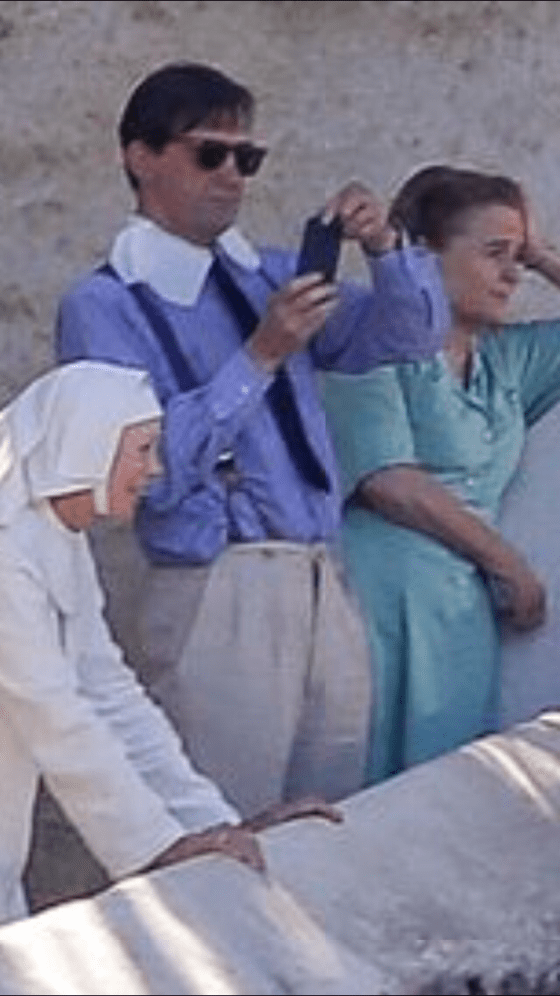
Sergeant Du Plessis is based on this tweet from location filming in South Africa:

IMG_4806


A Mission of Hope, Chapter Nine


BBN9PK

Previous Chapter

At precisely ten minutes before eight that morning, a young boy scampered up the stone steps to the Mission. He peeked in the entrance, then called out a few words in his native tongue. Without waiting for a response, he turned back to his assigned task and unwound a length of rope from a cleat on the stuccoed wall. He stayed there motionless until he heard a voice call out, then with a swift yank of the rope, he used his four-stone weight to ring the morning bell.

Almost instantly, children came running into the open yard from every direction, their voices filling the air with cheerful chatter. By the time the last bell had sounded, the children were lined up in orderly rows, smallest to tallest, and stood silently as they awaited the start of the day.

The newest student watched from the side, nerves beginning to show.  He glanced at his mother. “I’m older than all of them,” Timothy muttered.

“It does seem that way,” Patrick answered. “But you’ll be working on your own assignments, it won’t matter much anyway.”

“Yes, but Dad, we’re here for so long. I thought maybe I’d meet some people my own age. I can’t spend all my time with Angela and Nurse Crane.”  He shifted his bookbag on his thin shoulder.

An elderly man shuffled out from the dim school building. His white hair and beard stood in stark contrast to the darkness of his skin and despite his slow gait, he held himself erect.

“Good morning, children,” he called out in a deep and melodious voice.

“Good morning, Utitshala!” Twenty young voices called in return.

The teacher stood to one side of the doorway. “You may come in now.”

Obediently, the children proceeded into the little school house. As the last child entered,the old man turned to Timothy. “You must be my new charge,” the man said. “I am Philip Nkosi, but you may call me “Utitshala,” which means ‘teacher.’” He leaned in conspiratorially. “I must say I am very excited to have you here, young friend. We shall learn much from each other, I am certain.”

His easy manner seemed to relax Timothy, and the boy smiled. “I’m sure I have much more to learn from you, sir.”

Utitshala smiled, revealing strong white teeth. “You will do, Timothy Turner. And soon, you shall meet my young friend Stephen. He will come soon, and you shall have a friend.” He turned to Patrick and Shelagh and held out his hand. “Thank you for the gift of your son, Dr. and Mrs. Turner. I shall do my best to stay out of the way of his progress.”

Patrick shook his hand gratefully. “Thank you sir. We appreciate you accommodating our son during our stay.”

“We have much to learn from one another, Doctor, far beyond the academic. But there is a daughter, I was told.” He looked to Shelagh.

“Yes, Utitshala, but she is quite young. Angela will stay with Kholeka whilst I am at the hospital.”

The teacher nodded sagely. “Kholeka is a wise choice. She has raised four of her brothers and sisters already. She was quite a good student herself when she was in my school, but her family’s need was great. Well, then, Timothy Turner, shall we begin?”

“Yes, sir.”

“Then I shall follow you, as all good teachers must. Good day, Dr. Turner, Mrs. Turner.”

They watched as their son entered the building. Patrick glanced at his watch impatiently. “We’ll be late, Shelagh.”

Her clear blue eyes turned their focus to him. He was nervous, she knew. She reached her hand out to his and gripped it tightly. “Then I shall follow you.”


Despite Patrick’s fears, the team had yet to gather in the empty east wing of the hospital. Only Fred and Nurse Crane had arrived, and both had taken the time to settle in according to character. Whilst Nurse Crane stood by the crates of medical supplies taking inventory, Fred had settled himself in a cool corner, his worn pack of cards already spread out before him.

“Mornin’, Doc, Mrs. T,” he called. “Looks like we’ve got our work set out for us, don’t it?”

The room, though clean, had all the hallmarks of a long-abandoned hall. The plaster walls were yellowed with age, the institutional brown paint on the lower half chipping away like an old fresco. Natural light glowed from the large windows and doors, the brown mullions creating a patchwork of glass. Ceiling fans circulated the air.

“It certainly does, Fred. Hopefully, we can get this place sorted and then you can get started on the water supply situation. The Mission Society promised to send a hot water heater, but apparently it’s not yet arrived.” Shelagh walked along the rows of rough-hewn furniture stacked against the back wall, creating a plan as she went.

Patrick lifted the lid of an ancient Red Cross bin and peered inside in distaste. “I’m not sure even you can make something of this place, Shelagh.” He dropped the lid and brushed the rust from his hands.

Shelagh glanced back over her shoulder. “Have no fear, Doctor Turner. This place has good bones, I’m sure we’ll make it work.” She teased, “Remember what I did with you.”

Fred chortled. “I’m afraid she has ya there, Doc.”

Phyllis looked up from the clipboard in her hands. “Between what was here already and the supplies we brought along with us, it seems we have nearly enough to set up as soon as possible, Mrs. Turner.” She handed the papers to Shelagh.

Shelagh nodded and her shoulders lifted with excitement. “We’ll have this place sorted in no time.”

“Sorry, Mrs. Turner,” Trixie’s voice interrupted as she and Barbara Gilbert came through the door. “I simply had to get my “Keep Fit” exercises done this morning, and I convinced Barbara to join me. Just because we’re on a different continent is no excuse to let ourselves go.” A quick giggle took the edge off her words.

“I’m hardly letting myself go, Trixie,” Barbara muttered.

“You always thank me in the end,” came Trixie’s response. She turned about, taking in the room.

“I’m always thankful that it’s over, anyway.” Barbara dropped a bag filled with pamphlets on the nearest table.

Trixie turned about in place, taking in the room. “What a perfectly inspiring place. I can imagine Clark Gable wooing Grace Kelly in a place exactly like this.”

“I’m not certain a double feature of Mogambo and The African Queen was a good idea the week before we left, Nurse Franklin,” Phyllis Crane admonished. “We’re not likely to run into any Hollywood types here, I’m sure.”

Trixie sighed in resignation. “Yes, I suppose my dating life will be even more disappointing here than it was in Poplar. Oh, well. More energy for this!”

“I can’t imagine you not having energy for anything, Nurse Franklin,” Sister Winifred teased.

“Thank you, Sister. I must say, the two of you look so much cooler in these new linen habits. Can you imagine how frightfully uncomfortable your heavy blue habits would be right now? And it’s still morning!” Trixie continued to chatter, filling the silence.

Sister Julienne smiled enigmatically and changed the subject. “Sister Winifred and I spent some time in hospital this morning. It’s rather bereft of patients at the moment, I’m afraid.”

“That’s precisely our problem, Sister.” Dr. Fitzsimmon’s voice answered. Immediately, the focus of the room shifted. “The community is reluctant to come to us, therefore,  we must go out to them, and our resources are stretched beyond their limit. We seem to be putting out fires rather than preventing them in the first place. It’s my hope that by creating this clinic we shall bring the community to the Mission.”  

Her face remained impassive as she glanced about the room, measuring each newcomer in a look. Her eyes came to rest upon Shelagh. “Mrs. Turner, I did not realize you would be working with us as well. Though, of course, we are happy to accept any assistance.”

Shelagh felt the air leave her lungs. Conscious of several pairs of eyes upon her, her voice was composed. “Yes, Dr. Fitzsimmons, I’m looking forward to it.”

“I think you’ll find, Dr. Fitzsimmons, that Mrs. Turner is precisely the person you want setting up your clinic. We couldn’t do without her in Poplar.” Sister Julienne’s eyes met Shelagh’s for a quick moment, and for the moment, the tension that had existed between the two women for the last months disappeared.

Further discussion was interrupted by the insistent sound of a horn blaring in the front yard.

“Damn,” Myra Fitzsimmons muttered. “I’d hoped he wouldn’t descend upon us so soon.”

She turned to the team before her. “I’m afraid you are all about to see the dark side of South Africa.”

Next Chapter


A Mission of Hope, Chapter Seven


BBN9PK

Previous Chapter

To eyes used to the sights and sounds of Britain, there was nothing in Dr. Myra Fitzsimmons’ appearance to make her stand out from a crowd. Of medium height and build, she wore a simple green shirtwaister and sturdy shoes, her chin-length hair severely brushed back from her face. She could have been any woman shopping in the high street in Poplar.

Despite this, she was a handsome woman, her features sharp and strong. There was a squareness to her jaw that was offset by a pointed chin and thin nose, and bright blue eyes peered from beneath her dark brows. Deep lines carved her cheeks and forehead, arcing around her eyes and hinting at a passionate nature kept firmly in check.  The effect gave one the sense that she knew more than she let on.  

The small crowd parted to make a path and Dr. Fitzsimmons strode across the yard to greet the newcomers. She smiled, and her face warmed immediately. “I can’t thank you enough, Patrick.” She reached out her hands, grasping his while she examined his face. “My, it’s been a long time. You’re not the boy you were back in medical school.”

Patrick’s eyes widened. “I should hope not! It’s good to see you, Myra. The years have been kind to you.”

She grimaced sardonically and turned to the rest of the group. The moment of lightness disappeared from her face as she became formal once again. When she spoke, her voice was low and throaty. It pulled the listener in and commanded attention in its quietness. “I must thank you all as well. You’ve undergone a difficult journey and set aside your own lives to help us. I hope we can show you how very grateful we are.”

“Your gratitude is unnecessary, Dr. Fitzsimmons,” Sister Julienne answered. “We, all of us, are glad of the opportunity to offer assistance. Let us begin as friends and work together to strengthen your Mission.”

Patrick shifted towards the group, “Dr. Fitzsimmons, I’d like to present Sister Julienne, who runs Nonnatus House and ministers to our community in ways I never can.” He moved through the group, making introductions until he came back to his family. “And this is Timothy, our son, who will be quite happy to learn all he can from you. Feel free to make him toe the line as you did me.”

“It’s very nice to meet you, Dr. Fitzsimmons,” Timothy said.

“And you, Timothy. You look quite rather like your father, are you as bright as he is as well?”

“I hope to be, ma’am,” Timothy answered. He reached out his hand and was met with a firm handshake.

Patrick lifted his daughter up in his arms and turned to reveal the little face hiding in his shoulder. “This is Angela, whom I’m afraid keeps me very tightly wrapped around her finger. She’s a bit shy at first, but I warn you, if you’re not careful, she’ll be running your entire Mission.”

Dr. Fitzsimmons smiled politely at the child’s head. “I’m sure,” she answered. “ We have a girl ready to care for the child as soon as you like.”

“Yes, we’ll need that, thank you. And finally, I’d like to present my wife, Shelagh.”

The voice that welcomed Shelagh was cool. “Of course. I’m very grateful you could join your husband, Mrs. Turner. I hope that you will enjoy your stay here.”

Two pale pink spots appeared in Shelagh’s cheeks, and when she replied, her voice was strangely formal. “Thank you, Doctor. We’re most eager to offer assistance.”

Before Shelagh could say more, Dr. Fitzsimmons turned to the group. “That’s enough for introductions. I’m certain I shall forget most of your names–you’ll have to forgive me–but we are truly grateful you’ve come. I’ll let you get settled, and tonight at dinner we can all become better acquainted. Our staff here will join us, and you’ll be prepared to begin work tomorrow, as well.

She gestured to the young woman lingering near the bus. “Kholeka will lead you to the dormitory, and you can refresh yourselves after your trip. Jacob, please–”

Jacob appeared from nowhere at her side. “Yes, Doctor. The luggage is on its way to the rooms. But the boxes, I do not know where they should go.”

Shelagh tugged lightly on Patrick’s sleeve. “I’ll manage the children and the rooms, Patrick. You go with Dr. Fitzsimmons and see to the medical equipment. It will give you a chance to catch up.”

A small frown appeared between his brows. “Are you certain, Shelagh? There’ll be plenty of time later, perhaps you and I could take care of the supplies toget–”

“No, Patrick,” Shelagh insisted. “I’ll be fine on my own. I have Timothy, don’t forget.”

He nodded, the frown not completely leaving his face. “I’ll be back to clean up before dinner.” He touched her hand. “Thank you, Shelagh.”

She reached up and took the clinging child, then followed the rest to the long low building. The crowd had dispersed, and the two old friends stood together watching as she disappeared into their temporary home.

“She’s a pretty little thing, your wife.” Myra Fitzsimmons’ voice broke the quiet.

“Shelagh? I wouldn’t let her hear you say that if I were you.” He glanced over, a smile tugging at one side of his mouth. “I’ve seen her move a pack of dockworkers with a single command, and she’s the most skilled midwife I’ve ever worked with.”

Dr. Fitzsimmons nodded, her face showing a certain skepticism. “She’s much younger than I expected. Your son is–what–fifteen? She must have been very young when you married her.” An implication hung in the air between them.

He slipped his hands into his pockets and regarded her calmly. “Shelagh’s not my first wife, Myra. Timothy’s mother died five years ago–cancer. We were adrift, Tim and I, and then … then Shelagh and I found each other. It was her idea that we come here. She’s the force behind all this, Myra. She convinced me, the Mission Society–it was really quite tremendous. Every person on our team is here because of her efforts.”

“I am sorry, Patrick. I should never have said–I’m too used to speaking my mind before I’ve let it do the thinking. I suppose I’ve grown too used to being lord of my own little fiefdom.” Turning, she began to walk towards the main building.

“You’ll see. Humility was never a cloak I wore well. If we weren’t in such straits, you’d still be back in London.”


An hour later, Patrick entered the dormitory. He peered down the long corridor, dim even in its whiteness. The only light came from the door behind him and a single window at the end. The limed walls were covered in planks of wood, the floor finished with the same whitewash, yet the dimness made the space feel cooler. A half dozen transomed doors marched down each side.

He considered calling out, but the quiet hinted that his new housemates were resting and would not welcome his interruption. Nor did he wish to knock on each door as he made his way down the hall. He smiled crookedly as his eyes caught a bright blue scarf tied to a doorknob near the entrance. Leave it to Shelagh to choose the room that gave him best access out for emergencies.

He quietly turned the knob, half hoping to find his wife napping. He loved watching her sleep, almost as much as he loved waking her. The thought of a quiet hour resting against her appealed. Instead of lying in repose, a calm beacon to his anxious soul, Shelagh stood near the single wardrobe, unpacking.

“Always busy,” he teased. He slid his jacket from his shoulders and hung it on a hook behind the door.

Shelagh grinned. “Always much to do.”

“The children?”

“They’re in the room next door. We’ve set up a little camp cot for Angela, but I’m afraid she’ll have to move in with us, Patrick. There’s a bit too much freedom for her over there.”

“Shelagh, we’ve only just gotten our room to ourselves.”

“I know, dearest, but Kholeka tells me they have no cots her size. Apparently children here sleep on the floor.”

His eyebrow flew up.

“No, Patrick,” Shelagh scolded. “We are not making our child sleep on the wooden floor where who knows what manner of creepy crawlies wander about. Besides, what if she got the door open and wandered off somewhere?” She handed him his medical bag. “Here, put this on the desk.”

Outmaneuvered, he gave in and looked about the room. In addition to the broad wardrobe, there were few pieces of furniture in the room. A narrow chair partnered a wooden camp desk, and in the corner, a washstand served as a reminder that the plumbing facilities they could expect would be less than optimal. A large white iron bed stood out from the opposite wall, the space beneath it open and airy. A large mosquito net hung from above, offering the only softness in the room.

“Kholeka told me we would have to share this bed. They don’t have enough single beds for us all, apparently.” Shelagh finished hanging her uniform and gave it a tweak.  She closed the wardrobe and turned back to her husband.

“I think we’ll manage,” Patrick answered. He crossed the room and gathered his wife into his arms. He buried his face in her neck, and the two stood still for a long moment.

Shelagh pressed a kiss to his temple. “How is it?” she asked. “Is it what you expected?”

He pulled away and rubbed his hands over his face. “I’m not sure what I expected. The facilities are primitive, certainly. There’s electricity in the main building, but the generator is unreliable, and there’s no hot water. They have a room solely for boiling gallons of it throughout the day. The operating room would make Lister cringe. It’s surprisingly clean, though, and the ward is as efficient as any at the London.”

“Comes from Dr. Fitzsimmons’ years as a nurse, I daresay,” Shelagh teased.

A laugh escaped him. “Undoubtedly.” he grew serious again. “Myra’s the only doctor, though she has a staff of locals that handle much of the care. I’m not certain, but I think one or two of them are working as de facto doctors, simple procedures and the like. The Mission covers ten square miles, most of it without proper roads, so they’ve learned to manage as best they can.”

He exhaled sharply. “We may have bitten off more than we can chew, my love. I hope to God we don’t choke.”


Next Chapter


Thank you again for sticking with me. I am very grateful for all the lovely comments.

This pic helped to inspire the character of Dr. Myra Fitzsimmons for me.

2016-04-09 21.22.53


A Mission of Hope, Chapter Six

BBN9PK

Previous Chapter

The road to Hope Mission was a relic from the days of British colonialism, a wide byway meant for wagons pulling crops and lumber to the frontier outpost of Alice. Years of neglect had left it barely driveable in parts.  The twelve miles to the mission were not kind to any vehicle, and the Mission’s dusty maroon and tan bus did not make the journey gracefully.

“I never thought I’d miss the top of a double-decker barrelling down the commercial road,” Trixie complained. She gripped the seat in front of her fiercely, trying to keep from tumbling to the floor.  

“Think of it like this, Trixie,” Barbara advised. “It’s better than that old bus Tom uses for church trips!”

The two exchanged grins, ignoring the cry of protest from the vicar. The alliance between the two nurses had strengthened since the autumn, to the point where poor Tom sometimes felt like he was the third wheel.

“You two young ladies are very ungrateful,” Fred wagged a finger from his seat across the aisle. “That ol’ omnibus has a history!”

“Yes, Fred. It’s Pre-Historic!” Trixie quipped.

The bus lurched in the road and sent up a cloud of dust behind it. “Better than an English rollercoaster,” the driver called out with a cheerful laugh. Small and wiry, Jacob Arends drove with more enthusiasm than skill, but his wide grin and friendly manner had done more to settle nerves as the team completed the final leg of their journey than all the polished manners of the Mission Society escorts.

“Soon we will be at our Mission,” he assured them over his shoulder. “We are most excited to have you stay.”

“I would be most excited if he didn’t drive us into a ditch,” Patrick muttered as he swayed with the bus’s motion.

Shelagh’s lips pressed together and she smoothed Angela’s hair. The poor little girl was near the end of her tether with all the travel. “Almost there, darling, and then we’ll let you have a nice run ‘round. Patrick, you’re just nervous. Dr. Fitzsimmons wrote to you for a reason, dearest, you’re sure to help.”

“Some boxes of supplies and a few weeks service. What do I know about bush medicine? I’m a place-filler until the Mission Society can get a trained mission doctor here, that’s all.” His crossed arms and pursed lips gave him a petulant look.

“Patrick,” Shelagh soothed. Sometimes her husband was his own worst enemy. He needed to be busy, and the forced idleness of these days of travel had left him to worry more than she liked. “You’re more than trained for this. Certainly we’ll have challenges, but it’s not just your medical skills that will be of help here, dearest. You want to help people; you want to make their lives better. Dr. Fitzsimmons couldn’t have made a better choice when she sent you that letter.”

He glanced down at her bright blue eyes, full of encouragement and a reluctant grin tugged at the side of his mouth. “What would I do without you, Shelagh?”

“For one thing, you’d eat yourself sick. You certainly made a feast of the bobotie at the hotel last night!” Shelagh teased. Patrick was not the most adventurous of eaters, but their first official meal in South Africa had been a success.

His eyes lit up. “I only ate two servings last night! It’s not my fault is was so much like your shepherd’s pie.”

“Flatterer, you had three servings, and you finished Angela’s, too.”

“I was simply making sure she didn’t let the sultanas go to waste.”

And the mince, and the crust, too, I’m certain.” A dimple peeked out from Shelagh’s suppressed grin.

Leaning in conspiratorially, Patrick whispered loudly, “Angela, I think Mummy’s asking for a kiss.”

“Dad,” groaned the boy seated behind them. “Please don’t embarrass me at the Mission with that mushy stuff. It’s bad enough I have to see it at home.”

Shelagh giggled. “I’m sure I don’t know what you’re talking about, Timothy dear.”

Timothy rolled his eyes, then sat forward. “Mr. Arends said the next time he goes into Alice, he can take me to look at the University there. It’s the only library in the whole region.”

“We’ll see, Tim,” Patrick answered. “Let’s get settled at the Mission before we make any plans. We’re here for a purpose, not a sightseeing trip.”

Jacob Arends had other ideas, it seemed, and he slowed the bus to point out features along the way.  As they drove farther from Alice, the terrain began to change. The lonely thorn trees of the veld gave way to low bushes and tufts of pale grasses that swayed in the breeze, creating hiding places for the grazing animals as they took rest from the heat. Miles ahead, the green deepened, making a gradual climb up an imposing forested ridge.

“Up ahead, you see the mountain? That is Hogsback, most beautiful mountain God made. It is three, maybe four miles from our village, and the most lovely green mountain. The rivers there, they make waterfalls and a lake so deep there is no bottom.”

The bus rumbled through a dense copse of trees, upsetting a flock of bright birds. “There!” called out Tom Hereward. “In the tree–monkeys!”

“Those are vervets, Mr. Vicar. They pose no danger to you, but they will steal the food from your hand if you are not careful,” the driver advised.

“It’ll be just like have Sister Monica Joan with us,” laughed Trixie.

“Mr. Arends, what are those funny round buildings? We’ve seen them from the train, but could not place them,” piped in Sister Winifred.  A cluster of round buildings, bright with a white stucco and thatched roofs  sat upon a swell in the plain.

“Those are rondavels. They are Xhosa homes,” his voice clicked on the name.

“But why are they round?” Sister Winifred asked. “It seems a funny sort of shape for a building.”

“Why would they not be round? A square house, it has too many corners for snakes to hide.”

A low groan came from the back of the bus. A self-appointed quartermaster, Fred kept watch over the fragile boxes of medical equipment. “Snakes? ” his voice was high. “I hate snakes!”

Jacob Arends shook his head sagely as he looked back in the rearview mirror. “Then I am very sorry for you, my new friend.”

Another turn and the road moved north from the river. The bus groaned, demanding its rest, and lumbered another hundred yards before it passed under an old iron gate. Blaring the horn, Jacob read the sign aloud, “Welcome to Hope Mission!”

A collection of one-storey buildings, the mission nestled in a large clearing guarded by two gnarled olive trees. The stucco of its white stone walls gleamed brightly in the sun, topped by a steeply sloped tin roof, and was bookended by two symmetrical additions. Tall casement windows segmented the facade, high off the ground. A set of stone steps led up to a low belfry, welcoming visitors.

To the left of the main building, a long dormitory stretched to the back of the clearing, a row of windows chasing down its length.  On the other side of the main building stood several smaller, squat buildings, each with a clear purpose. Located closest to the well-pump, these buildings housed the kitchens, a laundry, and a generator room.

Eleven sets of anxious eyes peered out the bus windows. Six weeks of preparation suddenly did not seem like such a long time.  “It’s square,” gulped Sister Winifred.

Taking a deep breath, Patrick stood and approached the front of the bus.  “Thank you, Mr. Arendt. You’ve been most kind.” He turned to the team before him. “I want to thank you all, as well. I couldn’t possibly here manage without you.”

“We are all behind you, Doctor Turner,” Sister Julienne assured him. “If I might say a small prayer?”

He nodded. “Of course, Sister.”

Sister Julienne stood at her place and began, “Oh. Lord, guide us as we strive to carry out your work. Help us to bring healing and mercy to those in need, and give us the wisdom to learn more than we can teach. Amen.”

Jacob hopped down the bus steps and called out to the people that had begun to gather outside the bus, his voice clicking with sounds still strange to those used to the pattern of English, and a young boy ran to ring the mission bell.

One by one, the weary team stepped down from the bus into the bright sunlight, nervous smiles answering the dark cheerful faces before them.

Jacob turned his attention back to the group. “I am told Dr. Fitzsimmons is in the ward, she will be here quite soon, doctor,” Jacob announced. “Please, you must all follow me.” He stepped toward the main building, but before he could lead the group in, a woman rushed down the front steps.

“Patrick Turner!” she called. “I knew you were the man to count on!”

Next Chapter


A/N: The image I’ve used to base my Mission is that of a missionary school for Bantus near Middelburg, Transvaal, taken in September of 1964. You can find it here.

Xhosa (pronounced Kosa in English) in a South African language that features clicks as part of its phonetics. This video will give you an idea of how the sounds are made. Careful, though. If you’re anything like me, you’ll find yourself practicing for hours!


A Mission of Hope, Chapter Five

BBN9PKA/N:  I’ve tried to be as accurate as possible with this chapter in order to explain some of the questions I have about how a team of nuns and medics from the poorest part of London could get to South Africa. (Hint: it involves a great deal of suspension of disbelief, a generous benefactor, two planes, a train and a bus, and two nights in hotels–What? you don’t think that’s realistic?? It’s AU, baby!!).

Also, I’ve introduced apartheid and Homelands in this chapter and have tried to do so in a correct historical context of early 1962. Any errors are innocently meant. There are links below that will offer clarity.

One last thing. Did you know that a group of giraffes has two different collective nouns? A group of standing giraffes is called a “tower,” while a group of running giraffes is called a “jenny.”

Sometimes I really love English.

Previous Chapter


A battered train chugged through the pale yellow bushveld, lacking any of the urgency and determination of its European brethren. Miles distant, the blue shadows of the Great Escarpment jutted out from the veld, sequestering the Eastern Cape from the world. The sky glowed with a bright blue never seen in London, an enormous dome that refused admittance to any clouds.

It was as if God had used an entirely different palette of colors when He created this part of the world. Yellow and blue shimmered here in a way never seen on the sunniest day in England, challenging the eye to see more than it could. Green was deeper, darker and more mysterious than the pale greens of the English oak.  Even the greys were different from London greys.  

Within the first class carriage, Shelagh watched the scenery pass unchanged for miles. The pale gold of the mid-summer grasses was dotted with clumps of bushes and the occasional sinewy tree. The heat of the midday sun forced animals into shady spots, unseen from the train. In all, the effect was hypnotizing.

Shelagh shook herself from her quiet and stretched lightly. In the bench across from her, Angela lay curled up on Patrick’s lap, the two lulled to sleep by the gentle motion of the train. Shelagh smiled as she watched them breathe in tandem, Angela gently sucking her thumb as her father snored.

Not all of the passengers slept in the compartment. Sisters Julienne and Winifred both read from their Bibles. A catch-as-catch-can sort of schedule had been adopted for their daily offices, but both nuns were used to irregular schedules. Fred sat at an end of the car, a game of Solitaire spread out on the seat next to him. Trixie and Barbara sat across from Tom Hereward, a curious sort of trio. Timothy and Phyllis Crane sat in the first row of seats, eyes out the window as they catalogued everything they could see.

Shelagh rose and began to pace along the length of the car.  No other passengers had joined them in this car since they had left the port city of East London, despite the activity at each stop. She paused for a moment to observe Fred’s game, then tapped a card. He glanced up, then sheepishly shifted a stack. A moment with the sisters, another quiet conversation with the nurses, and she took a seat with her son.

“It’s hard to believe we were having tea in Nonnatus house only three days ago,” remarked Nurse Crane over the sound of the engine.

“It would have been much longer if we didn’t have the Missionary Society escorting us everywhere,” Timothy replied. Indeed, John Taylor had pulled enough strings to make the team from Poplar feel more like dignitaries than a travelling medical team. Missionary agents met the party each step of the way, paving over the arduous task of international travel.  Acclimating new missionaries was a top priority of the Christian Missionary Society. There were struggles enough ahead that could cause attrition, getting the help to Africa was the very least that could be done.

Connecting flights had been arranged between Heathrow, Nairobi and East London, South Africa, effectively  minimizing delays.  At each stop along the way, a different Society representative greeted them and handled arrangements for nightly accommodations, as evening travel was unreliable. After an early flight to East London, they were escorted to a small hotel near the sea for the night. Worn out from the travel, they were grateful for a day of rest before boarding a train to Alice, situated twelve miles south of the Hope Mission.

Shelagh stretched her back and looked at the stack of books between her son and the no-nonsense nurse. Over the past weeks, Timothy and Phyllis Crane had formed an unexpected bond. While the others spent the last month of preparation in accumulating and packing supplies for the mission, they gathered every book, travel brochure and periodical they could, resulting in a collection of knowledge fit for the British High Commission in Pretoria.  Timothy focussed on the flora and fauna of the region. Phyllis Crane was an expert in the unusual laws of the South African people.

“Though I suppose we’ll be spending most of our time in Ciskei, what they call a ‘homeland,’ and not ‘South Africa,’ to be precise,” Phyllis had informed the group at one of the gatherings before the departure. There was so much to organize in such a short time that semi-weekly meetings had been deemed necessary. Nonnatus House became a sort of home base for these meetings and  a temporary center for the donations and medical supplies they would bring to Africa.

Patrick had looked up from the large box of medical syringes on the dining room table. “What do you mean, not ‘South Africa’?”

“Just, that, doctor. Officially, we are not going to be working in South Africa. Last year, the government of South Africa created specific areas within the nation with the express purpose of settling blacks within those borders. They’re technically independent.” She walked over to the map she had requisitioned from the Mission Society. “Hope Mission is located here,” using her pen she pointed to a small area of the canvas. A rough outline had been marked in ink on the outdated map. “Just within the eastern border of Ciskei.”

“The government forced people to leave their homes and settle somewhere else?” Trixie’s voice showed her outrage.

“Yes.” Phyllis capped her pen and faced the group.

“But why would they move people in the first place?” Patrick abandoned the syringes. “Why would they go to the effort of moving such a large number of people from their homes? It doesn’t make sense.”

Phyllis sighed, and folded her glasses back up, slipping them into her uniform pocket. “It seems the official stance on the subject is to grant a sort of autonomy for the Blacks. The argument is that by keeping language groups together, with similar traditions, they will be able to govern themselves.  However, from what I can determine, there’s a much darker reason, I’m afraid.”

“How do you mean?” Patrick questioned. By now, the attention of everyone in the room had shifted to Phyllis.

“South Africa has a rather difficult history, as you know. The apartheid system,” she glanced around the room and saw the nods of understanding–everyone had done their homework it seemed— “has been in effect in fact if not official doctrine for a very long time. From what I can gather, the resettlement has more to do with sequestering the Blacks away from the Whites than granting independence. Technically, these four regions are independent, and not the responsibility of the South African government. By pretending these regions are no longer part of the official nation, the government can justify eliminating the few remaining political rights Blacks have within South Africa. Not to mention, if they can claim the homelands are not South African territory, the government has no reason to financially support the regions whatsoever.”

“That would explain why Dr. Fitzsimmons sent out the call for help,” mused Patrick. “A growing population and diminishing resources. We’re all too familiar with that set of problems.”

Phyllis looked about the room once more. “Doctor Turner is correct, I’m afraid. The problems of the Hope Mission are likely to be similar to problems we have encountered in Poplar, but I’m afraid that the scale will be on a level none of us have ever seen.”

Less than a day after their arrival in South Africa, the rightness of Nurse Crane’s words was becoming apparent. Signs hung above doors to businesses, hotels and even train carriages directing people along racial lines. Their train compartment was empty but for their party, as few whites were travelling, but the three cars in the rear were near overflowing. And while the medical team from Poplar enjoyed comfortable cushions and a clean car, the cars set aside for the Non-Whites were crowded and uncomfortable. Segregated by the invisible fence of custom and law, the tension here was certainly greater than back home.

Timothy glanced back at his sleeping father and sister. “Dad’s snoring.” he mocked. “He always snores when he sleeps sitting up. I don’t know how Angela can always nap on his lap with that noise.”

Shelagh grimaced. “Timothy, be nice. Your father works very hard. And I think your sister is delighted to spend time with him any way she can.” She poked his shoulder and teased, “Just for that, Mr. Always, you’re on Angela duty when she wakes.”

“I’d mind your mother, Timothy,” Phyllis nudged. “I recall you were none to happy to be following your sister up and down the aisle on that aeroplane to Nairobi. My, that girl does have energy!”

Shelagh stood. “I’d better get back in case she does wake. Timothy, I have the last few biscuits if you’re hungry.”

“I’m always hungry,” he quipped.

The scenery outside her window had not varied since her walk, so Shelagh turned her attention to the sleeping pair before her. Angela’s skin was already pink from her afternoon at the ocean yesterday. Hopefully, she would be more willing to keep her dress on when there were no ocean waves to tempt her. One day in the surf and sand had convinced the little girl she should be a mermaid, and they were still finding contraband seashells in her pockets.

Patrick’s face had some color too, and in his sleep, the stress of the last months eased. The new  lightweight linen clothes suited him, his lean figure cool and elegant in the pale tan material. Of all the tasks she had completed in preparation for the journey, shopping for a warm weather wardrobe for her family had been her favorite. Shelagh sighed lightly, and her eyes traveled back up to her husband’s face.

His eyes were open, bright with a gleam meant for her alone. The slow smirk that crossed his face showed her he knew exactly what she was thinking, and he winked. In an instant, Shelagh’s dimple appeared and she shook her head at him coyly. She glanced about the carriage nervously, then seemed to make a decision. Her eyes on his, she slowly stretched across the space dividing them and skimmed his shin with her foot.

His eyes widened in surprise as he considered a response, but a snuffle from Angela broke the mood. “I’ll remember that later, my love” Patrick whispered.

“Angela,” Tim cried from his bench at the front of the car.

“Timothy,” Shelagh shushed him. She turned to see the members of their group standing to look out the train windows on one side of the carriage. “What on earth?”

“Giraffes! Wake Angela! She’ll want to see them!” Tim called over his shoulder.

Patrick carried his slowly rousing daughter to the wide window across the train. In the distance, marula trees bowed over the bush, their wide crowns of leaves creating pools of shade on the sun-baked land.

“Look, Angela! What do you see?” Like the others, Patrick’s voice was child-like with excitement.

“Raffe!” the little girl shouted. “Raffe!” She began to look about her frantically.

“Here you go, darling,” Shelagh cooed, holding out a small wooden giraffe in her palm.

Angela clutched the figurine in her chubby hand and gave it a noisy kiss. “Raffe, Dada. See?” She pointed her hand at the tower of giraffes lazily nibbling on the bulbous fruit hanging from the branches. Patrick lowered her to stand on the seat next to her brother. “Raffes eating!” Her happy squeal was infectious.

“Yes, Angel girl, the giraffes are eating. And do you know who knows more about giraffes than anyone on this train, sweetheart?” Patrick’s eyes widened in encouragement.

“Timofee!” Angela cheered. None but Timothy would do, now, and the boy pretended a groan.

Fred hunkered down on the next bench and adjusted the window to keep the excited two-year old within the train. “Well, little miss, I gotta tell ya. This sure ain’t Poplar.”


Next Chapter

Here are some links to sites that may make this all make a bit more sense:

Photo: The Great Escarpment and the Bushveld

Map: South Africa

East London beach

South African Homelands


A Mission of Hope, Chapter Four

BBN9PK

A/N: Four chapters in and no one’s as much as packed a bag. This might take a while.

Previous Chapter


The last Sunday of Advent marked a change in Nonnatus House every year, a shift from contemplation to anticipation. For the faithful, the celebration of the birth of Christ served to renew the spirit. For the others, the sense of tradition and custom helped to ease the stress and pain of life and gave the energy to push forward. After a particularly difficult autumn, the community of Nonnatus needed a new beginning more than ever.

To that end, a gathering had been called after Church services to present the planned mission. In quiet words, Patrick, Shelagh and Sister Julienne put forth the details and goals to a surprised room. By the time they were finished, the faraway world of the Eastern Cape of South Africa had replaced any thoughts of tree trimming and holiday baking. 

“I would like to thank you all for your attention,” Sister Julienne’s restrained voice cloaked the room in calm. “The Order has committed to sending two nuns along with Dr. and Mrs. Turner, and Mr. Hereward has agreed to go to serve as a liaison with the local church authorities. Beyond that, everyone is free to decide for themselves.”

“Thank you, Sister,” Patrick joined. He spread his arms out, his hands wide open. “We realize this is unexpected, that we’re asking for something quite extraordinary. But we are certain that if any group can help Hope Mission survive, it is this one.”

Twelve people sat around the long table of the Nonnatus dining room considering the proposition before them. A six-week long mission to the South African bush was hardly what anyone expected when this meeting was called. Indeed, until an hour ago, the only thing on most minds was the enormous Christmas tree in the sitting room.

“Doctor, may I ask a question,” Nurse Phyllis Crane’s voice broke the silence.

“Of course.”

Phyllis looked around the table, then turned her focus back on Patrick. “This all seems very much a rush job. Even if we were to bring in reinforcements for the community which we now serve, how could we possibly be expected to complete preparations in such a short time?”

Shelagh stood. “Nurse Crane, the Mission Society would make our efforts a priority. They are prepared to meet all of our needs, be it one nurse or ten.” 

Phyllis leaned forward, her chin against her fist. “This does require some thought.”

“Yes, of course,” Shelagh responded. She glanced around the table.  “However, and I do see the difficulty here, we will need a decision from you as soon as possible if we are to assemble the team from other sources. There will, of course, be no expectation that any of you participates. We simply felt that the project should be presented to you before anyone else.”

Phyllis nodded, then continued. “Mrs. Turner, I don’t mean to be intrusive, but is it practical to consider bringing children on such a mission?”

Shelagh’s lips pressed together and Patrick’s hand reached for hers in support. She turned squarely to Nurse Crane and answered, “The Mission assures us that the children will be perfectly safe the entire time. Timothy may continue his studies whilst there, and a local woman will be found to assist in Angela’s care.” She met Phyllis’ eyes determinedly. “As to whether or not it’s practical, no, it probably isn’t the most practical decision we’ve ever made. However, Dr. Turner and I feel there’s much for Timothy to gain from this experience… and I couldn’t bear to leave Angela behind, even for only six weeks.”

Phyllis nodded in understanding. “Of course.” She crossed her arms on the table and leaned forward. “Alright then, I suppose I’ll have to start learning Afrikaans now. Or perhaps Xhosa! I’ve heard the clicking sounds are remarkably difficult to reproduce for the European tongue!” She looked around the table, her face eager for the adventure.

“Hear, hear, Nurse Crane,” came Tom Hereward’s voice from the far end of the table. He studiously avoided Barbara Gilbert’s eyes.

“I can go, if the Mother House would like me to,” volunteered Sister Mary Cynthia.

“As can I,” added Sister Winifred.

Sister Julienne nodded in their direction. “Thank you both. I think it best if we sit together and decide amongst ourselves who should join the mission. There is also Sister Monica Joan to consider. We must not make the change too difficult for our sister. She has taken…” she paused to take a deep breath, “She has taken Sister Evangelina’s death very hard and will require extra care.”

“Well, I don’t need to think about it,” Trixie’s voice came forcefully through the room. “I’ve always wanted to travel beyond France. This doesn’t sound like The Grand Tour, but I’d love to see Africa.” she looked at Sister Julienne. “Sister, if you’re quite certain things will be managed without us, I would very much like to go.”

The nun nodded. “Of course, but you might want to consider for a day or so?’

“No,” Trixie smiled bravely. “I’m definitely on board. Who knows? This could be exactly the change I’ve wanted.”

Patsy looked around the table. “I’m afraid I’m out. I can’t speak for Delia, of course, but we’ve already booked our trip to Paris this spring. I’m not sure we could–” She met Delia’s eyes across the table, and a moment of agreement passed between them.

“Of course not,” Shelagh answered. “We’re not looking for sacrifices from any of you. We hope that anyone who joins us will do so happily. Things will be difficult enough without anyone feeling uncomfortable with their decision.”

“Then you can be sure to count on us to hold down the fort here, Shelagh.” Patsy’s confident smile was meant to reassure, and it did.

“Mrs. T, I’m not so sure why I’m here? There’s not much I can do on the medical front, and no one’s ever asked me to serve in the manner of a religious.” Fred sat perched on a stool at the end of the table.

Shelagh and Patrick exchanged glances. “Fred, we were hoping you might consider coming along to provide some of your…special skills,” Patrick told him.  “From what we’ve been told, there’s more than a bit of corruption in the local government, and we’ll need someone who can act as a scrounger.”

“Plus,” Shelagh added, a sly smile lighting her face, “there’s none better to play the Pied Piper when it comes time to dig the new wells. You could be a big help to us, Fred, but I know you may not want to leave Violet. There’ll be no hard feelings if you decide to stay home.”

He nodded. “I’ll have to give it a good think. Plus, the Mrs. won’t be none too happy if I don’t discuss it wif her first.”

“I suppose that leaves just me, then,” Barbara Gilbert’s voice piped up. Eleven pairs of eyes turned to her, and color came to her cheeks. “I’m not certain that my parents would approve of me going. They were unhappy enough when I told them I was coming to London if I’m honest.” She looked about the room smiled her most “grown-up” smile. “Well hopefully that’s worn them down a bit. I’d hate for them to be disappointed when I tell them I’m going to Africa.”

Shelagh squeezed Patrick’s hand, her lips pressed together to hold back her excitement. “Well done. We couldn’t have asked for more support. Thank you all so very much!” Unable to contain her joy, her smile burst forth and filled the room with brightness.


Next Chapter


Walking Together

Timothy Turner’s face was set, all his will concentrated on the new crutches under his arms. The weight of the calipers on his legs both stabilized him and shifted his balance. A few days of physical therapy wearing the metal and leather contraptions, and Tim was ready to take to his feet. Step by step, he paced the length of the polio ward, determined to master this important move toward recovery.

“That’s it, Tim, well done,” his father’s voice cheered him on. “Just wait until Shelagh sees you!”

Timothy grinned widely as he clumsily did an about-face. “Well, I’m certainly not going to win any dance competitions, that’s for certain. I must look an absolute oaf thumping around on these things.” His happy face took the edge from the self-deprecating words, however.

Patrick grinned back and reached around to re-adjust the left crutch. “She’ll think you look like Gene Kelly, more likely. Now, don’t let the crutch slip too far forward. It’ll put too much pressure to the front and could put you off balance. Try again.” He stood back and watched proudly. “That’s it,” he repeated. “Just like that.”

A memory flashed by, his son just past his first birthday, wearing that same look of determination on his face. Margaret’s hands held his chubby little fists as the tot wobbled on his short little legs. Without baby Timothy  knowing it, his mother slowly released her son’s hands and clasped her own together, holding her breath.

The toddler took one slow step, and a second, then found his momentum and charged towards his father. He crossed the six feet separating them, then threw himself at his father’s legs.

“Well done, son!” Patrick cheered and swung his boy up into his arms.

Margaret crossed to join them, reaching one arm around her husband as the other hand squeezed her son’s foot. “We’ve been practicing with me holding on all day, but he wasn’t interested in going on his own at all until he saw you come in!”

Patrick turned his head and kissed her. “He wanted to have us all together, that’s all.” He hugged the boy a bit tighter but was met with resistance.

“Oh, no,” Patrick joked. “Just look at that stubborn face.” Timothy began to push away, eager to try his legs again. “I’m afraid young Master Turner is off to the races!”

The thumping of the crutches on the hospital linoleum floor brought Patrick back to the present. Timothy had already improved in the few passes across the room, and Patrick laughed quietly. “I was just remembering your first steps. We were so proud of you, toddling across the flat. You didn’t walk for long, though. Almost immediately, you were running circles around the flat. Your mother swore you were going to wear a path in the floor, make your own track oval between the kitchen and the sitting room!” His finger traced circles in the air.

Timothy chuckled. “I remember she used to call me “Thumper,” because of the noise my feet made as I ran through the flat.”

“It was Mrs. Wilkins from next door that started that, I’m afraid,” Patrick reminded him with a grimace.

“Right. Mrs. Wilkins didn’t like children, did she?” Already comfortable with the crutches, Timothy rested his weight on them and let his body hang.

“That’ll hurt if you do it much,” his father pointed out. “But no, I think she preferred her neighbors to be a bit quieter than you. I’m sure she was thrilled when her husband moved them nearer his new job out by the rock quarry.”

Timothy shifted his body up again. “You don’t have to keep going, Tim. You don’t want to tire yourself out.”

“I’m not tired, I’ll be fine.”

“You always say that and then you never are…” Patrick teased.

“Just one more time. I want to be able to really surprise Shelagh when she comes this afternoon.”

As he finished the last pass, Timothy collapsed on his bed. “Well, that’s got me knackered. I’d better rest a bit before Shelagh comes or I won’t be able to show off.”

Patrick helped his son lift his legs up on the bed, then sat on his regular chair next to the bed. “She’ll be thrilled, Tim. Really.”

Timothy reached for the model plane on his bedside table, fiddling with the wing. “Dad, how long will I be on the crutches?”

Patrick considered. “Dr. Carson thinks your arms and back are extremely strong, so maybe a month or two, perhaps.”

“But if I work very hard?” Tim still would not meet his father’s eye.

“Tim, what’s wrong? I thought you were happy to be up and about.”

“I am, of course. If I had to sit any longer I think I was going to go mad! I just… Dr. Carson said back after Christmas that I could go home when I was used to the calipers.” His voice grew quiet.

Nodding. Patrick answered. “Soon, Tim. Probably just a few more weeks, then you’ll be home for good. Is that what you want to know?”

Timothy looked up, his face beaming. “A few weeks! That’s brilliant. I can definitely last a few weeks!” He sat up, eager again, and Patrick smiled widely.

“It will be good to have you home again, son.”

“And…” Tim hinted.

Patrick’s brow wrinkled in confusion. “And?”

Timothy rolled his eyes. “Dad, you said after I came home…Ugh. You have no sense of romance, Dad. Do I have to all the work?”

“Oh, Lord, Tim. That’s right. I was so caught up in your recovery I nearly forgot!”  He started to laugh. “Do you reckon she’ll say ‘Yes’ again this time?”

Timothy smiled his wise little smile. “Don’t worry, Dad. I have a plan.”


An hour later, Shelagh entered the ward, her arm filled with a stack of new comic books for Timothy and the others. She was quite proud that in addition to Eagle and Valiant, she had unearthed a copy of an old American superhero magazine. That was sure to keep the children happy for a little while, certainly.

Timothy’s bed stood empty, it’s bedding smooth. “Where on earth?” she wondered aloud. Turning to the boy in the next bed, she asked, “Harry, do you know where Timothy’s got to? I was supposed to meet him and Dr. Turner here tonight.”

Harry tried unsuccessfully to hide a grin. “Not sure, Miss Mannion. Try the hallway outside the nurse’s office, maybe?”

Sighing in her confusion, Shelagh shrugged out of her coat and left her new hat neatly on top. Smoothing her skirt, she set off around the corner.

Patrick stood in the middle of the hallway, a serious smile on his face. “Hello, Shelagh,” he said.

Sensing an undercurrent to his greeting, she answered. “Hello, Patrick.” Why was it becoming hard to breath?

“We have something to show you, my love.” Patrick shifted to one side, revealing Timothy, standing proudly, supported by his calipers and crutches.

Slowly, but with confidence, Timothy and Patrick walked the length of the hall towards her.

“Oh,” she whispered. Emotions crossed her face, confusion and surprise melting into delight, then ripening into tearful joy. As they came to stand before her, her two most beloved of all people, she laughed happily and clasped her hands together.

Words would not come, so Patrick helped her. “We said we’d wait until Timothy was better, Shelagh.”

Timothy chimed in. “I’ll be home in just a few weeks. And if I work very hard, I may even be able to leave the crutches here, too. With my calipers on, I’ll be able to walk in the church all by myself.”

Shelagh’s eyes flew from Patrick’s face to Timothy’s and back again. “Marry me, Shelagh.” Patrick proposed. “In one month’s time. Let’s not wait any longer.”

“Please, Shelagh? Please will you marry my Dad?”


Sixty Minute Challenge: Prompt Three, Barbara’s Bucket Brigade

“I’m afraid it happens quite frequently, Nurse Gilbert. I can assure you, you will learn a great deal, and it is always good experience to spend time on Casualty.”

“They’ll eat her for breakfast,” muttered Sister Evangelina under her breath.

Deliberately ignoring the grumpy nun, Barbara Gilbert took a deep breath and shrugged her shoulders. It couldn’t be so bad, she told herself. Nurses like to help people, right? Cheerfully she smiled and rose from the table.

“Well, I’d best get on my bike if I’m to get a bright start, then. Wish me luck!”


Three days later, the young nurse knew she needed more than luck to survive the rest of the week. Casualty was not only frenetic and intense, it seemed to be staffed by nurses so fierce they made Nurse Crane look like a tabby cat.

“Gilbert,” ordered Matron. “The bandages are not stocked properly. I certainly hope you don’t think I’ve decided to arbitrarily create rules for you to flout them. Bandages must be stored precisely in this manner for a very good reason. Restack them and be back here in ten minutes.”

Barbara nodded, trying to hide the tears she wanted to shed. Half way through the week and she wanted to cry every day. The strict rules, demanding situations and sometimes unreasonable medical personnel did little for her self esteem. Closing the storage room door behind her, she let a few tears flow as she methodically stacked bandage upon bandage.

“Come on, Barbara,” she told herself. “You can do this. It’s really not so much different from home. All those children running about. You must simply keep your head clear and don’t let anyone rattle you. You can do this. Besides, after this, you’ll never be afraid of Nurse Crane again!”

The bandages done, she slipped back down to the admittance desk. A crowd of people filled the room, and she could hear matron shout,

“Form a queue! I cannot help you if you do not manage yourselves properly!” Catching sight of Barbara, Matron handed her a clipboard. “You. Take names, reason for being here. And clear out anyone who should not be here in the first place!”

Nervously, Barbara marched over to the group filling the room. Her attention focussed, she noticed that the large group of men that filled the room were wearing rugby uniforms. Several were covered in mud, and all were shouting loudly.

“They’re just large boys, Barbara,” she assured herself. Remembering the tip her mother told her when handling boys, she searched the room for the leader of the group. “Excuse me,” she interrupted as politely as she could, “I’m hoping you can help me.”

The rugby player turned to her and she was alarmed by his size. Well over six feet, and clearly more than fifteen stone, he towered over her. “Me friend’s hurt, Nurse. He needs to see a doctor, fast-like.”

“Yes. That’s what I’m here for,” she told him. Pretend you know what you’re doing Barbara, her inner voice whispered. “If you could help me to get the room under control, then I can help your friend.” She smiled, hoping the expression made it to her eyes.

Understanding crossed the big man’s face. “Right.” He turned to his mates and bellowed, “Bob, Mack, you stay. Everyone else, out!”

Within in moments, the room was cleared. Barbara turned to the Rugby leader and said, “Well done! You must be the captain!”

The big man blushed. “Yes, Nurse. You need a firm ‘and wif blokes like these! What can we do to help me friend Bob, here. It looks like he may’ve broken ‘is leg.”

Peering closely, Barbara confirmed his suspicion. “Don’t you worry, Bob. We’ll have you in to see the doctor quick as a wink.”

She glanced up quickly and shyly met the eye of the captain. “Thank you very much for your help-”

“Albert, Albert Smalls. We’ll just stay here wif Bob, if you don’t mind.”

Barbara nodded. “Of course. He’s lucky to have friends like you to help.”


For the rest of her shift, Barbara kept the interaction with the rugby player in her mind. If she could handle a large group of rugby players in line, then surely the rest of the week wouldn’t be so bad? She simply had to find the original solution to any problem Matron presented.

Unfortunately, originality did not impress the medical staff, and for the rest of the day, Barbara shuttled patients to and fro, collected samples and put on a brave face as her self-esteem dwindled. Nearing the end of her shift, matron assigned her to the desk to file the charts that had overflowed all day.

“I’ll be back in quarter of an hour, Mr. Swift requires my advice on a matter of surgical organization. If any unusual situations arise, do nothing. Wait for more trained personnel to arrive.”

Watching the gruff old nurse walk away, Barbara sighed heavily. “I’m not a child. I am a trained nurse. It would be nice to be treated like an adult sometimes.”

Files sorted themselves quickly, and soon she had little to do. The madness of the early afternoon had dwindled down and the only people waiting to see a doctor were a man with a sprained wrist and a lady with a rather shallow cut to her chin. “I suppose it bled rather a lot,” Barbara muttered.

Her attention was captured by a drop of water from above. When it was followed by another, and then another, Barabara began to search for its source. Walking around the room, she peered at the ceiling. A memory of a burst pipe in her father’s vicarage popped in her mind, and she suddenly realized what was about to happen.

Trying to keep calm, she called, “Excuse me, please follow me. Quickly.”

The two remaining patients looked at each other, shrugged and made to follow. Guiding them up the stairs to the desk beyond the waiting area, she reached for the telephone.

“Excuse me, Nurse,” cried Matron, “just what do you think you’re doing?”

“The number for the janitor’s office, please?” she asked as calmly as she could.

“Put that phone down right this minute. You’ll be reprimanded for this!”
“The caretaker’s office? It’s an emergency!”
“What emergency?”

Suddenly, the ceiling in the waiting room cracked open and water gushed down.

Stunned, the staff stared at the gallons of water filling the room.

“The number, please?” Barbara demanded.

Finally understanding, Matron called out the number and the connection was made.

Five interminable minute later, the water was shut down. The medical staff turned their attention to the patients, and tried to restore some order to the care.


Barbara stood at the top of the stairs looking down at the caretaker. The waiting area was flooded, nearly two feet deep in water.

“This’ll take forever to clean up,” poor Mr. Unger said.

Thinking for a moment, Barbara said, “Mr. Unger, get every bucket and pail you have down here. We’re going to empty this place out quick as a wink!”

The caretaker was doubtful. “I suppose I’ll need’em anyway.” He lumbered down the hall to the storage cupboard.

This is my chance, Barbara thought. Time to put my plan into action.
“Albert?” she called. “Albert Smalls?” The curtain at one bed in the far corner opened, and out came the rugby captain.

“Yes, Nurse?”

Barbara shook her head confidently. “Mr. Smalls, we need your help. Are your rugby friends still outside?”

“Should be. I told them to wait so we could carry Bob to the pub.”

“Yes. Well, before you go to your celebration, could I perhaps ask you to give me another hand? We seem to have a bit of a flood in our waiting area. I was hoping you and your teammates could form a sort of Bucket Brigade and help return our waiting room to its normal above-water condition.”

Her expectant face, plus her cheerful confidence shone through.

“”Course, Nurse. We can have this place back in shape quick as a wink.” The large man waded through to the door and called to his team. With nearly a dozen buckets, and nearly as many rugby players, the room was back to it’s antediluvian state.

“Well done, Mr. Smalls,” Charlotte applauded. “We are ever so grateful. Poor Mr. Unger would have been here all night trying to put this place to rights.”

“No problem, Nurse. “ ‘appy to help.” The large man grew shy again. “I was wondering, maybe you’d like to join us, you know celebrate? We won our game, Bob’s got his cast, you’ve got a dry waiting area. “How ‘bout it?”

Barbara considered, her mouth pursing to the side. “Oh, alright!” she answered. Leaning in conspiratorially, she continued, “As long as there’s no Advocat. I may have shown Matron what’s for, but I better not get ahead of myself!”

Sixty Minute Challenge, Prompt Two: Understanding Choices

“I should have known there was a man behind this!” Sister Evangelina rose angrily from her chair and paced the room.

Sister Julienne watched from behind the safety of her desk. She knew better than to interrupt her Sister at a moment like this. Sister Evangelina was a bit like a volcano, once the big explosion passed, the anger would cool and reason would return.

“We should have known. We should have known ten years ago! She was too young to join the Order. She should have waited, lived a life on the outside first. She was never tested.”

“Sister, she was young, but we both know the challenges she’d already faced.”

The angry nun turned. “She knew sadness, of course, but what did she know of the real world? Barely twenty when she joined us, fresh out of nursing school, and the convent school before that. The Reverend Mother should have insisted she wait.”

Realizing her own disobedience, Sister Evangelina returned to her chair. “Forgive me. I should not have said such a thing. Of course the Reverend Mother made the best decision she could at the time.”

Silence descended upon the two nuns as each struggled with difficult emotions.

Sister Evangelina spoke first. “At least now we know she hasn’t lost her faith. Though I’m not sure this is much better. To have her head turned by a man!” She sighed heavily. “I must say I am stunned. I had more respect for Dr. Turner than that.”

“I do not think it was as you suspect, Sister. I do not believe that either one of them have behaved improperly.”

Sister Evangelina was doubtful. “How on earth could this have happened? She left us only weeks ago, not nearly long enough for something like this to happen.”

Sister Julienne put down the pen she had been nervously rolling between her fingers and clasped her hands. “I’m afraid this was not so sudden as it seems.”

“But you said-” the other nun interrupted.

Shaking her head, the calm nun continued. “I am convinced the relationship did not begin until our sister had already decided to leave us. For a very long time, I knew there was something troubling her, something she was unwilling to share. You, too, noticed, I think. Last autumn?”

Thinking back, Sister Evangelina recalled. “Yes. The deaths of the Gibney mother and babe. She took that very hard. She asked to be excused from services for days.”

“Yes. And assisting at the Mother House last winter, Mother Jesu sensed a resistance to some of the old ways.”

“I can’t say as I blame her for that,” shrugged Sister Evangelina. “Sister Dorothy Ann is the most officious nun I have ever met.”

“Yes, well, it certainly didn’t help our former sister. I believe she began to question her role in the religious life long before those challenges. She realized she was living the wrong life, and it was only then that she began to look elsewhere for happiness.”

Using the desk to prop her arm, Sister Evangelina rested her forehead against her palm. “We all have doubts at times. It’s not an easy life. I had hoped she was strong enough.”

Sister Julienne considered her sister’s words. When she looked up, there were tears in her eyes. “Thank you, my dear sister. Until now, I did not truly understand our friend’s journey.”

She reached across the desk and gripped her Sister’s hand. “It is not a question of strength, old friend. Every path is a difficult one, every path has it’s own sacrifices and joys.

“Sister, why do we serve the mothers of this community? Why do we feel they are so important? It is because they are the center of all life. They give birth, they care for their families, and must willingly put the needs of others before themselves. Shelagh has not made a selfish choice, she has merely exchanged one set of sacrifices and joys for another.”

Sister Evangelina straightened and held her sister’s hand between both of her own. Smiling in understanding, she nodded. “I suppose we must accept that everyone must make their own path in life. Even if we don’t understand it.”

“We do, indeed.”

“Well,” Sister Evangelina stood abruptly. “I’ll support her in whatever decision she makes. Shelagh Mannion has earned the right to live her own life. I will miss her, though. She’s a funny little thing. She’ll make Timothy an excellent mother, too. The boy certainly deserves her.”

She turned and opened the door. “Dr. Turner better watch it, though. I do not take kindly to foxes in the henhouse.”