Everything She Asks For

2018-04-12This fic begins during s6e8, as Shelagh tells Patrick her decision about her labor and delivery.  You’ll see I’ve cribbed that scene for continuity’s sake.  Obviously, the italicized first section of this story does not belong to me.  Nor does the entire world of Call the Midwife.  I’m just happy to spend time there.


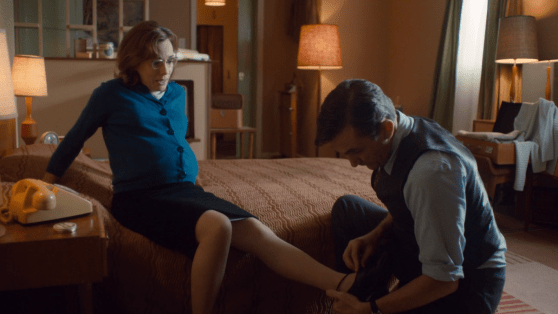
Shelagh rested back on her arms as she settled into an awkward sitting position on their bed, her shod foot in his hand.  He knew this may not be quite comfortable, but it was certainly better than taking off her own shoes. Besides, he enjoyed these little moments when he could take care of her.  His brain began to catalog facts as he worked the laces free. The baby had most definitely dropped in the last few days and Patrick wondered if his wife was starting to feel any increased pressure on her bladder.  Her torso was short enough that even this change wouldn’t help much with the difficulty breathing she sometimes felt.

“I do feel so much calmer since I gave up work, she assured him.  There was a hitch in her voice that pinged something in his subconscious, and he tensed as she continued.  “I think you might feel the same if you could just be my husband and not my doctor, too. And I think it…It might be best if you don’t attend the birth.”

His stomach lurched.   “But it never occurred to me that you wouldn’t want me there!”

“I want you there as soon as the baby’s born,” she pacified, “but we’ve been in too many delivery rooms together before today.  Solving problems. Preventing disasters.”

“And we do prevent disasters!  We’re a team.”

She seemed unmoved by his argument, and he tried to read her face.  He knew that expression–he’d seen it often enough when she had to give bad news to a patient or tell Timothy to get back to his studies.

“Patrick, I know that you’re looking at my ankles and thinking that they’re swollen.”

His answer was reflexive.  “If you’re not experiencing headaches, and there’s no sign of proteinuria, then it could just be the normal oedema of late pregnancy.”  Too late, he realized he’d proven her logic.

“See, the minute you look at me, you go to work.,” she rejoined.

“No,” he admitted, his heart swelling.  “The minute I look I you, I’ll give you everything you ask for.”  Discussion over, he slipped the second shoe from her foot.

“There,” Shelagh said, sliding her feet into the slippers her husband held out for her. “Thank you, Patrick.”

He glanced up from under his furrowed brow.  Not be there at the delivery? It didn’t seem he had much choice in the matter.  Shelagh’s bossy streak was in full force these last few weeks. First the new house…then the home birth…now this?  He opened his mouth to protest but closed it in resignation.

Shelagh leant forward and caressed his cheek. “Patrick dear, don’t look so glum.  You’ll see I’m right, I promise.” She leant down and pressed a kiss to his lips. With a ladylike grunt, she extended her arm for assistance. “Up, please.  Those potatoes are not going to boil themselves!”

Patrick watched as she left the room.  Her back must definitely be hurting a bit now, he thought.  The baby was certainly settling lower. He’d have to keep an eye out for any early signs of–

“Patrick,” Shelagh called gently from the door.  “See what I mean? You’re doing it right now!” Her smile was kind.  “Come on then, Doctor. Help your pregnant wife down the stairs like all the other husbands.”


The evening air was crisp in the back garden, and Patrick was grateful for the cardigan Shelagh had handed him after dinner.  He stood by the trash bins and looked up at the stars. It’d be clear the next day or so, he thought. Good. The children needed to be outside, needed to get some air and sunshine if they were to head off the influenza outbreak he’d heard of in other parts of London. It wouldn’t do for them to get ill, especially with Shelagh being so far along in her pregnancy.

A laugh drew his attention back to the house, and through the large glass doors, he could see Shelagh and Angela sitting together with the pile of books the little girl had chosen that afternoon at the lending library.  Timothy sat in the corner of the room, finally finished with his studies for the night and flipping through a new comic book. The sight of his family should ease his mind, he knew, but Shelagh’s words this afternoon still stung.

Not be in the room when she delivered? He’d never even thought that was a possibility.   He’d taken for granted that Shelagh would want him there.

God, he wanted a cigarette.  His nerves were close to the surface, and a long slow pull of smoke into his lungs would be just the thing to calm them.  He rubbed the back of his neck and turned away from the glow of the windows.

There were still so many questions about this pregnancy that remained unanswered.  They’d accepted the near-miracle of its conception (though if he were honest, simply applying the Laws of Probability had made it a much more likely event than mere medicine could predict).  Considering the scarring left behind by the TB and the resulting procedure that had given them heartbreaking news three years ago, he wasn’t even convinced the baby should be delivered here at home at all, but Shelagh had been determined.  His maternity hospital–his efficient, comfortable, safe maternity hospital was not the place for her delivery.

She’s just showing her old prejudice for her district nursing days, he groused.  There was absolutely no reason why she shouldn’t deliver at the hospital. Maybe she was just a bit shy to be in the regular patient population?  He could promise her a private room. At the hospital, they’d be ready for any possible emergency.

His legs grew a bit unsteady and he dropped onto the nearby bench.  What if there was an emergency?  If he couldn’t be in the room, how could he be certain any and all warning signs would be noted?  Sister Julienne was a talented midwife, but–

The sound of the glass sliders opening sliced through his worried thoughts.  Tim approached and took the place next to him. “Mum’s really getting close now, isn’t she?” The boy’s deepening voice brought a crooked smile to his father’s face.

“Yes, very close.  We should expect things to start changing around here anytime.”

“I suppose.”  Tim’s voice was low.  “Some things aren’t likely to change, I reckon.  Mum’s putting everything in order, planning everything.  She’s just told us that we’re to go to Granny Parker’s when the time comes, and you’ll work at the surgery until it’s all over.  Just like it’s a regular day for you.”

“Yes,” Patrick answered cautiously.  “Your mother prefers it that way.”

“But what about you, what do you prefer?  I should think you’d want to be at the birth of your own child.  You’ve been there for half the births in Poplar for the last twenty-five years.”  He straightened his spine. “I don’t need to be shuttled off to Granny’s as if I were a child, Dad.”

Patrick hesitated.  He’d need to show support for Shelagh, but Tim was no fool.  “Tim, when a woman gives birth, things change a bit for her. It’s rather scary, and your mother copes with that by creating a sense of order.  It’s important that we help her feel safe, and if that means I can’t be with her at her time, I’ll just have to accept that. You know Sister Evangeline wouldn’t let me in the room when you were born, either.”  He hoped he sounded more confident than he felt.

A look of empathy passed over the young man’s face.  “You’re not too happy about it, are you?”

No, his son was certainly no fool.  “Not at all.”

Two sets of shoulders lifted in parallel sighs of resignation.  “Women can be a mystery, Tim, especially regarding childbirth. You know, when Mummy was getting close, she decided that she needed to bake.  I have no idea why, but she insisted that if she made enough cakes, she’d be ready for you. In that last month, she must have gone through twenty pounds of flour.  We couldn’t eat it all, so she’d give most to Nonnatus.” He leant in conspiratorily. “To be honest, I think Sister Monica Joan was more relieved than I was when you were born.  Your mother was a terrible baker!”

Tim chuckled softly. “I remember her cakes.  I was always glad when Mrs. B sent one over to us on special occasions.”

After a long moment, Tim broke the silence.  “You like that Mum gets so fussy about the details, don’t you?  All her lists and plans?”

“What do you mean?”

Tim screwed his face in concentration, the right words eluding him.  He licked his lips nervously and said, “You like being taken care of.”

Patrick blinked.  “I hope I take care of her, too.”  His voice was guarded.

“Well, yes, but you like being managed by her.  The surgery is never organized when she’s away, and you’re always happy to have her run the house.”

“I’m not sure what you mean, Tim.”

Timothy shifted on the bench.  “The words aren’t coming out right.  I mean, I know you married Mum because you love her, but isn’t part of you glad she takes care of all those things?”

Patrick arched his neck and looked up at the night sky.  “I’m not certain I ever really thought of it that way, Tim.  I didn’t fall in love with Mum because I needed someone to help with the washing up.”

“No, I suppose not,” Tim admitted.  “But it got me wondering, that’s all.”

“We’re all on edge, Tim, that’s all this is.  Mum has good reasons to keep the house quiet when the time comes.  We have to respect them.” He leant in again. “Besides, you’re not really interested in being here, are you?  You cringe when we even talk about it. You wouldn’t be able to escape it if you were here!”

Timothy grimaced.  “No, I don’t really want to be here, but do I really have to stay at Granny Parker’s the whole time?”

Patrick’s mouth twisted in a half-smile.  Teasingly, he reached out to rub his son’s head.  “No, I suppose you could spend some of your time out trying to impress the ladies.  I’ll talk to Granny and let her know you’ll be out a bit. How’s that?”

“Dad!” Tim shrugged away, laughing.

Shelagh’s voice broke into their camaraderie. Neither had noticed that she’d come up behind them.  “You two look like you’re having a good time,” she said.

“Now, I hate to be a spoilsport, but it’s getting late, Timothy.  You said you needed to call your friend Alan about a question on your trigonometry.  You don’t want to wait too long. I’m sure his parents would not appreciate a phone call in the middle of the night.”

Patrick studiously avoided his son’s eye as he headed back in the house.  Instead, he extended his arm and Shelagh came up close against him.

“I have a feeling there was something going on out here I don’t quite understand,” Shelagh said.  

Patrick pressed a kiss against her smooth hair.  “I’m sure I don’t know what you’re talking about, my love,” he teased.  “Just man-talk–nothing to worry about.”

She slid her hand over his waist and toyed with the buttons of his cardigan.  “I think Tim wasn’t very happy about our decision to send the children to Granny Parker’s when the baby comes,” she admitted.

Our decision?  Patrick bit his lip to keep from saying the words.  “I’ve had a talk with him, and he understands better now,” he told her.  

“Truly?  I was so worried you’d both think I was being selfish.”  She looked up into his downturned face. “You’ll see, dearest.  It will be for the best.”

Angela’s voice came through the glass door.  “Mama, I finished my Horlicks!’

“Well, that’s me,” Shelagh pushed off from his side.  “Coming, Angela!”

At the doorway, she turned back.  “Are you coming, Patrick? It’s getting chilly out here.”

Smiling to himself ruefully, Patrick gave a brisk rub to his arms and followed his wife into the house.


A Mission of Hope, Chapter Twenty Two

BBN9PK

Previous Chapter


In the next several weeks, a new pattern began to emerge at Hope Mission. While the Zulu people of Zakhele Obi’s settlement continued to reject any and all invitations to attend clinic, word of the clinic began to spread through the region. Each morning soon after the sun rose, the doors would already be opened to those trying to make the long walk before the heat of the day. All the medics were now on the home visit rotation, including Patrick, and there was a growing sense that when they left, Hope Mission would thrive.

As in Poplar, the clinics became a social gathering place. Women clustered in groups for a good gossip while children ran about– the toys different, but the play the same.

Shelagh placed her handful of patient cards in the wooden box file and turned to see what was next. Sister Julienne sat in one corner attending to a very pregnant young woman flanked by several children, the oldest barely seven. Trixie tended the broken arm of a boy who, like all other boys, thought he was bigger than he really was and had tried to climb the wrong tree, and Nurse Crane, Sister Winifred, and Barbara were deep in a line of people anxiously awaiting their polio inoculations.

“Just like home,” Shelagh marveled. The waiting list seemed to have died down for the moment, and she decided it was time for a break. Jacob Arends learned early on that the key to the nurses’ hearts was a ready pot of tea, so she poured two mugs and sugared one well. Since Patrick had given up cigarettes, Shelagh was more inclined to indulge him with his sweet hot tea.

Patrick knelt on the ground, listening to the lungs of a patient. Satisfied, he sat back and reassured the small man, and patted him on the shoulder. As the man turned away, he thanked Patrick in Xhosa, and Patrick gamely responded. Good humored laughs rose up around them as he butchered the language.

“It’s brave of you to keep trying, dear.” Shelagh teased.

He grinned crookedly and accepted the cup of tea she offered.  “I just can’t seem to manage it. The words always come out with extra syllables. Are we finished for the day?”

“We may be. Twenty-three more polio vaccinations today!” She sipped her tea.

“Good. My worst fear is that those vaccines would go to waste. Myra had a patient this morning that’s presenting with what may be appendicitis, she’s checking him into the hospital ward now. Can you make sure–”

“I’ve already sent Fred in to help get the operating room ready. Imagine ever seeing Fred in scrubs back in Poplar–what would Sister Evangelina have said!”

“Poor Fred. I’m sure he’d much rather be out digging for that well. Tom said they’ve made no progress whatsoever, and Henry Makepeace is concerned enough to make another trip out again today to discuss it.” He gulped his tea down.

Shelagh grimaced at his bad habit, then glanced at Trixie. “I’m not quite so  sure the well is his only reason for coming out here so often, Patrick.”

His eyes followed hers, his eyes squinting with uncertainty. “Do you really think so? She’ll be returning to England soon.”

“There’s always letters, Patrick. I’m told they can be a very effective method of courtship.” Her eyes gleamed.

His face softened, and she felt as if he touched her with his look. “I’m a big believer in letter writing myself,” he said.

Shelagh blushed, then deliberately changed the subject. “Angela has made new friends.”

They both turned to the table set up under the tree. Clusters of children played with the box of toys the team had brought along on their journey. Angela and a small boy sat beneath the table building a tall tower of blocks that never seemed to grow as high as they wanted. Above them, Biscuit hovered on a low branch of the tree, idly chewing on a leaf.

“How are we going to leave here without bringing that monkey home with us?” Patrick wondered aloud yet again.

Suddenly the little vervet sat up very still, then let out a screech. In an instant, worried mothers called out in Xhosa and children moved with the practiced movements of experience. All children but Angela, that is.

Before Shelagh and Patrick could understand what was going on, an old lion appeared at the Mission gates. Mangy and thin, he had none of the supple grace they had seen in other animals out on the veldt. His mane was patchy, and an old battle had left him with only one eye. Long past his prime and rejected by the pride, the beast had an air of unpredictability about him.  

Patrick moved towards Angela, but a hand reached out to stop him.

“Wait, Patrick,” Myra’s voice was low behind him. “He hasn’t seen her. If you move, it could be disastrous.  Jacob’s gone for the gun–”

He jerked his arm away but the woman wouldn’t free him.

“Patrick, don’t. He’ll make it to her before you do. Only a moment, I promise you.”

“Don’t move Angela, darling,” Shelagh whispered. “Please God, don’t move.” Time stopped as the little girl stacked block upon block, oblivious to her friend’s departure and the strange silence.

Hearts pounded as the old lion stretched and slowly shifted his head to see more of the yard. In one instant, Angela’s tower of blocks came down, but just as the old lion’s head began to turn towards her, there was a loud screech and a blur of grey fur flew in front of his face. The lion shifted his body and lurched for the animal, and Patrick threw off Myra’s restraining hand. In the space of four heartbeats he had his daughter in his arms and inside the mission.

A loud crack echoed in the trees and the old lion dropped to the ground. Zakhele Obi lowered a gun nearly as long as he was. The only sound each person could hear in the silence that followed was the pounding of blood in their own ears.  

Finally, Zakhele called out in Xhosa, then in English, “Keep away from the body. He is as much a danger now as he was before.” Even the intense curiosity of the children, brave now the danger had passed, was not enough to make them defy his order.

Angela struggled from the tight clasp of her parents. “Too tight, Daddy. Down now, play time.”

Shelagh choked a laugh through her tears. “Mummy needs hugs, Angel Girl. Stay with Mummy a while longer.” Her legs could no longer support her, and she dropped into a chair.

The small grey blur wound about their legs and Patrick looked down at the monkey. “Well done, Biscuit. Very well done.”

Jacob Arends came from the mission holding a rifle of his own, but took one look at the scene before him and muttered, “I’ll get my shovel.”

Zakhele Obi put the safety on his gun and came forward, his hand outstretched in a gesture of peace.

“This old beast found his way to our settlement last night and got into our chickens. I had a feeling he would make his way to you.” His limp was more pronounced than ever.

“You walked all that way?” Myra Fitzsimmons demanded.

“My son does it every day. Do you think I am such an old man that I cannot walk a few miles myself?” He laughed, the adrenaline of the moments before lightening his tone.

“You’ll feel it tomorrow,” Myra assured him, her tone sardonic. “There are others that could make this trip easier than you, Zakhele. Why did you not send one of your young men?”

Conscious of the many eyes upon him, Zakhele hesitated. Myra considered him for a long moment, then decided. “I insist upon examining you. Jacob–”

The small man didn’t pause in his path. “I know, take Master Obi’s gun and put it somewhere safe.”

As the clinic began to return to normal, mothers passed by Shelagh, each aware of the terrible fear she still struggled to control. Hands squeezed her shaking shoulders, fingers stroked the soft cheek of the little girl that had finally relented to her mother’s embrace. Murmurs in melodic Xhosa drifted about the space, finally overtaken by the shouts of children returning to normal chaos.

Umakhulu stopped before Shelagh and lifted her hands to her heart. “Do not worry about what might have been, Nurse Uhmlobo. Your girl was meant to stay with you, but you will not have to hold her so tight. You chose your man well, he will help you keep her safe.” She leaned in and whispered something in Shelagh’s ear, causing a blush of deepest pink to flood her cheeks. With a laugh, the old woman called to her grandchildren and began the slow walk home.

“Nurse Uhmlobo? Doctor Turner, you are the husband of Nurse Uhmlobo?” Zekhele paused as he entered the Mission.

Patrick reluctantly turned his attention away from his wife and daughter. He tilted his head in confusion.

Zakhele laughed. “Even in our settlement, we have heard this tale. The women, they talk of the little nurse that saved Umakhulu’s granddaughter with her magic hands that can turn a baby inside its mother. Now they will speak of the Monkey Girl, who can send the beasts to her bidding. Perhaps we have underestimated the English, Doctor Fitzsimmons.”

“I’ve been telling you that for years, Mr. Obi.” Myra gestured to the clinic office. “Doctor Turner, I could use your help.” Without waiting for an answer, she disappeared into the building.

Patrick knelt down to meet Shelagh’s eyes. “Are you alright?” he asked. He grasped her hand in his while he checked for signs of shock.

“Go, Patrick. I’ll let go of her soon, I promise, just not for a little while yet.”

He nodded and pressed a kiss to her fingertips. “Take care of Mummy for me, Angela.” He stood, and smothered a groan as his knees creaked. “And remind Mummy I’ll want to know what Umakhulu said to her that made her cheeks so pink.”


Next Chapter

A Mission of Hope, Chapter Eighteen

BBN9PK

Previous Chapter

Shelagh could feel the fog of exhaustion drift back as she slowly woke. There was a sound she recognized tapping in her head, a sound she couldn’t ignore, and the last mists of sleep evaporated. She sat up, confused, and pushed her hair from her face.

A gentle tap at the door set her to action. In the bright moonlit room, she reached for her nightgown and slipped it over her head. She moved from the warm bed and shimmied the fabric down the length of her body, and frowned at the complicated garment. It was pretty, but it was a bit ridiculous.

“Mum?” she heard Timothy’s voice come through the crack of the door.

“Coming,” she whispered back. She padded in her bare feet across the room and opened the door.

Timothy stood before her, holding his small sister by the hand. In the dim light he was all angles, and even without her glasses Shelagh could see the boy was asleep on his feet. A sniffle from somewhere around the level of his knee drew her attention.

“There, there,” Shelagh crooned, kneeling before her teary daughter. She pushed Angela’s tangled hair back from her damp cheeks. “Did my little monkey have trouble sleeping?”

“I tried to settle her, but she only wanted you. Sorry, Mum, I know you must be tired after today.” Tim’s newly deepening voice rumbled in a way that recalled his father’s.

Shelagh wrapped her arms around Angela, then stood. “That’s alright, Timothy. I’ve got her now. You go back to sleep.”

He accepted her kiss, then turned back to his own room.

Shelagh closed the door and carried Angela over to the small desk in the corner. Deftly, she poured a small drink of water and watched as the little girl noisily gulped it down. She hoped she wouldn’t regret this break from the “no drinks after bedtime” rule  before morning.

Angela finished her water, and handed back the glass with a satisfied “Aaah!”

Shelagh giggled. “Whisper voice, sweetheart! Everyone’s sleeping.” She glanced over at her husband, who was, in fact, sound asleep. Shelagh rolled her eyes. She envied his ability to sleep through so much. Only the ring of the phone could stir him once he was asleep, an odd trait that had enabled him to miss many night-time child visits and feedings. She hated to wake him, but she would have to.

“Patrick,” her voice rose ever so slightly. She squeezed  his foot through the bedcovers. “Patrick, I need you to wake up for a moment.”

He woke suddenly, upright in an instant.

“It’s alright, dearest, no need to worry. You’ll need to dress for visitors.” She pushed his pyjamas through the opening in the netting.

“What’s wrong?’ he rubbed the sleep from his eyes.

“Angela’s been upset. I’ll bring her to the lav, you get dressed. We’ll be back in a jiffy.” The door closed behind her, her husband’s grunts of mild disapproval making her smile.

When they returned a few minutes later, a pyjama-clad Patrick had the bed straightened and the pillows set for the new sleeping arrangement.

“I suppose it was a rough day for everyone,” he agreed. He lifted the girl into his arms. Angela’s head nuzzled in the crook of his neck, then popped up. “Bizkit’s a monkey, Daddy,” she whispered.

“Yes, Biscuit’s a sleeping monkey, Angela. If we bring you into bed with us, will you sleep, too?”

The blonde head tucked itself back in place. “S’eeping  now, Daddy.” She pretended to snore.

They slipped into well-rehearsed positions, and in moments, Angela had fulfilled her promise.

“It doesn’t seem quite fair how she can do that,” Patrick whispered through a yawn. “Tell me about the delivery.”

Shelagh curved her body around Angela and slipped her toes under his calves to warm. Worry over the unexpected visit from DuPlessis and his men shifted attention away from Shelagh’s first call off the mission grounds, and they had yet to discuss it.

“The baby needed quite a bit of convincing, but we finally turned her right. Poor Thembe must have been in such terrible pain. You know, Patrick, they used the same tricks so many of our mothers in Poplar use to keep from making too much noise. It’s quite funny how similar the fundamentals are when you think about it. Thousands of miles apart, and yet we’re all still the same.”

“I thought that during the war; no matter where a soldier was from, he always had the same requests. Send love to his girl, ask his father to be proud. Here too, I suppose.” He paused, and when he spoke again, his voice was pained.

“How did you get her to trust you, Shelagh?”

Shelagh chose her words carefully. This wasn’t a tender ego talking. Trust was integral to a doctor’s practice. Without it, Patrick could not help anyone, including himself.

“It was Umakhulu–the grandmother. The thought of losing her girl was impossible, and they were just desperate enough to give me a try. But there was something else, Patrick. Myra told them I was a mother, too; that I had a little girl of my own. It made me a little less strange, somehow, and they let their fear of me go.”

Patrick sighed heavily as he considered her words. After a moment he turned to his side to face her and brushed his hand lightly along the curve of her hip. “You should sleep, my love. We can talk in the morning.”

She nodded as weariness began to overtake her. “We’ll find a way, Patrick. I know we will.”

As the night slipped into silence, an idea began to form.

A Mission of Hope, Chapter Fifteen

BBN9PKPrevious Chapter

The main ward of the Mission hospital was a long and narrow room, barely wide enough for a single row of beds.  The high, dark paneled ceilings and worn paint mimicked the style of the clinic hall, but despite the row of paned windows, the room felt somehow felt more cave-like than that space. Drawn blinds shielded the room from the intensity of the full noon sun as the four patients stirred restlessly in their beds.

Sister Julienne hovered over the dozing patients, stopping to scratch notes on the small chalkboards at the foot of each cot while Trixie sorted medical supplies for the third time that morning. The hospital saw even fewer patients than the weekly clinic, their charges the few villagers that had no family to care for them. Only a slow-healing stomach abscess and the lingering effects of dysentery kept them in hospital, and none needed the care the nurses had hoped to bring to the Mission.

Patrick sat at the lone desk at the head of the room as he reviewed notes. Still unused to the heat, he shifted his chair to take full advantage of the room’s only fan, then  glanced at his watch, impatient for something to do. Not since his days as a medical student had he been tied to one location for days on end. He preferred the constant movement about the community of his practice, the surgery and maternity hospital a gravitational center for his rounds.

Perhaps that was where things had started to go wrong, Patrick wondered. In the years since the National Health formed, he and so many other medical professionals had eagerly embraced the overconfident promises of science. The solutions seemed so much simpler. A few jabs and illnesses could be all but eradicated. If he never saw a case of polio again, it would be too soon.

Since their arrival in South Africa, he had done very little real medicine. The strange atmosphere of distrust hampered their efforts, and he, in particular, seemed to be singled out by the local population as a threat. The reasons were obvious, but he chafed at the idea that his help was not wanted. He wasn’t a fool; he knew Shelagh had championed this journey in order to rekindle his love of medicine. Now it was becoming obvious her hopes would be quashed by a culture of systemic racism.

He glanced about the room and tapped his pencil impatiently against his clipboard. He wondered ow far was the labor progressing. He had every faith in Shelagh’s abilities, but still he worried. Any complication in childbirth was magnified tenfold, even with her skills. He wished he could be with her.

He squelched a small sense of jealousy. At least he had spent some time out in the community since their arrival. Shelagh had somehow been delegated the tasks of organizing the clinic and their crew. While he knew part of her relished in the challenge, he was also aware that Shelagh itched to make a difference out with the people they had come to help. Today was her turn to reach out.

He stood and stretched, then made his way to the window. Angela was enjoying the change of scenery, certainly. Under the watchful eye of Kholeka, she skipped about the yard, watched by a monkey–no doubt her partner in mischief from the breakfast table–chattering from the nearby tree. His eyes followed as Angela stooped to pick a small yellow bloom from the grass and called out, “Bizzzzzz-kit!” She placed the flower at the foot of the tree, then turned to tiptoe back to Kholeka’s side.

The monkey’s chatter stopped and his eyes darted between the small child and the flower. With slow movements, he slid out of eyesight behind the tree.

“Bizzzkittt!” the little girl called again. “Flower for you!”

Suddenly, the little vervet dashed from around  the tree and snatched the flower. He sat still for a moment, then  shrieked what Patrick assumed was a monkey “thank you,” and returned to his sentry point. Angela laughed and began the routine again.

Patrick’s  lips twisted in a half grin. If they weren’t careful, his daughter might find a way to hide the monkey in her suitcase.

The roar of an engine broke the idyllic scene, and Patrick glanced in the direction of the mission gates. Clouds of dust rose in the air as a battered truck entered the mission yard and rolled to a grinding stop.

By the time Patrick began to make his way down the steps, his fears of another confrontation with Sergeant DuPlessis evaporated. Henry Makepeace climbed out from behind the wheel, a warm grin on his face.

“Doctor Turner! So glad to see you!” He took the floppy khaki hat from his head and waved it in greeting. “Come see what I’ve brought.”

Stopping to scoop Angela up in his arms, Patrick crossed the yard to the truck and peered over the side.

“I hope it’s not another crate of bandages. We’ve had a beastly time trying to square away what we’ve already got.” Patrick turned his head to see Nurse Franklin approach, her voice carrying the clipped tone he’d often noticed when she most wanted to be taken seriously. “What is it?” she asked.

“A hot water heater. Or it was, once upon a time. I thought perhaps between Jacob Arends and your Fred, it could be again.” The young man’s eyes studiously avoided the young nurse. “It was all I could do to get this old thing out here. DuPlessis has made it a sort of raison d’etre to keep any and all equipment out of the homelands. He’d rather see a water heater rust away on the bin heap than let it help here.”

“But why? If no one is Alice needs it, surely the Sergeant wouldn’t mind if we use it in hospital.” Trixie’s brows knit together in consternation. “Surely he wouldn’t stand in the way of our helping patients?”

Makepeace dropped his hat back on his head and opened the truck hatch. “Unfortunately, the government’s policies on the homelands rather encourages men like DuPlessis to rule as they wish. As long as he keeps the peace in the white communities, no one really pays much attention to what happens out here. A water heater only means something to him because it means something to us.”

“How dreadful!” Trixie murmured. “It must be so very difficult to cope. I’m sure you must be very brave and frightfully clever to outsmart him for us.”

A slow flush spread over the young man’s tanned cheeks. “It’s not–I mean, I–” he swallowed his words, then regained his composure. “Apartheid is wrong, for all it’s the law of the land. While the British government may not be willing to officially denounce it, we at the consulate can try to help in our own way.” By now he was in full command, and Patrick could see why the young man had chosen the diplomatic corps as a profession. “Medical care should be free from all politics.”

“Hear, hear,” Patrick enjoined.

“I’m glad you agree, doctor. If you don’t mind, I’ve got a task for you.”

He placed Angela on the ground. “Go run to Kholeka, darling. Daddy has work to do.”

Next Chapter 

A Mission of Hope, Chapter Twelve

BBN9PK

Previous Chapter

The final melody of a lullaby cocooned the little girl in her mother’s arms, the soft notes sending her to sleep. Her chest rose in a slow, deep breath that bound the two ever closer and peace filled the room.

Shelagh felt her own heart rate slow, her blood pressure calm, and she knew contentment for the first time all day.  She grazed her fingertip across the soft, rounded cheek of her daughter and pushed back a lock of damp hair. Angela would likely wake with a tangle of curls in the morning, but the bath had helped settle the fractious child. The late hours and time away from her mother had made Angela fussy these last few nights, and the shortage of family time and space had not helped. The routine that kept the family balanced had disappeared, and the strain was starting to show.

A twinge of resentment flickered and took hold. Each night since their arrival, she had been the one to stay with Angela, while her husband and son gathered with the others at the Mission house. She had never desired a life of social gatherings, but the intimate hours spent with her family were so very important. Quiet conversations about ordinary life, discussions about medical questions, even silent time together bound her to her family, and she felt the lack sorely.  Would she always be the one to make these small sacrifices? With little help, she had tried to make a home from two small dormitory rooms. Both Patrick and Timothy seemed more interested in the world beyond this space, and neither spent much time there anyway.

It had been her idea, hadn’t it? Patrick had been more than willing to let the issue drop when Dr. Fitzsimmons’ letter arrived last December. It was Shelagh that pursued the possibility, her plan that made it possible, her efforts that made the trip a reality, and for what? Patrick seemed no more confident in his abilities than before they left Poplar, Angela spent most of her days in the care of others, and Shelagh found herself more of a clerk than ever before.

She felt her forehead contract in tension, and a new worry crossed her mind. When would those lines become permanent? She wasn’t a vain woman, but of late she had noticed some changes. Fewer people expressed surprise that she could possibly be old enough to be the mother of a maturing boy. Were others starting to notice as well?

Angela sighed and buried her head deeper into her mother’s  neck. Her lips moved as if she were trying to finish a conversation, lifted in a quick smile and then stilled. The effect was comical, and Shelagh giggled.  “Mummy’s being silly, sweetheart. It’s just a few more weeks. And who knows what tomorrow will bring?”

The wooden chair Patrick had brought over for her from the Mission house creaked as she stood and transferred Angela to her cot. The little girl settled in, turning to her tummy and her pink cotton-covered bottom in the air. Shelagh’s lips pressed together in a smile as she ran her hand along Angela’s back and felt calm return. She moved about the room, putting clothes in their place and folded back the cover to Timothy’s bed. She dimmed the oil lamp and closed the door gently behind her.

Though it was early yet, she wouldn’t join them others.  Angela could still find a way out of the cot. Reluctant to retire, Shelagh made her way out to the veranda.

The air was heavy with humidity, a harbinger of the storm they had been promised would give a reprieve from the heat.  A vervet monkey coughed its last cry of the night as the hum of insects rose in the trees. Soon, the rain would pour down on the metal roof of the dormitory, as loud as any train in Poplar, and Shelagh wondered how she ever could have thought of this place as quiet.

A laugh carried across the courtyard, and she craned her neck to better see the mission house. Through the large double window, she could see the nurses, Tom and Fred playing cards. Timothy sat under the brightest lamp revising, determined to return to Poplar more than prepared for his exams in the spring. He thoughtfully chewed on the end of his pencil, a certain sign that the books before him were maths.

The nuns had long retired for the night. The regular schedule of offices had been firmly maintained, and the Great Silence observed strictly as well. Though she could not see them, she knew Patrick and Dr. Fitzsimmons would be in the hospital offices, struggling to find ways to extend outreach into the community.

Night time calls were infrequent at Hope Mission.  Bicycles did not travel well on the rutted roads of the territory, and  horses were too much of an attraction for the local nocturnal predators. Petro was hard to come by as well, so the untrustworthy Range Rover was only called out for the most dire of emergencies.

None of that seemed to be true source for their evening doldrums. The poor attendance at the clinics gave proof to that. After years of service and dedication Myra Fitzsimmons and her staff had secured the trust of the community, and were considered distinct from the oppressive government. The interlopers from England had not earned that same faith.

Shelagh took a seat on the bench and let her mind clear of all but that one fact. Until the people of Hope Mission accepted them, this trip could not find success. Change would not come from the medical supplies they had brought, or the convenience of the clinic hours. The people they were trying to help had good reason to distrust them. In Poplar, Shelagh well knew the distrust many had of British society, and by association, the National Health. She also knew that the surest way to tear down the walls of  built by distrust was to dismantle them one brick at a time.

The slam of the Mission house door surprised her, and she turned to see Patrick approach her. She warmed at the sight of him, his linen jacket tossed over his shoulder, his white shirtsleeves wrinkled and rolled up to his elbows. Even in his weary state, he still radiated an attraction she felt difficult to ignore.

“Angela asleep?” he asked quietly. His footsteps rasped on the sandy steps and he came to a stop on the steps below her.

Shelagh nodded. “She took some time to settle. Poor Piglet was entirely surrounded by water three times tonight, I fear.” She reached out and brushed his hair from his eyes. “You look tired, dearest. Making an early night of it?”

He settled on the bench next to her. “I had hoped to spend some time with my girls. It’s been ages since we’ve had a nice cuddle, the three of us.”

Shelagh smiled and took his hand in hers. His words slipped behind her earlier anxieties. “It’s been eleventy ages, as Piglet would say. We’ll have time when we go back to Poplar, Patrick. There’s work to be done.”

He grunted. “There’s always work to be done, but none of it’s doing any good. Not any real, lasting good, anyway.”

“Patrick, you know that’s not true. It takes time to build trust.”

His chest rose in a smothered sigh. “It does. I can’t say as I blame them, if I’m honest. If you could see the people when we approach their farms, Shelagh, it’s devastating. I know I can help them, but they won’t let me.” He sighed and looked down at their clasped hands. “Myra and I have decided I’m best used here at the hospital. The patients here have little chance to be choosey, certainly.” He turned his head to stare into the darkness of the trees.

“Patrick,” her voice was consoling, “it has nothing to do with you as a doctor or as a man, you know that. Men like DuPlessis have done such harm, they wield hatred and bigotry like weapons. We’ve got to find a way to make the people trust us.”

He turned back and smiled crookedly. “From your lips to their ears.”

“You’re not going to talk about lips, are you?” Timothy’s voice interrupted. He carried his books over his shoulder much the way his father held his jacket. “I think I’ve suffered enough. I’ve just spent the last hour listening to Fred teach everyone how to play poker. Nurse Crane beat him every time, though I’m fairly certain she’s a ringer.”

“A ringer?” Patrick asked, surprised.

“Yes, it’s someone who pretends–”

Patrick rolled his eyes. “Yes, I know what a ringer is, Timothy. I did spend five years in the Army. Though I suppose if you’re going to spend the evenings with Fred, I shouldn’t be surprised at some of your vocabulary.”

The mood on the veranda became light-hearted, and Shelagh wondered how much the boy had overheard. The years of sadness had made their mark on Timothy, and he was quick to soften its edges.

“Any success with your Latin tonight?” she asked.

“Nearly finished. I want to concentrate most of my time on learning Xhosa. Steven’s said he’ll bring me to his family’s homestead, if you agree.”

Shelagh and Patrick exchanged glances, and he gave an almost imperceptible nod of his head. “Of course, dear. They live several miles away, don’t they?”

“Nearly three. Steven runs to and from school every day,” Timothy boasted.

Patrick squinted. “In this heat? It’s been over ninety degrees everyday this week!”

“Stephen says you get used to it.” He shifted his books and climbed the remaining steps. “I’ll go to bed now. I was going to read for a bit, is that alright, Mum?”

“Yes, dear, not too late.” She offered her cheek for a kiss. “Angela should sleep through, but call me if you have any problems.”

The screened door creaked as it closed behind him. “Maybe whenever we want Tim to do something unpleasant, we should have Steven ask him.” Patrick commented dryly. He stood and held out his hand. “Come on, then. Lights out for us soon as well.”

Their room still had a temporary feel to it. The hard edges of the wardrobe and steel bed made it seem even more austere than her old cell in Nonnatus, Shelagh thought as Patrick closed the door behind them. The only softening was the airy mosquito netting draped over the bed. She sat at the only chair in the room and began to take down her hair.

Patrick stepped over to the wardrobe and hung his jacket up, then stretched and let out a groan. He tugged at his necktie and pulled the length of silk from around his neck. His waistcoat followed, placed neatly on the top shelf. Shelagh knew his housekeeping skills had been exhausted, and watched as he parted the netting to make a space to sit upon the bed. The springs creaked noisily as he sat to remove his shoes, and he grimaced at the sound.

“This heat is oppressive,” he complained. His shoes thunked as they hit the floor.

Shelagh stood. “Don’t forget to put your socks back in your shoes or you’ll have a nasty surprise in the morning,” she advised, and turned her back to him. “Zipper, please.”

He tugged the pull down and asked, “How do you manage to look as cool as a cucumber?”

As he spoke, the air pressure changed and a cool breeze pushed through the room. Shelagh faced him and answered, “I can be patient, dearest. The rain is coming.”

His hands came to rest on her hips and his brow furrowed in frustration. “Well, I can’t. First we had to share a room with Angela, and now this bloody squeaky bed. We never get any privacy.”

She reached behind him and folded the netting away further. “Listen, Patrick.”

In the distance, they could hear a wall of rain like an approaching drumline. In moments, the downpour arrived, its steady pounding on the metal roof creating a cocoon of white noise.

“It’s raining, Patrick,” Shelagh leaned in to whisper. Her nose brushed against the nape of his neck.

His forehead crinkled in response. “Yes, my love. I can hear it.”

“Patrick, you don’t understand. The rain is so very loud.” She hooked her thumbs at the top of his braces and pulled them from his shoulders.

His laugh was cut short by her lips pressing against his. He fell back on the bed, pulling her down with him and let the netting close around them.


Next Chapter

A Mission of Hope, Chapter Eight

BBN9PK

Previous Chapter

A bright dawn filtered through the louvered shutters of the room, coaxing Shelagh from sleep. New morning sounds, so different from the street hubbub of the East End, rose in a slow crescendo. Strange birds called into the quiet, and an insect droned outside the window as it hovered in the honeysuckle. The familiar sound of Patrick’s breath sussed in her ear and she smiled. He was pressed up against her, his arm over her side and his nose in her hair. This moment was only for her, no demands, no concerns, just the warmth of her husband’s arms. 

Her eyes flickered open. The room seemed misty, and between the netting and her own poor vision, the blur intensified the sense of seclusion. After days of near constant company, she wanted to enjoy the self-indulgence of this moment. Soon enough, Angela would stir in her camp bed a few feet away and usher in the demands of the world.

Shelagh felt a return of the anxiety she had felt throughout the previous day. Weeks of planning and preparation had in some ways distracted her from the actual mission, and now she felt uncertainty begin to creep in. Why did she feel the need to prove herself yet again?

Down the hall, the nuns would be preparing to leave for morning Lauds in the small chapel on site. Shelagh considered joining them, the decided against it. Perhaps later. Her own morning routine of meditation and prayer filled that void, whilst allowing her to remain with her family. The privacy of her own prayer had become quite special to her since leaving the sisterhood, a moment of serenity and thankfulness for the gift of her second life.

Slow breaths filled her lungs, flooding her body with oxygen. She let the air reach deep into her body as her mind cleared. Worries about the children, about Patrick, even her own worries for this mission faded as the well-remembered Breviary repeated in her head and she found her serenity.

Her prayers came to a close and she returned to an awareness of her place. Patrick was awake now, waiting for her to finish. “Morning,” he whispered in her ear. His voice had a husky tone in the morning that stirred her in ways she knew would not be fulfilled now, but for a moment, she let herself enjoy the warm glow of anticipation. They would have to find a solution to the dilemma of Angela’s sleeping arrangements.

She turned her head to see him and was kissed for her efforts. His long fingers glanced along the vulnerable line of her throat, stroking the length of her neck as it stretched towards him. The kiss was slow and tender, and for a moment, they were lost to the world.

“Mama, up!” Angela’s voiced piped across the fog of desire, breaking them apart.

Startled, Shelagh turned her head. Under a shock of pale blonde hair, a pair of brown eyes peered over the top of the mattress, two chubby arms outstretched.

“Angela! You startled me!”

“Mama, up!” The little girl demanded. Patrick’s answering groan expressed his displeasure, and Shelagh squeezed his hand in support.

“Mama. Up.” Angela was growing impatient.

“Too little to climb up, are we, my wee girlie,” her mother teased.

“That’s one way to keep her out of our bed,” grumbled Patrick. “She goes back to her room tonight, Shelagh.”

Shelagh tossed a wry grin back at her husband and pulled Angela up from under the mesh netting. The child scrambled under the thin covers and pressed against her mother. Giving in, Patrick raised his arm and pulled them both in close.

“Good morning kisses, Angela?” Shelagh coaxed.

Angela’s lips smacked the air loudly, her real attention on the teddy bear in her hands. “Monkey,” she cooed.

“You don’t have to beg me for kisses, my love,” Patrick teased. Shelagh glanced up, her eyes showing her opinion of his taunt.

“Yes, darling. You’re a monkey.” Shelagh turned back and tapped a gentle finger to the girl’s button nose.

“No, Mama. Monkey.” Angela pointed her finger at the window.

Lazily, their eyes followed her direction. Just outside the window was a monkey nearly the size of Angela herself.  It paused in its casual breakfast of palm fronds to turn and look back at them. Shelagh gasped, and moved to block her daughter from the monkey’s sight. Patrick leapt up and released a low growl, and the monkey scampered away.

He turned back to his wife and daughter. “Are you alright?” He asked. He was breathing heavily.

Shelagh began to giggle, and the sound stirred Angela from her silence. “Monkey!” She cheered.

Patrick dropped on the bed. “I’m not sure I’m ready for this!”

A scream rose out from somewhere down the hall.

“Monkey!” Angela crowed again.

Struggling into his dressing gown, Patrick ran out into the hall. Doors along the corridor opened, and tousled heads poked out.

“It came from down there, Dad,” Timothy pointed. He followed his father past nurses and nuns to the last door. About to knock, they were startled when Fred appeared, his face ashen.

“A gorilla! There was a gorilla outside my window!” In his haste to escape some great beast, he had left his dressing gown behind and stood in his unmentionables. He clenched a rolled up copy of the Sporting Life in his hand as if he had discovered its more useful purpose: Safari security.

Patrick blinked and struggled to keep the grin from his face. “A gorilla, Fred? Are you alright?”

The large man sighed heavily and leant against the doorjamb. “My heart is pounding like a train! I had no idea we’d be face to face with King Kong!”

Patrick nodded, his face a study in physician’s calm. “Yes, well, I’m glad you’re not harmed, Fred. I’ll leave you to get dressed, shall I?”

Fred huffed and closed his door.

As Patrick and Timothy returned to their rooms, Timothy muttered, “There aren’t any gorillas for two thousand miles!”

Trixie laughed. “It’s a good thing, too. I have no desire to act the part of Faye Wray, even to save Fred.”


Next Chapter


I think we’re gonna see a bit more of this fellow.

Screenshot 2016-05-20 09.47.47

A Mission of Hope, Chapter Seven


BBN9PK

Previous Chapter

To eyes used to the sights and sounds of Britain, there was nothing in Dr. Myra Fitzsimmons’ appearance to make her stand out from a crowd. Of medium height and build, she wore a simple green shirtwaister and sturdy shoes, her chin-length hair severely brushed back from her face. She could have been any woman shopping in the high street in Poplar.

Despite this, she was a handsome woman, her features sharp and strong. There was a squareness to her jaw that was offset by a pointed chin and thin nose, and bright blue eyes peered from beneath her dark brows. Deep lines carved her cheeks and forehead, arcing around her eyes and hinting at a passionate nature kept firmly in check.  The effect gave one the sense that she knew more than she let on.  

The small crowd parted to make a path and Dr. Fitzsimmons strode across the yard to greet the newcomers. She smiled, and her face warmed immediately. “I can’t thank you enough, Patrick.” She reached out her hands, grasping his while she examined his face. “My, it’s been a long time. You’re not the boy you were back in medical school.”

Patrick’s eyes widened. “I should hope not! It’s good to see you, Myra. The years have been kind to you.”

She grimaced sardonically and turned to the rest of the group. The moment of lightness disappeared from her face as she became formal once again. When she spoke, her voice was low and throaty. It pulled the listener in and commanded attention in its quietness. “I must thank you all as well. You’ve undergone a difficult journey and set aside your own lives to help us. I hope we can show you how very grateful we are.”

“Your gratitude is unnecessary, Dr. Fitzsimmons,” Sister Julienne answered. “We, all of us, are glad of the opportunity to offer assistance. Let us begin as friends and work together to strengthen your Mission.”

Patrick shifted towards the group, “Dr. Fitzsimmons, I’d like to present Sister Julienne, who runs Nonnatus House and ministers to our community in ways I never can.” He moved through the group, making introductions until he came back to his family. “And this is Timothy, our son, who will be quite happy to learn all he can from you. Feel free to make him toe the line as you did me.”

“It’s very nice to meet you, Dr. Fitzsimmons,” Timothy said.

“And you, Timothy. You look quite rather like your father, are you as bright as he is as well?”

“I hope to be, ma’am,” Timothy answered. He reached out his hand and was met with a firm handshake.

Patrick lifted his daughter up in his arms and turned to reveal the little face hiding in his shoulder. “This is Angela, whom I’m afraid keeps me very tightly wrapped around her finger. She’s a bit shy at first, but I warn you, if you’re not careful, she’ll be running your entire Mission.”

Dr. Fitzsimmons smiled politely at the child’s head. “I’m sure,” she answered. “ We have a girl ready to care for the child as soon as you like.”

“Yes, we’ll need that, thank you. And finally, I’d like to present my wife, Shelagh.”

The voice that welcomed Shelagh was cool. “Of course. I’m very grateful you could join your husband, Mrs. Turner. I hope that you will enjoy your stay here.”

Two pale pink spots appeared in Shelagh’s cheeks, and when she replied, her voice was strangely formal. “Thank you, Doctor. We’re most eager to offer assistance.”

Before Shelagh could say more, Dr. Fitzsimmons turned to the group. “That’s enough for introductions. I’m certain I shall forget most of your names–you’ll have to forgive me–but we are truly grateful you’ve come. I’ll let you get settled, and tonight at dinner we can all become better acquainted. Our staff here will join us, and you’ll be prepared to begin work tomorrow, as well.

She gestured to the young woman lingering near the bus. “Kholeka will lead you to the dormitory, and you can refresh yourselves after your trip. Jacob, please–”

Jacob appeared from nowhere at her side. “Yes, Doctor. The luggage is on its way to the rooms. But the boxes, I do not know where they should go.”

Shelagh tugged lightly on Patrick’s sleeve. “I’ll manage the children and the rooms, Patrick. You go with Dr. Fitzsimmons and see to the medical equipment. It will give you a chance to catch up.”

A small frown appeared between his brows. “Are you certain, Shelagh? There’ll be plenty of time later, perhaps you and I could take care of the supplies toget–”

“No, Patrick,” Shelagh insisted. “I’ll be fine on my own. I have Timothy, don’t forget.”

He nodded, the frown not completely leaving his face. “I’ll be back to clean up before dinner.” He touched her hand. “Thank you, Shelagh.”

She reached up and took the clinging child, then followed the rest to the long low building. The crowd had dispersed, and the two old friends stood together watching as she disappeared into their temporary home.

“She’s a pretty little thing, your wife.” Myra Fitzsimmons’ voice broke the quiet.

“Shelagh? I wouldn’t let her hear you say that if I were you.” He glanced over, a smile tugging at one side of his mouth. “I’ve seen her move a pack of dockworkers with a single command, and she’s the most skilled midwife I’ve ever worked with.”

Dr. Fitzsimmons nodded, her face showing a certain skepticism. “She’s much younger than I expected. Your son is–what–fifteen? She must have been very young when you married her.” An implication hung in the air between them.

He slipped his hands into his pockets and regarded her calmly. “Shelagh’s not my first wife, Myra. Timothy’s mother died five years ago–cancer. We were adrift, Tim and I, and then … then Shelagh and I found each other. It was her idea that we come here. She’s the force behind all this, Myra. She convinced me, the Mission Society–it was really quite tremendous. Every person on our team is here because of her efforts.”

“I am sorry, Patrick. I should never have said–I’m too used to speaking my mind before I’ve let it do the thinking. I suppose I’ve grown too used to being lord of my own little fiefdom.” Turning, she began to walk towards the main building.

“You’ll see. Humility was never a cloak I wore well. If we weren’t in such straits, you’d still be back in London.”


An hour later, Patrick entered the dormitory. He peered down the long corridor, dim even in its whiteness. The only light came from the door behind him and a single window at the end. The limed walls were covered in planks of wood, the floor finished with the same whitewash, yet the dimness made the space feel cooler. A half dozen transomed doors marched down each side.

He considered calling out, but the quiet hinted that his new housemates were resting and would not welcome his interruption. Nor did he wish to knock on each door as he made his way down the hall. He smiled crookedly as his eyes caught a bright blue scarf tied to a doorknob near the entrance. Leave it to Shelagh to choose the room that gave him best access out for emergencies.

He quietly turned the knob, half hoping to find his wife napping. He loved watching her sleep, almost as much as he loved waking her. The thought of a quiet hour resting against her appealed. Instead of lying in repose, a calm beacon to his anxious soul, Shelagh stood near the single wardrobe, unpacking.

“Always busy,” he teased. He slid his jacket from his shoulders and hung it on a hook behind the door.

Shelagh grinned. “Always much to do.”

“The children?”

“They’re in the room next door. We’ve set up a little camp cot for Angela, but I’m afraid she’ll have to move in with us, Patrick. There’s a bit too much freedom for her over there.”

“Shelagh, we’ve only just gotten our room to ourselves.”

“I know, dearest, but Kholeka tells me they have no cots her size. Apparently children here sleep on the floor.”

His eyebrow flew up.

“No, Patrick,” Shelagh scolded. “We are not making our child sleep on the wooden floor where who knows what manner of creepy crawlies wander about. Besides, what if she got the door open and wandered off somewhere?” She handed him his medical bag. “Here, put this on the desk.”

Outmaneuvered, he gave in and looked about the room. In addition to the broad wardrobe, there were few pieces of furniture in the room. A narrow chair partnered a wooden camp desk, and in the corner, a washstand served as a reminder that the plumbing facilities they could expect would be less than optimal. A large white iron bed stood out from the opposite wall, the space beneath it open and airy. A large mosquito net hung from above, offering the only softness in the room.

“Kholeka told me we would have to share this bed. They don’t have enough single beds for us all, apparently.” Shelagh finished hanging her uniform and gave it a tweak.  She closed the wardrobe and turned back to her husband.

“I think we’ll manage,” Patrick answered. He crossed the room and gathered his wife into his arms. He buried his face in her neck, and the two stood still for a long moment.

Shelagh pressed a kiss to his temple. “How is it?” she asked. “Is it what you expected?”

He pulled away and rubbed his hands over his face. “I’m not sure what I expected. The facilities are primitive, certainly. There’s electricity in the main building, but the generator is unreliable, and there’s no hot water. They have a room solely for boiling gallons of it throughout the day. The operating room would make Lister cringe. It’s surprisingly clean, though, and the ward is as efficient as any at the London.”

“Comes from Dr. Fitzsimmons’ years as a nurse, I daresay,” Shelagh teased.

A laugh escaped him. “Undoubtedly.” he grew serious again. “Myra’s the only doctor, though she has a staff of locals that handle much of the care. I’m not certain, but I think one or two of them are working as de facto doctors, simple procedures and the like. The Mission covers ten square miles, most of it without proper roads, so they’ve learned to manage as best they can.”

He exhaled sharply. “We may have bitten off more than we can chew, my love. I hope to God we don’t choke.”


Next Chapter


Thank you again for sticking with me. I am very grateful for all the lovely comments.

This pic helped to inspire the character of Dr. Myra Fitzsimmons for me.

2016-04-09 21.22.53


A Mission of Hope, Chapter Six

BBN9PK

Previous Chapter

The road to Hope Mission was a relic from the days of British colonialism, a wide byway meant for wagons pulling crops and lumber to the frontier outpost of Alice. Years of neglect had left it barely driveable in parts.  The twelve miles to the mission were not kind to any vehicle, and the Mission’s dusty maroon and tan bus did not make the journey gracefully.

“I never thought I’d miss the top of a double-decker barrelling down the commercial road,” Trixie complained. She gripped the seat in front of her fiercely, trying to keep from tumbling to the floor.  

“Think of it like this, Trixie,” Barbara advised. “It’s better than that old bus Tom uses for church trips!”

The two exchanged grins, ignoring the cry of protest from the vicar. The alliance between the two nurses had strengthened since the autumn, to the point where poor Tom sometimes felt like he was the third wheel.

“You two young ladies are very ungrateful,” Fred wagged a finger from his seat across the aisle. “That ol’ omnibus has a history!”

“Yes, Fred. It’s Pre-Historic!” Trixie quipped.

The bus lurched in the road and sent up a cloud of dust behind it. “Better than an English rollercoaster,” the driver called out with a cheerful laugh. Small and wiry, Jacob Arends drove with more enthusiasm than skill, but his wide grin and friendly manner had done more to settle nerves as the team completed the final leg of their journey than all the polished manners of the Mission Society escorts.

“Soon we will be at our Mission,” he assured them over his shoulder. “We are most excited to have you stay.”

“I would be most excited if he didn’t drive us into a ditch,” Patrick muttered as he swayed with the bus’s motion.

Shelagh’s lips pressed together and she smoothed Angela’s hair. The poor little girl was near the end of her tether with all the travel. “Almost there, darling, and then we’ll let you have a nice run ‘round. Patrick, you’re just nervous. Dr. Fitzsimmons wrote to you for a reason, dearest, you’re sure to help.”

“Some boxes of supplies and a few weeks service. What do I know about bush medicine? I’m a place-filler until the Mission Society can get a trained mission doctor here, that’s all.” His crossed arms and pursed lips gave him a petulant look.

“Patrick,” Shelagh soothed. Sometimes her husband was his own worst enemy. He needed to be busy, and the forced idleness of these days of travel had left him to worry more than she liked. “You’re more than trained for this. Certainly we’ll have challenges, but it’s not just your medical skills that will be of help here, dearest. You want to help people; you want to make their lives better. Dr. Fitzsimmons couldn’t have made a better choice when she sent you that letter.”

He glanced down at her bright blue eyes, full of encouragement and a reluctant grin tugged at the side of his mouth. “What would I do without you, Shelagh?”

“For one thing, you’d eat yourself sick. You certainly made a feast of the bobotie at the hotel last night!” Shelagh teased. Patrick was not the most adventurous of eaters, but their first official meal in South Africa had been a success.

His eyes lit up. “I only ate two servings last night! It’s not my fault is was so much like your shepherd’s pie.”

“Flatterer, you had three servings, and you finished Angela’s, too.”

“I was simply making sure she didn’t let the sultanas go to waste.”

And the mince, and the crust, too, I’m certain.” A dimple peeked out from Shelagh’s suppressed grin.

Leaning in conspiratorially, Patrick whispered loudly, “Angela, I think Mummy’s asking for a kiss.”

“Dad,” groaned the boy seated behind them. “Please don’t embarrass me at the Mission with that mushy stuff. It’s bad enough I have to see it at home.”

Shelagh giggled. “I’m sure I don’t know what you’re talking about, Timothy dear.”

Timothy rolled his eyes, then sat forward. “Mr. Arends said the next time he goes into Alice, he can take me to look at the University there. It’s the only library in the whole region.”

“We’ll see, Tim,” Patrick answered. “Let’s get settled at the Mission before we make any plans. We’re here for a purpose, not a sightseeing trip.”

Jacob Arends had other ideas, it seemed, and he slowed the bus to point out features along the way.  As they drove farther from Alice, the terrain began to change. The lonely thorn trees of the veld gave way to low bushes and tufts of pale grasses that swayed in the breeze, creating hiding places for the grazing animals as they took rest from the heat. Miles ahead, the green deepened, making a gradual climb up an imposing forested ridge.

“Up ahead, you see the mountain? That is Hogsback, most beautiful mountain God made. It is three, maybe four miles from our village, and the most lovely green mountain. The rivers there, they make waterfalls and a lake so deep there is no bottom.”

The bus rumbled through a dense copse of trees, upsetting a flock of bright birds. “There!” called out Tom Hereward. “In the tree–monkeys!”

“Those are vervets, Mr. Vicar. They pose no danger to you, but they will steal the food from your hand if you are not careful,” the driver advised.

“It’ll be just like have Sister Monica Joan with us,” laughed Trixie.

“Mr. Arends, what are those funny round buildings? We’ve seen them from the train, but could not place them,” piped in Sister Winifred.  A cluster of round buildings, bright with a white stucco and thatched roofs  sat upon a swell in the plain.

“Those are rondavels. They are Xhosa homes,” his voice clicked on the name.

“But why are they round?” Sister Winifred asked. “It seems a funny sort of shape for a building.”

“Why would they not be round? A square house, it has too many corners for snakes to hide.”

A low groan came from the back of the bus. A self-appointed quartermaster, Fred kept watch over the fragile boxes of medical equipment. “Snakes? ” his voice was high. “I hate snakes!”

Jacob Arends shook his head sagely as he looked back in the rearview mirror. “Then I am very sorry for you, my new friend.”

Another turn and the road moved north from the river. The bus groaned, demanding its rest, and lumbered another hundred yards before it passed under an old iron gate. Blaring the horn, Jacob read the sign aloud, “Welcome to Hope Mission!”

A collection of one-storey buildings, the mission nestled in a large clearing guarded by two gnarled olive trees. The stucco of its white stone walls gleamed brightly in the sun, topped by a steeply sloped tin roof, and was bookended by two symmetrical additions. Tall casement windows segmented the facade, high off the ground. A set of stone steps led up to a low belfry, welcoming visitors.

To the left of the main building, a long dormitory stretched to the back of the clearing, a row of windows chasing down its length.  On the other side of the main building stood several smaller, squat buildings, each with a clear purpose. Located closest to the well-pump, these buildings housed the kitchens, a laundry, and a generator room.

Eleven sets of anxious eyes peered out the bus windows. Six weeks of preparation suddenly did not seem like such a long time.  “It’s square,” gulped Sister Winifred.

Taking a deep breath, Patrick stood and approached the front of the bus.  “Thank you, Mr. Arendt. You’ve been most kind.” He turned to the team before him. “I want to thank you all, as well. I couldn’t possibly here manage without you.”

“We are all behind you, Doctor Turner,” Sister Julienne assured him. “If I might say a small prayer?”

He nodded. “Of course, Sister.”

Sister Julienne stood at her place and began, “Oh. Lord, guide us as we strive to carry out your work. Help us to bring healing and mercy to those in need, and give us the wisdom to learn more than we can teach. Amen.”

Jacob hopped down the bus steps and called out to the people that had begun to gather outside the bus, his voice clicking with sounds still strange to those used to the pattern of English, and a young boy ran to ring the mission bell.

One by one, the weary team stepped down from the bus into the bright sunlight, nervous smiles answering the dark cheerful faces before them.

Jacob turned his attention back to the group. “I am told Dr. Fitzsimmons is in the ward, she will be here quite soon, doctor,” Jacob announced. “Please, you must all follow me.” He stepped toward the main building, but before he could lead the group in, a woman rushed down the front steps.

“Patrick Turner!” she called. “I knew you were the man to count on!”

Next Chapter


A/N: The image I’ve used to base my Mission is that of a missionary school for Bantus near Middelburg, Transvaal, taken in September of 1964. You can find it here.

Xhosa (pronounced Kosa in English) in a South African language that features clicks as part of its phonetics. This video will give you an idea of how the sounds are made. Careful, though. If you’re anything like me, you’ll find yourself practicing for hours!


A Mission of Hope, Chapter Five

BBN9PKA/N:  I’ve tried to be as accurate as possible with this chapter in order to explain some of the questions I have about how a team of nuns and medics from the poorest part of London could get to South Africa. (Hint: it involves a great deal of suspension of disbelief, a generous benefactor, two planes, a train and a bus, and two nights in hotels–What? you don’t think that’s realistic?? It’s AU, baby!!).

Also, I’ve introduced apartheid and Homelands in this chapter and have tried to do so in a correct historical context of early 1962. Any errors are innocently meant. There are links below that will offer clarity.

One last thing. Did you know that a group of giraffes has two different collective nouns? A group of standing giraffes is called a “tower,” while a group of running giraffes is called a “jenny.”

Sometimes I really love English.

Previous Chapter


A battered train chugged through the pale yellow bushveld, lacking any of the urgency and determination of its European brethren. Miles distant, the blue shadows of the Great Escarpment jutted out from the veld, sequestering the Eastern Cape from the world. The sky glowed with a bright blue never seen in London, an enormous dome that refused admittance to any clouds.

It was as if God had used an entirely different palette of colors when He created this part of the world. Yellow and blue shimmered here in a way never seen on the sunniest day in England, challenging the eye to see more than it could. Green was deeper, darker and more mysterious than the pale greens of the English oak.  Even the greys were different from London greys.  

Within the first class carriage, Shelagh watched the scenery pass unchanged for miles. The pale gold of the mid-summer grasses was dotted with clumps of bushes and the occasional sinewy tree. The heat of the midday sun forced animals into shady spots, unseen from the train. In all, the effect was hypnotizing.

Shelagh shook herself from her quiet and stretched lightly. In the bench across from her, Angela lay curled up on Patrick’s lap, the two lulled to sleep by the gentle motion of the train. Shelagh smiled as she watched them breathe in tandem, Angela gently sucking her thumb as her father snored.

Not all of the passengers slept in the compartment. Sisters Julienne and Winifred both read from their Bibles. A catch-as-catch-can sort of schedule had been adopted for their daily offices, but both nuns were used to irregular schedules. Fred sat at an end of the car, a game of Solitaire spread out on the seat next to him. Trixie and Barbara sat across from Tom Hereward, a curious sort of trio. Timothy and Phyllis Crane sat in the first row of seats, eyes out the window as they catalogued everything they could see.

Shelagh rose and began to pace along the length of the car.  No other passengers had joined them in this car since they had left the port city of East London, despite the activity at each stop. She paused for a moment to observe Fred’s game, then tapped a card. He glanced up, then sheepishly shifted a stack. A moment with the sisters, another quiet conversation with the nurses, and she took a seat with her son.

“It’s hard to believe we were having tea in Nonnatus house only three days ago,” remarked Nurse Crane over the sound of the engine.

“It would have been much longer if we didn’t have the Missionary Society escorting us everywhere,” Timothy replied. Indeed, John Taylor had pulled enough strings to make the team from Poplar feel more like dignitaries than a travelling medical team. Missionary agents met the party each step of the way, paving over the arduous task of international travel.  Acclimating new missionaries was a top priority of the Christian Missionary Society. There were struggles enough ahead that could cause attrition, getting the help to Africa was the very least that could be done.

Connecting flights had been arranged between Heathrow, Nairobi and East London, South Africa, effectively  minimizing delays.  At each stop along the way, a different Society representative greeted them and handled arrangements for nightly accommodations, as evening travel was unreliable. After an early flight to East London, they were escorted to a small hotel near the sea for the night. Worn out from the travel, they were grateful for a day of rest before boarding a train to Alice, situated twelve miles south of the Hope Mission.

Shelagh stretched her back and looked at the stack of books between her son and the no-nonsense nurse. Over the past weeks, Timothy and Phyllis Crane had formed an unexpected bond. While the others spent the last month of preparation in accumulating and packing supplies for the mission, they gathered every book, travel brochure and periodical they could, resulting in a collection of knowledge fit for the British High Commission in Pretoria.  Timothy focussed on the flora and fauna of the region. Phyllis Crane was an expert in the unusual laws of the South African people.

“Though I suppose we’ll be spending most of our time in Ciskei, what they call a ‘homeland,’ and not ‘South Africa,’ to be precise,” Phyllis had informed the group at one of the gatherings before the departure. There was so much to organize in such a short time that semi-weekly meetings had been deemed necessary. Nonnatus House became a sort of home base for these meetings and  a temporary center for the donations and medical supplies they would bring to Africa.

Patrick had looked up from the large box of medical syringes on the dining room table. “What do you mean, not ‘South Africa’?”

“Just, that, doctor. Officially, we are not going to be working in South Africa. Last year, the government of South Africa created specific areas within the nation with the express purpose of settling blacks within those borders. They’re technically independent.” She walked over to the map she had requisitioned from the Mission Society. “Hope Mission is located here,” using her pen she pointed to a small area of the canvas. A rough outline had been marked in ink on the outdated map. “Just within the eastern border of Ciskei.”

“The government forced people to leave their homes and settle somewhere else?” Trixie’s voice showed her outrage.

“Yes.” Phyllis capped her pen and faced the group.

“But why would they move people in the first place?” Patrick abandoned the syringes. “Why would they go to the effort of moving such a large number of people from their homes? It doesn’t make sense.”

Phyllis sighed, and folded her glasses back up, slipping them into her uniform pocket. “It seems the official stance on the subject is to grant a sort of autonomy for the Blacks. The argument is that by keeping language groups together, with similar traditions, they will be able to govern themselves.  However, from what I can determine, there’s a much darker reason, I’m afraid.”

“How do you mean?” Patrick questioned. By now, the attention of everyone in the room had shifted to Phyllis.

“South Africa has a rather difficult history, as you know. The apartheid system,” she glanced around the room and saw the nods of understanding–everyone had done their homework it seemed— “has been in effect in fact if not official doctrine for a very long time. From what I can gather, the resettlement has more to do with sequestering the Blacks away from the Whites than granting independence. Technically, these four regions are independent, and not the responsibility of the South African government. By pretending these regions are no longer part of the official nation, the government can justify eliminating the few remaining political rights Blacks have within South Africa. Not to mention, if they can claim the homelands are not South African territory, the government has no reason to financially support the regions whatsoever.”

“That would explain why Dr. Fitzsimmons sent out the call for help,” mused Patrick. “A growing population and diminishing resources. We’re all too familiar with that set of problems.”

Phyllis looked about the room once more. “Doctor Turner is correct, I’m afraid. The problems of the Hope Mission are likely to be similar to problems we have encountered in Poplar, but I’m afraid that the scale will be on a level none of us have ever seen.”

Less than a day after their arrival in South Africa, the rightness of Nurse Crane’s words was becoming apparent. Signs hung above doors to businesses, hotels and even train carriages directing people along racial lines. Their train compartment was empty but for their party, as few whites were travelling, but the three cars in the rear were near overflowing. And while the medical team from Poplar enjoyed comfortable cushions and a clean car, the cars set aside for the Non-Whites were crowded and uncomfortable. Segregated by the invisible fence of custom and law, the tension here was certainly greater than back home.

Timothy glanced back at his sleeping father and sister. “Dad’s snoring.” he mocked. “He always snores when he sleeps sitting up. I don’t know how Angela can always nap on his lap with that noise.”

Shelagh grimaced. “Timothy, be nice. Your father works very hard. And I think your sister is delighted to spend time with him any way she can.” She poked his shoulder and teased, “Just for that, Mr. Always, you’re on Angela duty when she wakes.”

“I’d mind your mother, Timothy,” Phyllis nudged. “I recall you were none to happy to be following your sister up and down the aisle on that aeroplane to Nairobi. My, that girl does have energy!”

Shelagh stood. “I’d better get back in case she does wake. Timothy, I have the last few biscuits if you’re hungry.”

“I’m always hungry,” he quipped.

The scenery outside her window had not varied since her walk, so Shelagh turned her attention to the sleeping pair before her. Angela’s skin was already pink from her afternoon at the ocean yesterday. Hopefully, she would be more willing to keep her dress on when there were no ocean waves to tempt her. One day in the surf and sand had convinced the little girl she should be a mermaid, and they were still finding contraband seashells in her pockets.

Patrick’s face had some color too, and in his sleep, the stress of the last months eased. The new  lightweight linen clothes suited him, his lean figure cool and elegant in the pale tan material. Of all the tasks she had completed in preparation for the journey, shopping for a warm weather wardrobe for her family had been her favorite. Shelagh sighed lightly, and her eyes traveled back up to her husband’s face.

His eyes were open, bright with a gleam meant for her alone. The slow smirk that crossed his face showed her he knew exactly what she was thinking, and he winked. In an instant, Shelagh’s dimple appeared and she shook her head at him coyly. She glanced about the carriage nervously, then seemed to make a decision. Her eyes on his, she slowly stretched across the space dividing them and skimmed his shin with her foot.

His eyes widened in surprise as he considered a response, but a snuffle from Angela broke the mood. “I’ll remember that later, my love” Patrick whispered.

“Angela,” Tim cried from his bench at the front of the car.

“Timothy,” Shelagh shushed him. She turned to see the members of their group standing to look out the train windows on one side of the carriage. “What on earth?”

“Giraffes! Wake Angela! She’ll want to see them!” Tim called over his shoulder.

Patrick carried his slowly rousing daughter to the wide window across the train. In the distance, marula trees bowed over the bush, their wide crowns of leaves creating pools of shade on the sun-baked land.

“Look, Angela! What do you see?” Like the others, Patrick’s voice was child-like with excitement.

“Raffe!” the little girl shouted. “Raffe!” She began to look about her frantically.

“Here you go, darling,” Shelagh cooed, holding out a small wooden giraffe in her palm.

Angela clutched the figurine in her chubby hand and gave it a noisy kiss. “Raffe, Dada. See?” She pointed her hand at the tower of giraffes lazily nibbling on the bulbous fruit hanging from the branches. Patrick lowered her to stand on the seat next to her brother. “Raffes eating!” Her happy squeal was infectious.

“Yes, Angel girl, the giraffes are eating. And do you know who knows more about giraffes than anyone on this train, sweetheart?” Patrick’s eyes widened in encouragement.

“Timofee!” Angela cheered. None but Timothy would do, now, and the boy pretended a groan.

Fred hunkered down on the next bench and adjusted the window to keep the excited two-year old within the train. “Well, little miss, I gotta tell ya. This sure ain’t Poplar.”


Next Chapter

Here are some links to sites that may make this all make a bit more sense:

Photo: The Great Escarpment and the Bushveld

Map: South Africa

East London beach

South African Homelands


A Mission of Hope, Chapter One

I’ve decided to jump into the world of AU, and write about something that’s not canon. This fic has nothing to do with what’s likely to happen in Series 6 of Call the Midwife, and is more an exercise in combining my love of the characters, history and movies.

I will play with timelines, use some dramatic license with locations, and test the laws of physics. Well, I’ll avoid physics, but I might test your sense of disbelief. My main goal is to explore and understand some well-loved characters. As always, these characters do not belong to me, but I am grateful for all they have taught me.

Forgive me my self -indulgence.

BBN9PK

Chapter One

In the weeks since the thalidomide scandal broke out, a strange melancholy had come over the Kenilworth Row Maternity Home and its staff. While no new babies had been born afflicted by the ravages of the cruel drug, every day brought with it the worry that today, another would appear. Even the start of the holiday season did little to dissipate the grim mood.

The drug had been officially banned in the United Kingdom, and calls came up through the medical profession demanding new standards in pharmaceutical testing. If there was any good that could come from this terrible chapter, it would be stronger regulations to prevent such a tragedy from ever occurring again. But that was little comfort to mothers like Rhoda Mullocks.

Patrick Turner stepped from his car, turning the key to lock the door and headed up the stone steps from street level to the flat’s entrance. To keep the spirit of Christmas up for the children, Shelagh had insisted they decorate for the holiday. Today, she had hung a wreath on the door. He did appreciate all Shelagh was doing to maintain some sense of normal, even if he found it hard to assist. He would have to make a greater effort. He swallowed heavily and entered the flat.

The sounds of carols on the radio greeted him as he hung his coat in the hall, the scent of mince pies filling the air. He suspected the early baking was more to keep his wife’s mind occupied that a desire to stock up on holiday pastry. More than anyone else, Shelagh understood his sense of guilt and even felt a sense of her own culpability. Both knew they had acted in the best interests of their patients, that there had been no malpractice, but the knowledge that is was their misplaced trust in modern medicine made it all the harder to continue caring for the poor of Poplar. He pushed forward and went to meet his family.

Timothy sat in an armchair, his Biology text balanced on his knees as he copied a diagram. He didn’t look completely happy about his position, having been ejected from his preferred spot at the table. The boy had a desk in his room but preferred to sit with his mother and sister as he worked on his studies. Patrick wondered how the boy could get anything done now that Angela refused to stay within the confines of her play yard. She seemed to take great delight from piling her toys on her brother as he worked.

Shelagh looked up from the washing she was folding. “Hello, dear,” she greeted him, raising her cheek for his light kiss.

“Dad, there’s a letter for you postmarked from South Africa!” Tim announced.

“South Africa?” he wondered, his brow furrowing.

Before he could give the letter any more attention, he felt a tug on his trouser leg and looked down to see two-year-old Angela’s  bright eyes and saucy smile. Pushing aside the sting of guilt he felt each time he pushed away his burdens, he crouched down to her level. “Hello, Miss Angela. It’s a pleasure to see you.” He picked up her soft hand, lifted it to his lips and was rewarded with the same shy smile of delight he so often saw play across his wife’s face.

Wrapping his daughter in his arms, he stood. “What’s that about a letter, Tim?’ he asked. His eyes squinted as Angela patted his cheeks.

“It’s got a stamp from South Africa. Who do you know from there?” Tim asked. He handed the letter up, avoiding his sister’s inquisitive fingers.

Patrick turned the letter over in his hands. “Hope Mission,” he read aloud. “M. Fitzsimmons.” He thought for a moment, remembering. “We went to medical school together. She went down there sometime after the war, I think. I wonder what she has to say to me?”

“There was a woman in your medical school class, Dad?” Tim was amazed.

“Women can become doctors, Timothy,” Shelagh admonished from beyond the kitchen hatch.

“They can now, Mum. But Dad went to school so long ago, I didn’t think it was possible.”

“Mind your cheek, Tim, “ Patrick warned, his grin hidden by Angela’s hands. “There were three in my class when we started, I’ll have you know.” He caught his son’s eyes, halting any further response. “And no, it wasn’t so long ago that one of them was named ‘Eve.’”

“Can the letter wait a bit longer, dearest? Dinner’s just ready.” Shelagh carried in a bowl of roasted sprouts.

Patrick placed the letter on the mantle. “I suppose it won’t hurt to wait until later. I’m famished.”


Evenings were the easiest time to forget about the troubles within the practice, when self-reproach gave way to love. There was a tacit agreement to put the focus on family for the few hours they had before the children went to bed. The lively chatter of a bright young man and the happy little girl kept the mood light and made preparations for the holiday possible.

Patrick stood in doorway of the bath and watched as Shelagh gave Angela’s hair a final rinse. The little girl sputtered and squealed with laughter.

“She’ll turn into a mermaid one day,” he laughed. He opened the towel and put out his arms, scooping up the slippery child. “I’ll dress her tonight.”

He passed by Tim’s room on the way to the nursery. “Ready for the Biology exam tomorrow, Tim?”

“I think so. I’m fairly certain I know my all the enzymes.”

Patrick shifted the wiggly girl on his hip. “Enzymes aren’t all that hard, Tim. Just remember to break it down.”

Timothy rolled his eyes at the terrible pun. “Can I have the stamp when you’ve finished your letter?”

“Right. I nearly forgot.”

Shelagh joined them in the hallway. “You go read your letter, Patrick. I’ll get Angela to sleep tonight,” she suggested.

With a kiss on Angela’s little nose and a quick one on his wife’s cheek, Patrick left his family to settle in for the night.


He sat staring into space, absently tapping the letter against his chin when Shelagh returned.

“Good news, I hope,” she said as she settled on the couch next to him. Her hand slid around his arm, finding his hand. They’d have one last cup of tea and set to wrapping gifts.

He sat up a bit and put the letter on her lap. “Interesting news, anyway. Myra Fitzsimmons was always…she’s an unusual person. She wasn’t the only woman in our class, but she was the most ambitious, maybe more ambitious than any of us. She was older and had years of medical training before she came to school–she lied about her age to be accepted as a nurse in the First World War, then went on to serve in Liverpool Hospital for another ten years or so.” He laughed softly. “I don’t suppose she relished the idea of listening to anyone, much less a man, so she left nursing and joined our class. Some of the old instructors were pretty rough on her, but she held firm. I think she was the only one to never faint in anatomy class!”

Shelagh lifted the letter to exaine it more closely. “It must have been difficult for her. In my experience, most doctors can be …condescending… when treating women as patients. In the classroom, they must’ve been insufferable!”

Patrick turned to her in mock outrage.

“Present company excepted, dearest.” She pressed her cheek against his shoulder. “Were you friends?”

“Not friends, exactly. Myra Fitzsimmons didn’t make friends easily, but she was an excellent lab partner. No nonsense, and the quickest diagnostician I ever knew. She signed up with the RAMC during the World War II and got stationed in Cape Town, and decided to stay.”

“So why did she write you? Is she coming back to England? We could use someone like her here in Poplar.” Shelagh stifled a yawn.

“Actually, no. She runs a mission on the East Cape, and it looks like they’re in trouble.” He turned to face Shelagh. “She wants us to go down there.”


Next Chapter